

Maddy summaryHR 7109, the Equal Representation Act, requires the U.S. Census Bureau to add a citizenship status checkbox to the 2030 and future decennial censuses, asking respondents to identify if they are U.S. citizens, U.S. nationals, lawful residents, or unlawful residents. It then mandates excluding noncitizens (both lawful and unlawful residents) from the population count used to determine each state's number of congressional seats and electoral votes starting with the 2030 census. This bill directly affects how states are apportioned representation in Congress and presidential electoral votes, based solely on the citizen population. The key change is shifting the apportionment base from total population to citizen population alone, using the new census data.
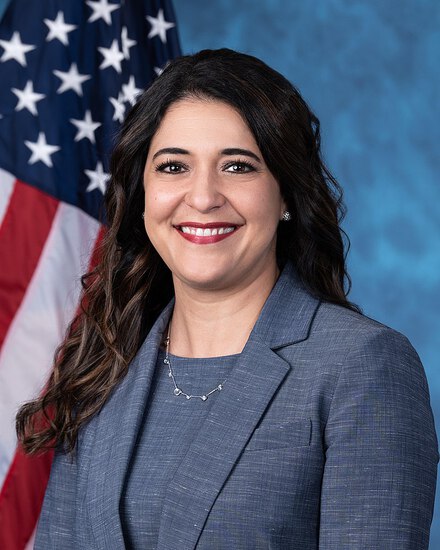
Rep. Stephanie I. Bice
Sponsored bills
Maddy summaryHRES 1223 designates October 10, 2024, as "American Girls in Sports Day" through a symbolic resolution. It recognizes the impact of women in sports history, emphasizes the importance of Title IX protections for female athletes, and urges sports organizations to safeguard opportunities for biological girls in competition. The resolution does not create new laws or funding but serves as a formal acknowledgment of existing policy goals. It directly affects the symbolic recognition of women's sports participation, with no concrete policy changes or affected groups beyond this designation.
Maddy summaryThis bill authorizes the placement of a memorial honoring women who contributed to World War II efforts on the National Mall or adjacent federal land in Washington, D.C. It specifically removes a location restriction (under 40 U.S.C. § 8908) to allow the memorial - previously authorized by the 2023 Consolidated Appropriations Act - to be situated within Area I of the National Mall or the National Mall Reserve. The memorial would commemorate over 18 million women who worked as pilots, engineers, mechanics, and codebreakers during the war. The bill directly affects the Women Who Worked on the Home Front Foundation, which is tasked with establishing the memorial.
Maddy summaryHJRES 98 is a congressional resolution seeking to block a National Labor Relations Board (NLRB) rule that defined how businesses are considered "joint employers" for labor law purposes. The bill targets the NLRB's October 2023 rule (88 Fed. Reg. 73946), which would have changed how companies like franchisors or staffing agencies are held responsible for workers' rights. If passed, this resolution would cancel the rule, directly affecting businesses managing multiple employer relationships and labor organizations enforcing workplace standards. The measure uses a standard process under federal law to disapprove an agency rule, not creating new policy but reversing an existing regulation.
Maddy summaryHR 8231, the James Earl Jones Congressional Gold Medal Act, authorizes a Congressional Gold Medal to be awarded to actor James Earl Jones in recognition of his distinguished career in theater and film, and his role in advancing inclusion and equal opportunities for people of all backgrounds in the entertainment industry. The Treasury will strike the medal with an image and inscription of Jones, and may produce and sell bronze duplicates to cover costs, with proceeds deposited into the U.S. Mint's public enterprise fund. This bill serves as a ceremonial honor with no new legal requirements or policy changes.
Maddy summaryHR 6285, the Alaska’s Right to Produce Act of 2023, requires the federal government to reissue canceled oil and gas leases on six specific tracts (16, 17, 24, 26, 27, and 30) in Alaska’s Coastal Plain. It mandates the Secretary of the Interior to accept the highest valid bids from January 2021 within 30 days and issue leases by December 2024, while blocking new environmental reviews for the program. The bill also nullifies federal actions that paused leasing, including a 2023 BLM rule and a 2021 Secretarial Order, and restricts judicial review of related approvals. This directly affects oil companies that bid on the canceled leases and the Bureau of Land Management, requiring them to proceed under the 2020 Record of Decision.
Maddy summaryThe Weather Act Reauthorization Act of 2023 reauthorizes and updates the Weather Research and Forecasting Innovation Act of 2017, focusing on improving weather forecasting capabilities across multiple domains. It authorizes annual funding for research and development in tornado, hurricane, and atmospheric river forecasting, with specific provisions for enhancing data collection from commercial sources and improving public communication of weather warnings. The bill establishes programs to improve data assimilation practices, support agricultural and water management applications, and enhance the National Oceanic and Atmospheric Administration's computing resources for weather modeling. This legislation directly affects the National Oceanic and Atmospheric Administration, its partners in the weather enterprise, and the public who rely on weather forecasts and warnings for safety and planning.
Maddy summaryThis bill establishes a 5-year research program at the Department of Energy to study abandoned oil and gas wells. It funds research on better methods to locate these wells, plug them safely, repurpose them for uses like geothermal energy, and understand their environmental impacts - including methane emissions and groundwater risks. The program will receive $30 million in fiscal year 2024, increasing to $35 million by 2028, with coordination required from universities, labs, and private companies. It directly affects the Department of Energy and state agencies tasked with implementing the research, but does not fund direct well cleanup.
Maddy summaryHRES 1177 designates May 5, 2024, as the "National Day of Awareness for Missing and Murdered Indigenous Women and Girls." The resolution expresses congressional support for this designation, calls on the public to commemorate affected individuals and show solidarity with families, and recommends the Department of Justice commission a new study on the crisis to update statistics since the 2016 report. It directly affects awareness efforts for Indigenous communities and families impacted by violence, while acknowledging ongoing gaps in addressing the crisis despite prior legislation like Savanna’s Act. The resolution does not create new laws or funding but focuses on recognition and data collection.
Maddy summaryHRES 1170 prohibits U.S. House Members, Delegates, and Resident Commissioners from bringing or displaying any foreign nation's flag on the House floor during sessions, except for lapel pins or flags shown during speeches under House rules. The resolution applies to all flag sizes and is enforced by the House Sergeant-at-Arms. It directly affects House members' conduct during floor proceedings but allows limited exceptions for personal accessories and official speeches. This is a procedural rule change, not a substantive policy.