

Maddy summaryThis bill requires the Secretary of Defense to create regulations within 180 days that exempt active-duty military members taking parental leave (over 31 consecutive days) from performance evaluations during that leave period. It directly affects service members using the expanded 12-week paid parental leave for birth, adoption, or placement of a child. The key provision mandates that members can take this leave without needing special waivers from their commanding officer, addressing inconsistent current policies across military branches. The bill also aims to reduce paperwork burdens by allowing leave use within a two-year window after the birth or adoption event. These changes implement a 2022 policy expansion to ensure military parents aren't penalized for taking leave.
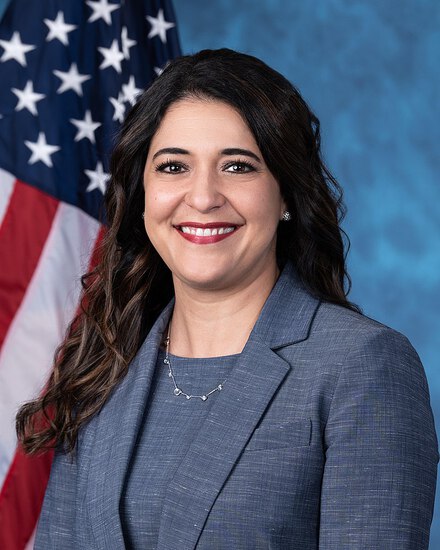
Rep. Stephanie I. Bice
Sponsored bills
Maddy summaryHR 662 amends the tax code to change how oil and gas companies calculate taxable income related to intangible drilling and development costs. It allows companies to disregard certain depreciation and depletion expenses recorded on their financial statements when computing taxable income, effectively reducing their tax burden on these specific costs. The bill directly affects oil and gas producers who use intangible drilling costs in their operations. The changes apply to taxable years beginning after December 31, 2025. This is a tax code adjustment, not a direct policy change for energy production.
Maddy summaryHJRES 28 proposes a constitutional amendment to permanently fix the number of justices on the U.S. Supreme Court at nine. This would require ratification by 38 state legislatures (three-fourths of states) within seven years to become part of the Constitution. The amendment directly affects the structure of the Supreme Court, which has had nine justices since 1869 but could otherwise be altered by future congressional action. It does not change current court operations or create new laws, but instead seeks to make the nine-justice composition a permanent constitutional requirement.
Supporting Accurate Views of Emergency Services Act of 2025 or the 911 SAVES Act This bill requires the Office of Management and Budget to categorize public safety telecommunicators as a protective service occupation under the Standard Occupational Classification system no later than 30 days after the enactment of this bill. (The Standard Occupational Classification system is a federal statistical standard used by federal agencies to classify workers into occupational categories for the purpose of collecting, calculating, or disseminating data.)
Maddy summaryHR 587 removes the lesser prairie-chicken (all populations) from the federal lists of threatened and endangered species under the Endangered Species Act. It also permanently amends the law to prevent the U.S. Fish and Wildlife Service from ever listing the bird as threatened or endangered in the future. This bill directly affects the lesser prairie-chicken by ending its current legal protections under the Endangered Species Act. The key mechanism is a specific exclusion added to the Act’s listing authority, blocking any future federal protection for this species.
Maddy summaryHRES 49 prohibits all House Members, Delegates, and Resident Commissioners from displaying or bringing foreign flags on the House floor during sessions. Exceptions allow lapel pins with foreign flags and flags shown as part of speeches or debates under House rules. The Sergeant-at-Arms enforces this rule, which applies to all visible foreign flags regardless of size, except for the specified exceptions. This is a procedural rule change affecting conduct on the House floor, not a policy on foreign relations.
Maddy summaryHR 465, the "Old Glory Only Act," requires all U.S. diplomatic and consular posts abroad to fly only the United States flag. The bill directs the Secretary of State to ensure no other flags are displayed over these government facilities. This is a procedural change affecting the physical display of flags at U.S. embassies and consulates worldwide, with no other policy provisions. It mandates a specific practice without altering other diplomatic protocols or affecting citizens or organizations.
Maddy summaryHR 404, the "Hearing Protection Act," reclassifies firearm silencers (devices that reduce gunfire noise) as firearms for federal tax and regulatory purposes. It imposes a 10% federal tax on silencers, requires the destruction of all existing federal silencer registration records within one year, and preempts state laws that tax or regulate silencers. The bill clarifies that silencers are treated as firearms under federal law, including for licensing and marking requirements, and defines "firearm silencer" to include specific components. Note: The bill’s title is misleading - it addresses firearm silencer regulation, not hearing protection for people.
Maddy summaryHR 450, the FORCE Act, prevents the U.S. government from removing Cuba from the State Sponsors of Terrorism list. It requires the President to make a specific determination under the 1996 LIBERTAD Act before Cuba can be removed. The bill directly affects Cuba's international designation status and U.S. foreign policy actions toward the country. It does not change existing law but blocks any removal until the specified determination is made. The provision applies to both the President and the Secretary of State.
Maddy summaryHR 413, the CHILD Act of 2025, increases the annual tax benefit limit for dependent care assistance programs from $5,000 to $10,000 (with $2,500 to $5,000 for single filers) for taxpayers using employer-sponsored dependent care accounts. It adds automatic annual cost-of-living adjustments to these limits based on inflation, rounding increases to the nearest $50. The bill also removes an outdated provision (previously referenced as subparagraph (D)) from the tax code. These changes directly affect working parents and caregivers who use dependent care benefits, applying to tax years beginning after December 31, 2024.