

Maddy summaryHRES 412 is a non-binding House resolution congratulating Pope Leo XIV on his historic election as the 267th pope and the first American-born pope in the Catholic Church's 2,000-year history. The resolution recognizes his Chicago upbringing, missionary work in Peru, and commitment to humility and pastoral care, highlighting his significance for American Catholics. As a symbolic gesture with no legal effect, it expresses the House's support for his leadership without altering any policies or affecting any stakeholders.
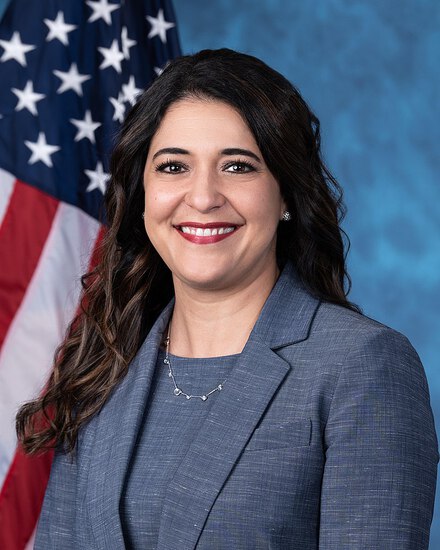
Rep. Stephanie I. Bice
Sponsored bills
Maddy summaryH.J.Res. 24, enacted May 9, 2025, disapproves a Department of Energy (DOE) rule establishing energy efficiency standards for walk-in coolers and freezers. This resolution, passed under the Congressional Review Act, blocks the rule (published December 23, 2024) from taking effect, meaning the DOE’s proposed standards will have no legal force. The action directly affects commercial food equipment manufacturers and businesses using such cooling systems by preventing the implementation of new energy conservation requirements.
Maddy summaryThis resolution blocks a Department of Energy rule that would have set new energy efficiency standards for gas-fired instant water heaters. It prevents the rule from taking effect, meaning appliance manufacturers would not have to meet the proposed efficiency requirements. The rule, submitted in December 2024, directly affected manufacturers of these water heaters and consumers purchasing them. Congress approved this disapproval through a joint resolution passed on May 9, 2025.
Maddy summaryThis bill creates a new system for recognizing and regulating individuals who help veterans file benefit claims. It requires the VA to provide veterans with information about free assistance options and maintain a public list of accredited representatives. The bill sets a maximum fee limit of $12,500 or 5 times the monthly benefit increase for representatives, and establishes penalties for unaccredited representatives who charge improper fees. The law aims to protect veterans from unscrupulous representatives while ensuring they have access to quality assistance with their benefit claims.
Maddy summaryHRES 381 designates May 5, 2025, as the "National Day of Awareness for Missing and Murdered Indigenous Women and Girls," calling for public commemoration of victims and solidarity with their families. The resolution urges the public and groups to honor both documented and undocumented cases while recommending the Department of Justice commission a new study on the crisis, citing that the last major study was published in 2016. It does not create new laws or funding but aims to raise awareness about ongoing issues, referencing recent data showing 5,614 Indigenous women and girls reported missing in 2024. This symbolic resolution directly affects Indigenous communities, families, and the public, aligning with prior federal efforts like Savanna’s Act and the Not Invisible Act.
Maddy summaryHRES 373 is a symbolic resolution expressing support for designating May as "Fallen Heroes Memorial Month" to honor U.S. military service members who died in service. It urges the President to issue an annual proclamation designating May as this commemorative month, recognizing over 1.3 million fallen service members and calling on Americans to reflect on their sacrifice. The resolution does not create new laws or requirements but formally requests a presidential proclamation to honor these veterans and their families. It directly affects the President (who would issue the proclamation) and the public (who are encouraged to participate in remembrance). This is a non-binding ceremonial gesture, consistent with existing Memorial Day observances.
Maddy summaryThis bill establishes a federal grant program to help states create or improve paid family leave programs that provide at least 6 weeks of paid leave for new parents (for birth or adoption). States with existing programs can apply for grants to fund implementation, improve access for low-income workers, and coordinate with other states through a new Interstate Paid Leave Action Network. The grants can be used for program design, technology, outreach, and administrative costs, with states required to meet specific benefit standards including income-based calculations (higher percentages for lower-income workers). The bill aims to increase access to paid family leave for workers across states by standardizing and coordinating state programs through the new interstate network.
Maddy summaryThe I-PLAN Act of 2025 establishes an Interstate Paid Leave Action Network (I-PLAN) to coordinate state paid family and medical leave programs across state lines. It requires participating states to develop a standardized interstate agreement covering key elements like benefit calculations, eligibility rules, and administrative processes to simplify compliance for employers and employees working in multiple states. The bill creates a national intermediary to support I-PLAN activities, including developing technology systems for processing cross-state leave claims and producing annual reports comparing state programs. States with existing paid leave programs can receive federal grants to help implement the agreement and cover administrative costs, with funding authorized for fiscal years 2026-2028. This legislation directly affects states, employers operating across state lines, and employees who work in multiple states.
Maddy summaryHR 3044, the "No Vaccine Mandates in Higher Education Act," prohibits federal funding from being provided to colleges and universities that require students or staff to receive a COVID-19 vaccine for enrollment, employment, or access to services. This directly affects institutions of higher education receiving federal funds, such as those participating in student aid programs. The bill's key mechanism is withholding federal funds from any institution enforcing such vaccine mandates, as defined under the Higher Education Act of 1965. The law focuses solely on vaccine requirements, not other health or safety policies.
Maddy summaryThe TAKE IT DOWN Act makes it a crime to intentionally share intimate images or digital forgeries of people without their consent, with penalties of up to 2 years in prison for adults and 3 years for minors. It requires major online platforms to establish a 48-hour process for victims to request removal of such content, with platforms protected from liability when acting in good faith. The bill defines "digital forgery" as AI-generated content that appears authentic and applies to websites and apps primarily hosting user-generated content, excluding email services and broadband providers. The Federal Trade Commission will enforce these notice and takedown requirements. This legislation directly affects victims of nonconsensual intimate content, the platforms hosting such material, and individuals who distribute it.