

Asylum Abuse Reduction Act This bill places restrictions on aliens seeking asylum and contains provisions related to immigration enforcement. Under this bill, an asylum seeker who arrives at a U.S. land port of entry without entry documents may not be admitted unless an asylum officer at a U.S. embassy or consulate has interviewed the alien and has concluded that the alien (1) has been persecuted in the alien's country of nationality due to their race, religion, or other characteristics; (2) has a credible fear of persecution if they returned to that country; or (3) would be tortured by the government upon return to that country. (Currently, an alien arriving at a port of entry may apply for asylum and an immigration officer there typically will give the alien a credible fear interview.) Furthermore, an alien who traveled through a third country to enter the United States through the southern border shall be ineligible for asylum unless (1) the alien has applied for and been denied asylum or protection in that third country, (2) the alien was a victim of severe human trafficking, or (3) the third country is not party to certain international agreements relating to refugees. Each federal judicial district shall appoint at least one judge to issue arrest warrants for individuals violating orders to depart, upon a showing of probable cause. Under this bill, the Flores agreement (a lawsuit settlement which imposes various requirements relating to the treatment of alien minors detained for immigration-related purposes) shall not apply.
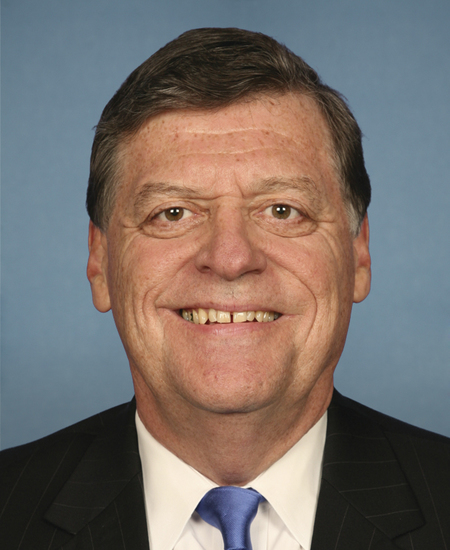
Rep. Tom Cole
Sponsored bills
Prohibiting IRS Financial Surveillance Act This bill prohibits the Department of the Treasury from requiring a financial institution to report the transfers into and out of a financial account. This prohibition does not apply to laws or regulations in effect on October 1, 2021.
Indian Programs Advance Appropriations Act of 2021 This bill authorizes advance appropriations for several covered appropriations accounts of (1) the Bureau of Indian Affairs and the Bureau of Indian Education within the Department of the Interior, and (2) the Indian Health Service within the Department of Health and Human Services. The advance appropriations provide new budget authority that first becomes available for the first fiscal year after the budget year. The covered accounts within the Bureau of Indian Affairs are (1) Operation of Indian Programs, (2) Contract Support Costs, (3) the Indian Guaranteed Loan Program, (4) Construction, and (5) Payments for Tribal Leases. The covered accounts within the Bureau of Indian Education are (1) Operation of Indian Education Programs, and (2) Education Construction. The covered accounts within the Indian Health Service are (1) Indian Health Services, (2) Contract Support Costs, (3) Payments for Tribal Leases, and (4) Indian Health Facilities. The bill also requires the President's budget and the supporting documents submitted to Congress to include detailed estimates related to the advance appropriations.
This resolution honors Gibraltar's contribution to advancing U.S. security interests in the Mediterranean region and expresses support for the people of Gibraltar.
Prince Jonah Kūhiō Kalaniana'ole Protecting Family Legacies Act This joint resolution consents to the Hawaii legislature's amendments to the Hawaiian Homes Commission Act. In 2017, the Hawaii legislature reduced the minimum Native Hawaiian blood quantum required for an individual to inherit a homestead lease under the act.
This concurrent resolution supports the designation of a national day of remembrance for the Native American children who died while attending an Indian boarding school in the United States.
Israel Relations Normalization Act of 2021 This bill requires the Department of State to take certain actions promoting the normalization of relations between Israel, Arab states, and other relevant countries and regions. Specifically, the State Department must develop a strategy on expanding and strengthening the Abraham Accords (the term used to refer collectively to agreements between Israel and the United Arab Emirates and between Israel and Bahrain marking the public normalization of relations between the two Arab countries and Israel). The strategy must include a description of how the U.S. government will encourage further normalization of relations with Israel. In addition, the State Department must report on options for U.S. international efforts to promote the strengthening of ties between Israel, Arab states, and other relevant countries and regions. The State Department must also report on the status of the normalization of relations with Israel, including information on (1) laws that punish individuals for people-to-people relations with Israelis (i.e., anti-normalization laws), and (2) evidence of steps taken by Arab governments toward permitting or encouraging normalized relations between their citizens or residents and Israeli citizens.
Eliminating a Quantifiably Unjust Application of the Law Act of 2021 or the EQUAL Act of 2021 This bill eliminates the federal sentencing disparity between drug offenses involving crack cocaine and powder cocaine. Currently, different threshold quantities of crack cocaine and powder cocaine (e.g., 28 grams of crack cocaine and 500 grams of powder cocaine) trigger the same statutory criminal penalties. This bill eliminates the lower quantity thresholds for crack cocaine offenses. Under the bill, the same threshold quantities of crack cocaine and powder cocaine trigger the same statutory criminal penalties. The change applies to future cases and cases pending on the date of enactment. With respect to past cases, the bill authorizes a sentencing court to impose a reduced sentence on a defendant who was convicted or sentenced for a specified crack cocaine offense before this bill's enactment. A defendant does not have to be present at the sentence reduction hearing. Finally, the bill prohibits the reduction of a sentence that was previously reduced.
2020 WHIP+ Reauthorization Act This bill expands disaster indemnity programs through which the Department of Agriculture provides payments to agricultural producers for crop and milk losses resulting from hurricanes, wildfires, and other qualifying natural disasters. In particular, the bill extends the Wildfire and Hurricane Indemnity Program Plus (WHIP+), the On-Farm Storage Loss Program, and the Milk Loss Program to make losses that occurred in the 2021 and 2022 calendar years eligible for payments. Under current law, these programs provide disaster payments to agricultural producers with crop and milk losses resulting from qualifying natural disasters that occurred in the 2018 and 2019 calendar years.
This bill reauthorizes through FY2026 certain activities under the Impact Aid Program. The program provides funding to local educational agencies that have lost property tax revenue due to the presence of tax-exempt federal property or to those that have experienced increased expenditures due to enrollment of federally connected children (e.g., children living on Indian lands or military bases).