Urban Indian Health Confer Act This bill requires the Department of Health and Human Services (HHS) to confer with urban Indian organizations regarding health care for American Indians and Alaska Natives living in urban areas. Currently, only the Indian Health Service (IHS) is required to confer with urban Indian organizations on matters relating to the Indian Health Care Improvement Act. The bill requires HHS to ensure that the IHS and other agencies and offices within HHS confer with urban Indian organizations on (1) matters relating to the Indian Health Care Improvement Act, and (2) other provisions of law relating to health care for American Indians and Alaska Natives.
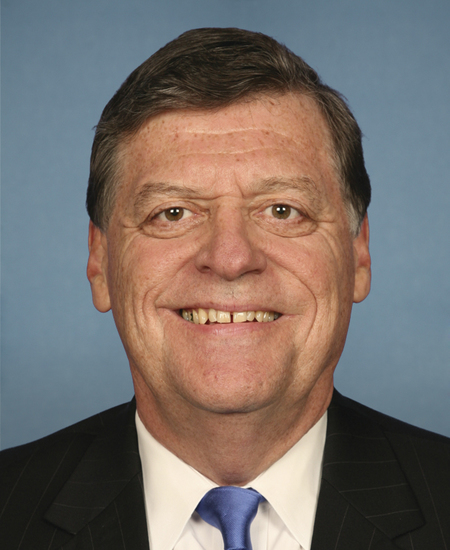
Rep. Tom Cole
Sponsored bills
Screening for Communities to Receive Early and Equitable Needed Services for Cancer Act or the SCREENS for Cancer Act of 2022 This bill reauthorizes through FY2027 and makes changes to the National Breast and Cervical Cancer Early Detection Program. This program provides funding to states for breast and cervical cancer screening, diagnostic, and treatment services for individuals who have low incomes, are uninsured, or otherwise lack access to such services.
This resolution celebrates the 50th anniversary of the Federal Pell Grant program and expresses support for the designation of National Federal Pell Grant Day.
Tribal Energy Investment Act of 2022 This bill authorizes the Department of Energy to provide direct loans to Indian tribes and tribal energy development organizations for energy development. These direct loans shall be made through the Federal Financing Bank.
This bill designates the facility of the United States Postal Service located at 1233 North Cedar Street in Owasso, Oklahoma, as the Technical Sergeant Marshal Roberts Post Office Building.
Recovering America’s Wildlife Act of 2022 This bill provides funding for the conservation or restoration of wildlife and plant species of greatest conservation need, including endangered or threatened species, and establishes related requirements. TITLE I--WILDLIFE CONSERVATION AND RESTORATION (Sec. 101) This title establishes and funds a subaccount of the Wildlife Conservation and Restoration Account, which was established under the Pittman-Robertson Wildlife Restoration Act. The subaccount must be used to support efforts of states, territories, or the District of Columbia to recover and manage wildlife and plant species of greatest conservation need. The Department of the Interior must use a portion of the funding from the subaccount for grants to state fish and wildlife departments, the District of Columbia fish and wildlife department, fish and wildlife departments of territories, nonprofit organizations, or regional associations of fish and wildlife departments. The grants must be used for innovative recovery efforts for species of greatest conservation need, species listed as endangered or threatened species, or the habitats of such species. Funding for the subaccount must supplement existing funds available to the states from funds distributed under the Dingell-Johnson Sport Fish Restoration Act and the Wildlife Conservation and Restoration Account. Recipients of the funding from the subaccount must match federal funds as specified by the title. The Government Accountability Office must study and report on the progress of states, territories, the District of Columbia, and Indian tribes in protecting species of greatest conservation need, endangered species, and threatened species. TITLE II--TRIBAL WILDLIFE CONSERVATION AND RESTORATION (Sec. 201) This title establishes and funds a Tribal Wildlife Conservation and Restoration Account to support Indian tribes' efforts to recover and manage wildlife and plant species of greatest conservation need. Indian tribes are not required to provide matching funds. TITLE III--ENDANGERED SPECIES RECOVERY AND HABITAT CONSERVATION LEGACY FUND (Sec. 301) This title establishes and funds through FY2026 the Endangered Species Recovery and Habitat Conservation Legacy Fund. The U.S. Fish and Wildlife Service must use the fund to (1) implement an Endangered Species Recovery Grant Program; (2) address its interagency consultation responsibilities under the Endangered Species Act of 1973; (3) work with nonfederal entities to conserve wildlife habitat and at-risk species, threatened or endangered species, or species proposed to be listed as threatened or endangered species; or (4) address the development and permitting of voluntary conservation agreements under such act. Amounts made available under the fund must supplement other federal amounts made available to carry out such activities. The President must annually submit to Congress, together with the annual budget of the United States, a list of threatened species and endangered species for which recovery plans will be developed or implemented with amounts from the Endangered Species Recovery and Habitat Conservation Legacy Fund. TITLE IV--REPORT (Sec. 401) Interior must also report on information concerning the amount of grants and contracts that were awarded or are allocated under this bill to Historically Black Colleges and Universities, Hispanic-serving educational institutions, tribally controlled colleges and universities, minority-serving educational institutions, minority-owned business enterprises, women-owned business enterprises, and community-based organizations that are principally administered by, operated by, or serving minority communities.

Promoting Cross-b order Energy Infrastructure Act This bill establishes a new process for approving the construction and operation of energy infrastructure across an international border of the United States and replaces the existing process established under specified executive orders. Specifically, this bill requires a person to obtain a certificate of crossing before constructing, connecting, operating, or maintaining a border-crossing facility for the import or export of oil, natural gas, or electricity across an international border. A certificate must be obtained from the Federal Energy Regulatory Commission (FERC) for a facility consisting of oil or natural gas pipelines or the Department of Energy (DOE) for an electric transmission facility. As a condition of issuing a certificate, DOE must require that an electric transmission facility be constructed, connected, operated, or maintained consistent with specified policies and standards. FERC and DOE must meet a deadline for issuing a certificate as set forth by this bill. The bill also requires FERC to meet a deadline for approving applications to import or export natural gas to or from Canada or Mexico.
Military Spouse Hiring Act This bill expands the Work Opportunity Tax Credit (WOTC) to include the hiring of a qualified military spouse. (The WOTC permits employers who hire individuals who are members of a targeted group such as qualified veterans, ex-felons, or long-term unemployment recipients to claim a tax credit equal to a portion of the wages paid to those individuals.) A qualified military spouse is any individual who is certified by the designated local agency as being (as of the hiring date) a spouse of a member of the Armed Forces.
Maddy summaryThis resolution (HRES 1143) is a symbolic recognition of the USS Oklahoma City (SSN-723), a Los Angeles-class attack submarine, and its crew for their service to the United States. It honors the submarine’s 34-year career, including global deployments, support during the 1995 Oklahoma City bombing aftermath, and its role as the first Navy submarine to adopt all-electronic navigation. The resolution has no policy or legal effect - it does not fund, change laws, or directly affect any individuals or entities beyond expressing congressional appreciation for the vessel’s service. It was introduced in May 2022, following the submarine’s decommissioning on May 20, 2022.
Native American Language Resource Center Act of 2021 This bill authorizes the Department of Education to make a grant to or enter into a contract with an eligible entity (e.g., an institution of higher education) to establish, operate, and staff a Native American language resource and training center. The center must serve as a resource to improve the capacity to teach and learn Native American languages.