

Chisholm National Historic Trail and Western National Historic Trail Designation Act This bill designates (1) the Chisholm National Historic Trail, and (2) the Western National Historic Trail. The Department of the Interior shall administer any portion of these trails that is located on nonfederal land only (1) with the voluntary consent of the owner of the nonfederal land, and (2) if the portion qualifies for certification as a component of the applicable trail. The approval by an owner of applicable nonfederal land of a certification agreement shall satisfy the voluntary consent requirement. A certification agreement may be terminated at any time. The establishment of these trails does not authorize any person to enter private property without the consent of the private property's owner. Interior may accept a donation of land or an interest in land for these trails, with specified exceptions. Land or an interest in land may not be acquired for these trails by eminent domain or condemnation.
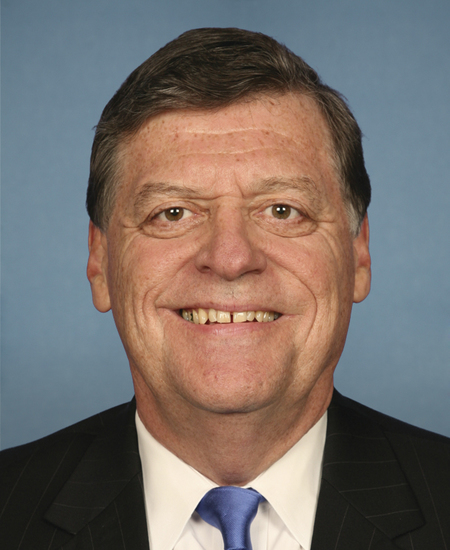
Rep. Tom Cole
Sponsored bills
This resolution recognizes the 100th anniversary of the 1921 Tulsa Race Massacre and expresses the hope that this is a moment for the country to see how racial relations have changed during the last 100 years, to celebrate improvements, and to reflect upon the areas where more work is needed.
Bridging Agency Data Gaps and Ensuring Safety for Native Communities Act or the BADGES for Native Communities Act This bill revises federal policies and procedures related to information sharing, reporting, and investigating cases of missing, unidentified, or murdered Indians. Among other elements, the bill requires the Department of Justice to (1) establish a grant program for specified entities (e.g., tribes) to implement changes to enhance their responses to missing person cases and death investigations of interest to tribes, and (2) work with the Department of Health and Human Services to ensure that federal training resources and culturally appropriate mental health and wellness programs are available to tribal and Bureau of Indian Affairs (BIA) law enforcement officers experiencing occupational stress. The Department of the Interior must establish a five-year demonstration program for the purpose of conducting or adjudicating personnel background investigations for applicants for law enforcement positions in the BIA. The bill also requires the Government Accountability Office to conduct specified studies, including a study on the evidence collection, handling, and processing procedures and practices of federal law enforcement agencies.
Protecting Pain-Capable Unborn Children from Late-Term Abortions Act This bill establishes a new criminal offense for performing or attempting to perform an abortion if the probable gestational age of the fetus is 15 weeks or more. A violator is subject to criminal penalties—a fine, a prison term of up to five years, or both. The bill provides exceptions for an abortion (1) that is necessary to save the life of the pregnant woman, or (2) when the pregnancy is the result of rape or incest. A physician who performs or attempts to perform an abortion under an exception must comply with specified requirements. A woman who undergoes a prohibited abortion may not be prosecuted for violating or conspiring to violate the provisions of this bill.
Law Enforcement De-Escalation Training Act of 2022 This bill directs the Department of Justice (DOJ) to develop scenario-based training curricula (or identify existing curricula) that includes topics such as alternatives to the use of force, de-escalation tactics, and safely responding to an individual experiencing a mental, behavioral health, or suicidal crisis. The bill also directs DOJ to make grants to states for costs associated with providing the training to law enforcement officers or mental health professionals.
American Confidence in Elections Act or the ACE Act This bill addresses election administration and security, campaign finance, and other related provisions. Among other provisions, the bill reduces certain election assistance payments for states and local jurisdictions that allow noncitizens to vote in state and local elections, establishes certain requirements related to election and political mail, prohibits foreign nationals from making contributions or donations in connection with state or local ballot initiatives or referenda, repeals certain limits on coordinated party expenditures and aggregate contributions by individuals, terminates the Presidential Election Campaign Fund and requires remaining funds to be transferred to the 10-Year Pediatric Research Initiative Fund, and prohibits the use of federal funds to establish a Disinformation Governance Board.
Parity for Tribal Law Enforcement Act This bill treats certain tribal law enforcement officers as federal law enforcement officers under specified circumstances. Specifically, the bill authorizes the law enforcement officers of any Indian tribe that has contracted or compacted any or all federal law enforcement functions through the Indian Self-Determination and Education Assistance Act to enforce federal law within the tribe's jurisdiction if those officers meet certain qualifications. These qualifications include completing training and passing an adjudicated background investigation. Further, the bill deems a tribal law enforcement officer who is acting under an authorized contract or compact as a federal law enforcement officer for the purposes of certain federal laws, including for injury and death, retirement, and pension benefits. The Department of the Interior must (1) develop procedures for credentialing tribal officers to confirm these officers meet minimum certification standards and training requirements for Indian country peace officers, and (2) promulgate guidance to implement this bill. The bill also requires the Department of Justice to coordinate and provide oversight for its functions and programs to ensure a coordinated approach for public safety in Indian communities.
Supporting Opportunities to Build Everyday Responsibility Act of 2022 or the SOBER Act of 2022 This bill directs the Department of Justice to establish a grant program to provide funding for 24-7 sobriety programs. It also directs the National Institute of Justice to evaluate the policies and procedures used by grant recipients to reduce crime, recidivism, and incarceration attributed to use of alcohol or controlled substances.
Secure Every School and Protect Our Nation’s Children Act or the STOP II Act This bill reauthorizes and supports various grants to enhance school safety and security initiatives. It also provides statutory authority for the federal clearinghouse of school safety resources. (The clearinghouse identifies and publishes best practices and recommendations for school safety for use by state and local educational and law enforcement agencies, institutions of higher education, health professionals, and the public.)
No User Fees for Gun Owners Act This bill prohibits a state or local government from imposing any insurance requirement, tax, user fee, or similar charge as a condition of the manufacture importation, acquisition, transfer, or continued ownership of a firearm or ammunition, with the exception of a proportionate sales tax. The bill imposes the same prohibition under the Internal Revenue Code for firearms, pistols, or revolvers, but allows for the assessment of a proportionate sales tax.