

Maddy summaryHRES 1537 is a non-binding House resolution condemning Hamas' October 7, 2023, attacks on Israel, which killed over 1,200 people and took 251 hostages, including 7 Americans still held captive. It calls on Hamas to immediately surrender, cease attacks, and release all hostages unconditionally, while reaffirming Israel's right to self-defense. The resolution also urges international organizations to condemn Hamas' actions and address the global surge in antisemitism following the attacks. As a symbolic statement, it does not create new laws or alter policy but expresses congressional position. The bill specifically references the ongoing captivity of seven U.S. citizens: Edan Alexander, Itay Chen, Sagui Dekel-Chen, Gadi Haggai, Judith Weinstein Haggai, Omer Neutra, and Keith Siegel.
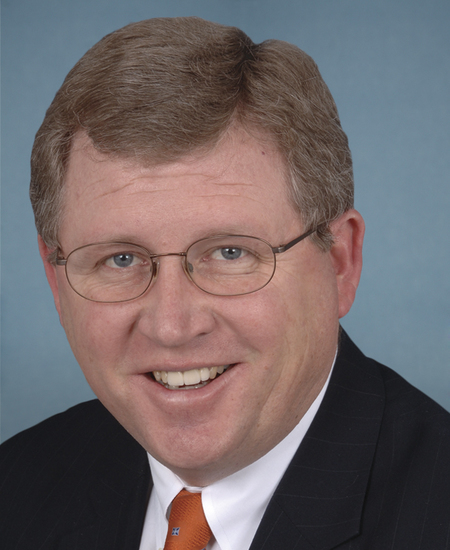
Rep. Frank D. Lucas
Sponsored bills
Maddy summaryHR 9633 creates two new offices: the Strategic Hub for Innovation and Financial Technology (FinHub) within the Securities and Exchange Commission (SEC) and LabCFTC within the Commodity Futures Trading Commission (CFTC). These offices will advise regulators on financial technology, provide guidance to fintech companies, and coordinate the agencies' responses to emerging tech. Both hubs must report annually to Congress on meetings with industry participants, recommendations for regulatory changes, and efforts to improve agency services. The bill directly affects SEC and CFTC staff, financial technology companies seeking regulatory clarity, and Congress through mandated transparency reports.
Maddy summaryHRES 1517 is a symbolic resolution expressing the U.S. House of Representatives' support for designating October 7-12, 2024, as "National 4-H Week." It does not create new laws or policies but formally recognizes 4-H, the nation’s largest youth development program, which engages nearly 6 million young people through hands-on learning in health, science, and leadership. The resolution highlights 4-H’s role in developing youth leadership via its network of volunteers, land-grant universities, and the Department of Agriculture. It has no direct impact on any specific group or program, as it only serves as a formal acknowledgment of the organization’s work.
Maddy summaryThe Next Generation Pipelines Research and Development Act creates a new demonstration initiative to fund research on advanced pipeline technologies. It authorizes $45 million for fiscal year 2024 (increasing to $50 million annually through 2028) for competitive grants to eligible entities including universities, research organizations, and private companies. The program will focus on developing technologies for leak detection, novel pipeline materials, sensor systems, computational modeling, and cybersecurity to improve pipeline safety and efficiency. The initiative requires coordination with the Department of Transportation and National Institute of Standards and Technology, and will be administered through a National Pipeline Modernization Center.
Maddy summaryThe NASA Reauthorization Act of 2024 authorizes $25.2 billion in funding for NASA in fiscal year 2025, with specific allocations for exploration, space operations, technology, science, and education. The bill advances the Artemis program for lunar exploration by requiring NASA to partner with U.S. private companies for human lunar landing capabilities while ensuring these companies meet U.S. content requirements. It includes provisions for maintaining the International Space Station through 2031, developing commercial low-Earth orbit capabilities, and continuing Earth science and planetary research. The act requires NASA to submit regular reports on program implementation, cost management, and commercial partnerships to ensure transparency and accountability in the use of federal funds.
Maddy summaryThis bill, officially titled the GUARDRAIL Act of 2023, would require the Securities and Exchange Commission (SEC) to ensure public companies only disclose information that's material to investment decisions, rather than all information. It mandates the SEC to maintain a list of non-material disclosure requirements with explanations for why they're required, and creates a new Public Company Advisory Committee composed of business leaders to advise the SEC on disclosure rules. The bill also directs the SEC to study how European sustainability reporting directives might impact U.S. companies, consumers, and the economy. These changes would primarily affect public companies that file with the SEC, the SEC itself, and potentially investors who rely on disclosure information.
Maddy summaryHJRES 144 is a congressional disapproval resolution targeting a specific rule issued by the Bureau of Alcohol, Tobacco, Firearms, and Explosives (ATF) on April 19, 2024. The resolution seeks to block the ATF's rule that redefined the term "engaged in the business" for firearm dealers, which would have affected how federal licensing requirements apply to certain sellers. If enacted, this resolution would nullify the rule, preventing it from taking effect under procedures in Title 5 of the U.S. Code. The bill directly impacts firearm dealers operating under the current regulatory framework and the ATF's enforcement authority.
Maddy summaryHR 6319 (the 911 SAVES Act of 2023) requires the Office of Management and Budget to reclassify public safety telecommunicators as "Protective Service Occupations" within 30 days of enactment. This change corrects their current misclassification in the federal Standard Occupational Classification (SOC) system, which is used for statistical data on jobs. The bill directly affects how these professionals - critical in emergency calls involving missing children, active threats, and officer safety - are officially categorized in government workforce data. It does not create new benefits or funding but aims to better recognize their lifesaving role through accurate federal job classification.
Maddy summaryThis bill (HJRES 163) is a congressional disapproval resolution targeting an Environmental Protection Agency (EPA) rule finalized on May 9, 2024. The EPA rule established new emissions standards for greenhouse gases from fossil fuel power plants (both new and existing) and repealed a previous rule called the Affordable Clean Energy Rule. The resolution would block this EPA rule from taking effect by invoking the Congressional Review Act (Chapter 8 of Title 5, U.S. Code). If passed, it would prevent the EPA rule from being enforced, directly affecting fossil fuel power plant operators and the EPA’s regulatory authority over emissions.
Maddy summaryHR 9632, the CASH Act, requires factoring providers to give small businesses clear written disclosures before entering into factoring agreements for transactions under $500,000. These disclosures must detail fees, reserve amounts, payment terms, and include a concrete example (e.g., for a $10,000 invoice) showing how payments are calculated. The bill directly affects small businesses entering such agreements and prevents states from adding extra disclosure requirements. It aims to increase transparency in factoring deals, where businesses sell unpaid invoices for immediate cash, by standardizing required information.