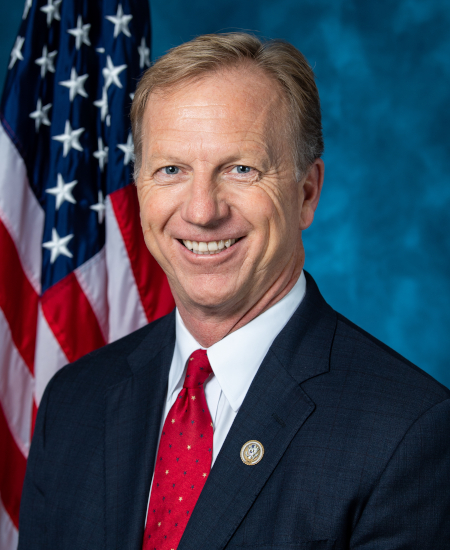
Photo of Kevin Hern
R United States House · District 1 · Oklahoma

Rep. Kevin Hern

Compare
Total votes
2,837
all sessions
Attendance
98%
48 missed
Near the chamber average
With party
92%
of cast votes
Near the chamber average
Bipartisan score
4%
crosses aisle rarely
Near the chamber average
Sponsored
531
bills & resolutions
Lower than 91% of chamber peers
Committees
3
assignments
531 bills and resolutions

Sponsored bills

Total
531
Primary
55
Co-sponsor
476
This page
531
matching current filters
Primary HR 9060
In committee · United States House · Lead sponsor
Precious Metals Parity Act

Maddy summaryThe Precious Metals Parity Act amends tax rules to treat precious metals the same way as foreign currencies for regulated investment companies. Specifically, it updates the Internal Revenue Code to include gold, silver, platinum, and palladium bullion when calculating how these companies report income. This change ensures that investment funds holding these specific metals are taxed consistently with those holding foreign currency assets. The provision applies to taxable years starting after the law is enacted.

In committee May 29, 2026 0 co-sponsors
Co-sponsor HR 3164
In committee · United States House · Co-sponsor
Ensuring Community Access to Pharmacist Services Act

Maddy summaryThis bill would add pharmacist services to Medicare Part B coverage for beneficiaries, specifically covering pharmacist-led testing and treatment for illnesses like flu, COVID-19, or strep throat during public health emergencies. It defines covered services as those performed under state law, often requiring collaboration with a physician, and sets payment at 80% of the lesser of the actual charge or 85% of physician payment rates. Pharmacists would be prohibited from balance billing for these services, ensuring Medicare beneficiaries pay only their standard copayment. The changes would take effect January 1, 2026.

In committee May 21, 2026 1 co-sponsor
Co-sponsor HR 8891
In committee · United States House · Co-sponsor
Rural MOMS Act of 2026

Maddy summaryThe Rural MOMS Act of 2026 modifies how Medicare counts hospital beds, specifically excluding labor and delivery rooms from the total number of acute care inpatient beds used to determine if a facility qualifies as a Critical Access Hospital. This change directly affects rural hospitals that provide maternity services by altering the financial thresholds required to maintain their special status under the Medicare program. By removing delivery rooms from the bed count calculation, the bill aims to prevent these facilities from losing their designation solely because they offer childbirth care. The legislation does not change how these hospitals are funded or operated, but rather adjusts the metric used to evaluate their eligibility for critical access benefits.

In committee May 19, 2026 1 co-sponsor
Co-sponsor HR 7343
In committee · United States House · Co-sponsor
Foster Youth Workforce Opportunity Act

Maddy summaryThis bill expands education and job training support for youth who have been in foster care since age 14 or older. It allows funding for apprenticeships, GED programs, and remedial education to help them earn diplomas or enter postsecondary training. The changes lower the eligibility age from 16 to 14 and extend participation time for remedial education (up to 6 years). It directly affects foster youth transitioning to adulthood by broadening access to workforce preparation programs.

In committee May 11, 2026 1 co-sponsor
Co-sponsor HRES 1156
Passed · United States House · Co-sponsor
Expressing support for tax policies that support working families.

Maddy summaryThis resolution expresses support for the Working Families Tax Cuts, a law already enacted in July 2025 that provides various tax benefits to American taxpayers. The bill directly affects individuals and families by recognizing specific provisions that reduce tax liability, including expanded child tax credits, increased standard deductions, and tax relief for tipped workers and overtime pay. Key provisions include making a four-person household earning under $73,000 generally face zero federal income tax, increasing the child tax credit to $2,200 per child, and allowing 529 accounts to cover K-12 and trade school expenses. The resolution also acknowledges tax relief for seniors, auto loan interest deductions for American-made vehicles, and expanded health savings account access. This is a procedural measure that formally acknowledges existing tax policies rather than creating new legislation.

Passed Apr 16, 2026 1 co-sponsor
Co-sponsor HR 8101
In committee · United States House · Co-sponsor
Ensuring Better Interest Treatment and Deductibility Act (EBITDA)

Maddy summaryThis bill, titled the Ensuring Better Interest Treatment and Deductibility Act, would change how businesses calculate the limit on interest expenses they can deduct on their taxes. It directly affects corporations and other businesses that pay interest on loans by modifying the rules for determining adjusted taxable income. The key provision removes a specific clause from the tax code that currently limits how much interest can be deducted based on a company's earnings, effectively allowing more interest to be treated as a deductible business expense. These changes would apply to tax years starting after December 31, 2025, meaning businesses would need to adjust their financial planning for future tax filings.

In committee Mar 26, 2026 1 co-sponsor
Co-sponsor HRES 971
In committee · United States House · Co-sponsor
Condemning the coercive actions of the People's Republic of China against Japan in response to statements regarding Taiwan and reaffirming the United States commitment to its allies in the Indo-Pacific region.

Maddy summaryHRES 971 is a non-binding resolution condemning China's economic and military actions against Japan following Japanese officials' comments about Taiwan. It specifically addresses China's travel advisory (causing $1.2 billion in tourism losses), a ban on Japanese seafood imports, and military drills near Japanese territory. The resolution reaffirms U.S. support for the U.S.-Japan alliance under their mutual security treaty and calls on China to cease coercion. It emphasizes U.S. commitment to upholding a "free and open Indo-Pacific" based on international law. This resolution directly affects Japan's economy and security, with no new legal obligations but serving as a formal U.S. policy statement.

In committee Mar 26, 2026 1 co-sponsor
Co-sponsor HR 8034
In committee · United States House · Co-sponsor
Protecting America’s Small Oil and Gas Producers and Rural Jobs Act

Maddy summaryThis bill modifies tax rules to provide financial incentives for small oil and gas producers operating in marginal or low-production areas. It changes how the percentage depletion tax deduction is calculated, allowing a higher deduction rate based on oil prices and adjusting that rate annually using an inflation measure called the Producer Price Index. The legislation also removes certain income limits that restrict how much of this tax benefit producers can claim and doubles the minimum oil production threshold from 1,000 to 2,000 barrels to qualify for the deduction. These tax changes would take effect for taxable years beginning after December 31, 2026, primarily affecting independent oil and gas companies and rural communities dependent on these industries.

In committee Mar 20, 2026 1 co-sponsor
Co-sponsor HR 5688
In committee · United States House · Co-sponsor
Non-Domiciled CDL Integrity Act

Maddy summaryHR 5688, the Non-Domiciled CDL Integrity Act, changes rules for issuing commercial driver's licenses (CDLs) to people who don't live in the state where the license is issued. It allows states to issue CDLs to foreign nationals with lawful U.S. immigration status and work-related visas (valid for up to one year or until their stay ends), requiring states to verify status before issuing and keep records for two years. For residents of U.S. territories like Puerto Rico, it requires proof of U.S. citizenship or permanent residency before issuing CDLs, with similar verification and record-keeping rules. The bill directly affects commercial drivers from foreign countries and U.S. territories seeking CDLs in states where they are not residents.

In committee Mar 18, 2026 1 co-sponsor
Co-sponsor HR 1422
Passed · United States House · Co-sponsor
Enhanced Iran Sanctions Act of 2025

Enhanced Iran Sanctions Act of 2025 This bill imposes sanctions on certain foreign persons (individuals and entities) that are involved in Iran's petroleum sector as well as certain associated persons. The bill also requires or authorizes actions to facilitate the enforcement of sanctions on Iran. Specifically, the bill requires the President to impose visa- and property-blocking sanctions on any foreign person that, after the bill's enactment, knowingly engages in any transaction related to the processing, export, or sale of oil, condensates, gas, liquefied natural gas, or other petrochemical products in whole or in part from Iran. The President must also impose sanctions on certain foreign persons associated with a sanctioned individual or entity. For example, the President must sanction the subsidiaries and corporate officers of a sanctioned business. The bill provides certain exceptions to these sanctions, including specifying that sanctions do not apply to the importation of goods or to conducting or facilitating transactions for humanitarian assistance. The Department of State must establish an interagency working group that shall seek to establish a multilateral contact group to coordinate international efforts to enforce sanctions on Iran. The bill expands the State Department rewards program to authorize a reward payment to any individual who furnishes information leading to the identification of a person (1) subject to sanctions under this bill, or (2) that has attempted or is attempting to evade sanctions under this bill.


Passed Mar 17, 2026 1 co-sponsor
Showing 11 to 20 of 531 bills