

Maddy summaryHR 4237, the Ensuring Sound Guidance Act, requires investment advisors and retirement plan fiduciaries to prioritize financial factors (like investment returns and costs) when making decisions for clients or plan participants. It mandates that non-financial factors (such as environmental or social goals) can only be considered if the client provides written consent, and advisors must then disclose the expected and actual financial impact over a three-year period. The bill amends the Investment Advisers Act and ERISA to enforce this standard, with changes taking effect 12 months after enactment. Additional provisions direct studies on state pension plans, climate disclosures in municipal bonds, and rules preventing payments to officials for government business.
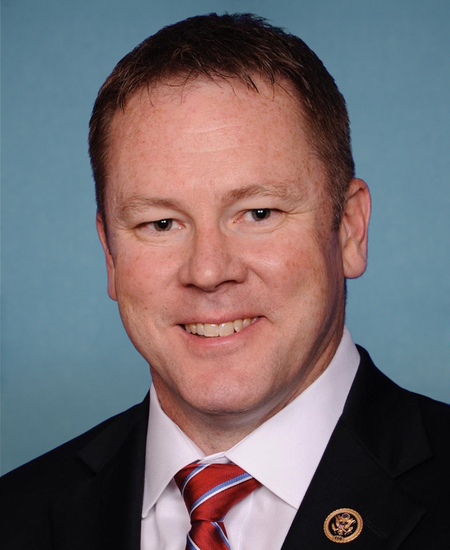
Rep. Warren Davidson
Sponsored bills
Maddy summaryHR 277 would require Congress to approve major federal regulations before they take effect. Major rules are defined as those with significant economic impact ($100 million+ annually), major cost increases for consumers or industries, or significant adverse effects on competition, employment, or innovation. Agencies must submit detailed information about these rules to Congress, including cost-benefit analyses, before they can take effect. Congress would have 70 session days to approve the rule with a joint resolution; if they don't act within that timeframe, the rule would not take effect. This would increase congressional oversight of federal regulations and require more detailed information about proposed rules before they become law.
Maddy summaryHR 4107, the Civil Liberties Protection Act of 2023, creates a new Civil Liberties Protection Officer position within the Financial Crimes Enforcement Network (FinCEN) at the U.S. Treasury Department. This officer, appointed by the Treasury Secretary and reporting directly to them, is tasked with ensuring FinCEN’s activities protect civil liberties and privacy, overseeing compliance with privacy laws, reviewing complaints about potential abuses, and assessing privacy risks from FinCEN’s technology use. The bill requires the officer to conduct annual privacy impact assessments and report findings to the House Financial Services Committee and Senate Banking Committee. It also mandates that the Treasury Secretary keep these committees informed about FinCEN’s activities and promptly report any unlawful activity or corrective actions taken.
Maddy summaryThe Protecting Americans' Data From Foreign Surveillance Act of 2023 requires the Secretary of Commerce to establish controls on the export, reexport, and in-country transfer of certain personal data belonging to U.S. citizens and individuals in the U.S. The law mandates identifying sensitive data categories that could be exploited by foreign adversaries, setting thresholds (between 10,000 and 1,000,000 covered individuals) for when data transfers would require licensing, and creating lists of "restricted countries" where licenses would be required. It includes exceptions for encrypted data meeting specific standards, journalism activities, and personal data of the individual themselves. Companies handling this data must obtain licenses for transfers exceeding thresholds to restricted countries, with annual reporting requirements to Congress.
Maddy summaryHR 1525, the FAIR Act of 2023, reforms federal civil forfeiture laws to require all property seizures to go through a court process rather than allowing agencies to take property without judicial review. It raises the evidence standard from "preponderance of the evidence" to "clear and convincing evidence" for the government to prove forfeiture, and mandates courts to review cases within 7 days of seizure. The bill also requires courts to appoint attorneys for low-income individuals unable to afford legal representation and ensures property owners receive timely notice of their rights. These changes directly affect individuals whose property is seized in civil forfeiture cases, particularly those with limited financial means.
Maddy summaryHR 4035, the Protecting Small Business Information Act of 2023, requires the Treasury Secretary to coordinate the effective dates of all rules under the Corporate Transparency Act. It mandates that all final rules related to beneficial ownership reporting must take effect on the same date, delaying implementation until the Secretary certifies to Congress that all rules are issued and will align on a single effective date. This directly affects small businesses required to report beneficial ownership information under the Corporate Transparency Act. The bill’s key mechanism is creating a unified implementation timeline, preventing staggered rule deadlines that could complicate compliance for small entities. It does not change reporting requirements but ensures a synchronized rollout of the regulations.
Maddy summaryHR 4036, the Accountability through Confirmation Act, changes the appointment process for the Director of the Financial Crimes Enforcement Network (FinCEN). It requires the President to appoint the Director with Senate confirmation (instead of the Treasury Secretary), sets the Director's pay at Executive Schedule Level IV, and provides a transition period for the current Director until the new appointee is confirmed. This bill directly affects FinCEN leadership by shifting appointment authority to the President and Senate. The key change is the requirement for Senate confirmation of the FinCEN Director, altering the current process.
SEC Stabilization Act of 2023 This bill expands the composition of the Securities and Exchange Commission from five commissioners to six, extends the term of the commissioners from five years to six, and creates an executive director position. If appointing two commissioners whose terms end on the same date, the President is prohibited from appointing individuals from the same political party.
This resolution expresses support for keeping AM radios in cars. (Several car manufacturers announced plans to remove AM radio options from some or all of their models.)
Maddy summaryThis bill amends the definition of "accredited investor" under securities law to expand who qualifies. It adds four new categories: individuals with net worth over $1 million (excluding primary residence value), those with high income ($200,000 individually or $300,000 jointly), licensed financial professionals, and individuals with verified investment expertise. The bill requires the SEC to update Regulation D to reflect these changes, with the $1 million net worth threshold adjusted for inflation every five years. This directly affects investors seeking to participate in certain private securities offerings by lowering the accreditation barriers for qualified professionals and high-net-worth individuals.