

Maddy summaryHRES 1458 is a commemorative resolution designating September 16-20, 2024, as "Medical Research Week" to honor medical research contributions. It recognizes the National Institutes of Health (NIH)’s role in advancing treatments for diseases like cancer, Alzheimer’s, and heart disease, while highlighting how NIH funding supports over 400,000 jobs and $93 billion in economic activity. The resolution has no binding effect - it does not change laws, funding, or policies, but simply urges the House to support the designation and acknowledge medical research’s national impact. It directly affects public awareness, not specific individuals or entities, and serves only as a symbolic observance.
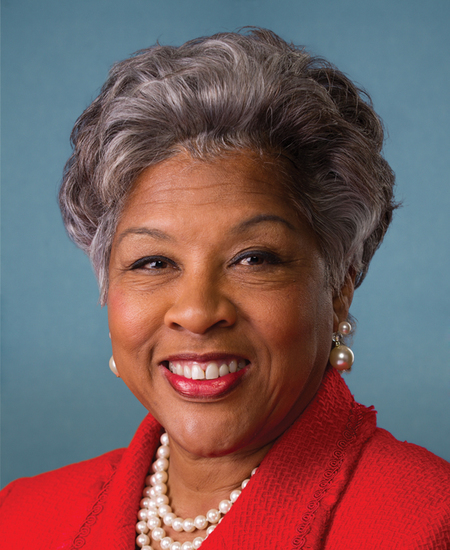
Rep. Joyce Beatty
Sponsored bills
Maddy summaryHR 6319 (the 911 SAVES Act of 2023) requires the Office of Management and Budget to reclassify public safety telecommunicators as "Protective Service Occupations" within 30 days of enactment. This change corrects their current misclassification in the federal Standard Occupational Classification (SOC) system, which is used for statistical data on jobs. The bill directly affects how these professionals - critical in emergency calls involving missing children, active threats, and officer safety - are officially categorized in government workforce data. It does not create new benefits or funding but aims to better recognize their lifesaving role through accurate federal job classification.
Maddy summaryThe Artsakh Revenue Recovery Act of 2024 would establish a U.S. fund to compensate Armenians displaced from Artsakh (Nagorno-Karabakh) after Azerbaijan's military assault in September 2023. It requires the U.S. government to seize Azerbaijani sovereign assets held in the United States if Azerbaijan fails to compensate displaced Armenians for lost revenue from businesses, property, and employment. The bill creates a claims process through which displaced Armenians can submit claims for compensation for revenue lost since September 2023, with the fund paying claims if Azerbaijan does not compensate within 90 days. The Artsakh Revenue Recovery Fund would operate for up to one year after a peace agreement between Azerbaijan and Armenia is signed or until all claims are paid.
Maddy summaryHRES 1461 is a symbolic resolution designating September 2024 as "National Voting Rights Month" to raise awareness about voting access. It encourages all U.S. citizens to uphold voting rights, supports existing voting rights legislation like the Freedom to Vote Act, and recommends schools teach about voting history and current restrictions. The resolution specifically aims to highlight efforts to address historical and ongoing barriers affecting historically marginalized groups, including Black, Latino, and disabled voters. It does not create new laws but promotes educational initiatives and media campaigns about registration deadlines and election access.
Maddy summaryHRES 1448 is a non-binding House resolution stating that the House believes every person has the right to emergency health care, including abortion care, during medical emergencies. It specifically addresses concerns that abortion restrictions force medical providers to choose between treating patients in life-threatening situations or risking criminal charges. The resolution highlights that such restrictions disproportionately harm Black, Indigenous, people of color, immigrants, low-income individuals, and LGBTQI+ patients. It does not change existing laws but expresses congressional support for ensuring access to emergency care without legal barriers. The resolution was introduced by multiple House members and referred to the Energy and Commerce Committee.
Maddy summaryThe National STEM Week Act designates an annual National STEM Week to promote science, technology, engineering, and math (STEM) education. It directs a federal committee to coordinate activities encouraging schools, families, and STEM industry partners to host events like student mentorship programs and home-based learning. The bill requires annual reports to Congress on participation rates and the impact of these activities on improving STEM engagement. It directly affects educational institutions (from elementary to college), students, families, and STEM businesses across all 50 states and territories.
Maddy summaryThis resolution expresses the House of Representatives' sense that the U.S. Postal Service should issue a commemorative stamp honoring Lt. Col. Charity Adams Earley. It specifically directs the Citizens' Stamp Advisory Committee (a USPS entity) to recommend such a stamp to the Postmaster General. The resolution highlights her historic role as the first Black officer in the Women’s Army Corps and her leadership of the 6888th Central Postal Directory Battalion during WWII, which cleared critical mail backlogs in Europe. This is a symbolic measure with no binding effect on USPS policy.
Maddy summaryThe NO BAN Act (HR 9244) prohibits U.S. immigration authorities from denying visas or entry based on national origin, religion, or sex. It amends immigration law to explicitly ban such discrimination in visa decisions and tightens restrictions on the president’s power to suspend entry of certain groups under Section 212(f). The bill requires specific evidence, narrow tailoring, time limits, and congressional notification for any entry restriction, while mandating public reports on visa denials and waivers. It directly affects nonimmigrant visa applicants (e.g., students, workers) and federal agencies administering immigration policy.
Maddy summaryThe Systemic Risk Authority Transparency Act (HR 4116) requires federal regulators to provide detailed public reports after a bank failure determination. It directly affects failing banks with federal insurance (like commercial banks) and their primary regulators (such as the Federal Reserve or FDIC). The bill mandates two key reports: first, the GAO must review and report on the failure's causes, management issues, regulatory gaps, and effects on incentives within 60 and 180 days; second, the primary regulator must submit a report disclosing confidential supervisory information, management failures, and recommendations for preventing future failures. These provisions aim to increase transparency around bank failures without changing existing regulatory authority.
Maddy summaryThis bill establishes minimum annual funding and staffing requirements for two key financial oversight entities. It mandates the Office of Financial Research (OFR) maintain at least $124.6 million in annual funding (adjusted yearly using government wage data) and 231 full-time equivalent staff. It also requires the Financial Stability Oversight Council (FSOC) to receive a minimum $15.3 million annually from the OFR for staffing and operations, with similar annual adjustments. The bill prohibits Congressional Appropriations committees from reviewing these funding levels, aiming to preserve the independence of these bodies.