

Maddy summaryThis bill requires mortgage lenders to consider consumer-permitted alternative data (like rent or bank transaction history) when evaluating loan applications, specifically for applicants who lack traditional credit history. It directly affects approximately 45 million "credit invisible" consumers - disproportionately low-income, younger, and people of color - who struggle to qualify for mortgages due to thin or nonexistent credit files. Lenders must treat this permissioned data equally with traditional credit reports, provide clear multilingual notices explaining the option, and include it in underwriting decisions. The law mandates these changes within 18 months of enactment, aiming to expand mortgage access through standardized, consumer-controlled data sharing.
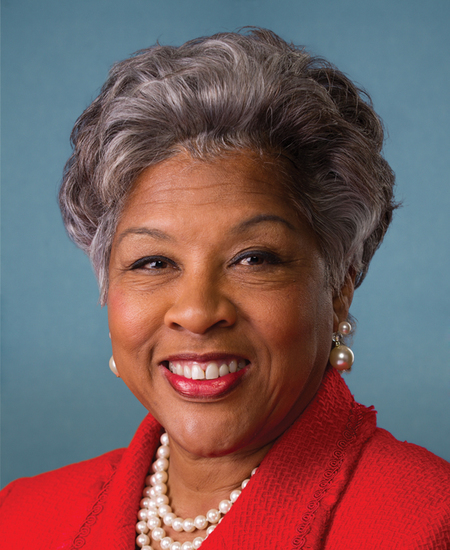
Rep. Joyce Beatty
Sponsored bills
Maddy summaryHR 6751 authorizes the U.S. Mint to produce commemorative coins honoring Roberto Clemente, a Hall of Fame baseball player and humanitarian, including 50,000 $5 gold coins, 400,000 $1 silver coins, and 750,000 half-dollar coins. The coins must feature Clemente's image and inscriptions like "Roberto Clemente" and "2027," with all sales including a surcharge ($5-$35 per coin) paid to the Roberto Clemente Foundation. The foundation, which supports youth sports, education, and disaster relief programs, will use these funds for its mission, while the U.S. Treasury must recover all production costs. The coins will be sold exclusively in 2027, with no net cost to the government.
Maddy summaryThe Diversity Data Accountability Act (HR 10283) amends the Dodd-Frank Act to require financial regulatory agencies to collect diversity data from banks and other institutions they oversee. This bill would directly affect large financial institutions subject to federal regulation, mandating them to provide diversity-related information to agency Directors. The key provision adds a new requirement for agencies to demand such data to fulfill their regulatory oversight duties. The bill does not specify exact diversity metrics (e.g., race, gender) but focuses on establishing a framework for collecting this information.
Maddy summaryThis bill (HR 5640) renames a specific United States Postal Service facility in Chesterland, Ohio, located at 12804 Chillicothe Road, as the "Sgt. Wolfgang Kyle Weninger Post Office Building." It directly affects the postal facility and all official U.S. government references to that location. The key provision updates all federal documents, maps, and records to use the new name instead of the previous designation. This is a commemorative measure honoring Sgt. Wolfgang Kyle Weninger with no policy changes or funding impacts.
Maddy summaryThe Working Dog Commemorative Coin Act (HR 807) directs the U.S. Treasury to mint three types of commemorative coins honoring working dogs' service: $5 gold coins, $1 silver coins, and half-dollar coins with specific weight and composition requirements. Each coin will carry a surcharge ($35 for $5 coins, $10 for $1 coins, $5 for half-dollars) that will be paid directly to America's VetDogs to support their programs providing service dogs for veterans, the disabled, and others. The coins will be issued in 2027 with designs reflecting working dogs' roles in military, detection, therapy, and assistance work. The legislation specifies that all surcharge revenue must fund America's VetDogs' operations without creating new government programs. This is a commemorative measure focused on honoring working dogs' contributions through coin sales, with all surcharge funds going to a specific nonprofit organization.
Maddy summaryThis bill amends a key housing finance law to increase funding for affordable housing. It raises the mandatory allocation rate for Fannie Mae and Freddie Mac from 4.2 to 10 basis points of their capital, requiring them to dedicate more capital to affordable housing programs. The change directly affects these government-sponsored enterprises, which manage most U.S. residential mortgage lending. This policy shift increases the minimum capital they must allocate toward affordable housing without altering their core operations.
Maddy summaryHR 10197, the "Analyzing Kinetic Impact Projectiles Against Americans Act," requires the U.S. Department of Health and Human Services to commission a study on the health impacts of kinetic impact projectiles (like rubber bullets, bean bag rounds, and sponge rounds) used by domestic law enforcement. The study, to be completed within one year, must analyze injury frequency/severity, demographic/racial impacts, usage patterns, and treatment efficacy. It mandates annual reports to Congress and the public, including recommendations for governmentwide changes, best practices, and oversight of federal funding for these projectiles. The bill authorizes $2 million for fiscal year 2025 to fund this study, focusing on data collection rather than immediate policy changes.
Maddy summaryThe Minority Diabetes Initiative Act (HR 10193) creates a federal grant program to improve diabetes care in minority communities. It authorizes the Secretary of Health and Human Services to fund public and nonprofit health providers - including community health centers, tribal health departments, and community organizations - to deliver specific diabetes services. These grants must cover routine care, prevention education, eye/foot care, and treatment for complications like kidney disease, while requiring services to be culturally appropriate and offered in accessible languages. The program is funded through annual appropriations for fiscal years 2025-2030. This bill directly affects minority communities with high diabetes rates by expanding access to comprehensive, culturally responsive care through eligible health providers.
Maddy summaryHR 10198, the Promoting Diverse Investment Advisers Act, requires the Federal Reserve Board to set goals in its investment management agreements that prioritize using diverse individual-owned and controlled investment advisers and brokers/dealers. Specifically, it mandates that the Fed aim to maximize the use of firms owned (at least 51% by women, minorities, or veterans) or managed by such groups as intermediaries in its programs. The bill defines "diverse individual-owned and controlled firm" and requires the Fed to report on these goals in its annual report. This policy directly affects the Federal Reserve's investment agreements and the investment management industry by establishing new diversity requirements for firms working with the Fed.
Maddy summaryHR 10196, the "Strengthening Exports Against China Act," amends the Export-Import Bank Act to prevent certain financing from counting toward the Bank's rate calculations. Specifically, it excludes financing that helps replace or compete with products from entities on U.S. sanctions lists (like the Bureau of Industry and Security's Entity List or Treasury's Specially Designated Nationals list). The bill targets financing provided to entities competing with sanctioned Chinese companies, excluding such transactions from the Bank's rate calculations under section 8(g)(1). This change directly affects the Export-Import Bank's financing oversight and entities seeking U.S. export financing tied to competition with sanctioned Chinese businesses.