

Maddy summaryHR 2837 establishes an Advisory Council under the Department of Health and Human Services to improve access to existing resources for victims of gun violence. The council, composed of federal agency heads and appointed victims/support professionals, will assess needs, identify effective programs, and compile a public resource hub with contact information for medical, financial, mental health, legal, and government support services. It requires a detailed report within 180 days of enactment and a follow-up report within two years, focusing on gaps in current assistance and coordination. The bill directly affects individuals defined as victims of gun violence (including those wounded, threatened, witnessing incidents, or related to victims) and aims to connect them to existing federal, state, and nonprofit resources without authorizing new funding. The council will sunset after five years.
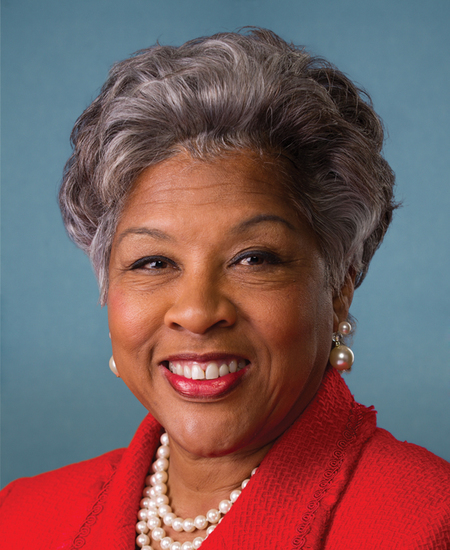
Rep. Joyce Beatty
Sponsored bills
Maddy summaryHR 2831, the Small Business Energy Loan Enhancement Act, doubles the maximum loan amounts for certain small business energy projects under the Small Business Investment Act of 1958, raising the cap from $5.5 million to $10 million for two specific loan categories. This directly affects small businesses seeking financing for energy-related investments, such as efficiency upgrades or renewable energy installations. The bill requires the Small Business Administration (SBA) to annually report to Congress on which industries and geographic areas receive these loans. These changes aim to increase access to capital for qualifying energy projects without altering eligibility criteria.
Maddy summaryHR 2859, the Child Care Nutrition Enhancement Act of 2025, adds a 10-cent per meal reimbursement to the Child and Adult Care Food Program (CACFP) for meals served to children in licensed childcare settings. This change directly affects childcare providers, including family and group day care homes and centers participating in CACFP, starting after the bill's enactment. The bill amends existing law to require this additional payment for every meal and supplement served under the program. The increase applies to all qualifying meals served after the effective date, without altering existing reimbursement tiers or eligibility rules.
Maddy summaryThe GOSAFE Act prohibits the sale, manufacture, transfer, and possession of gas-operated semi-automatic firearms and large capacity ammunition feeding devices (those holding more than 10 rounds). It defines gas-operated firearms as those that use gas from fired cartridges to cycle the action, requiring the Attorney General to publish a list of prohibited firearms within 180 days. The bill establishes a process for manufacturers to seek approval for new firearm designs before selling to civilians and creates a "Firearm Safety Trust Fund" to cover related costs. Certain firearms are exempt, including single-shot, muzzle-loading, and firearms with permanently fixed magazines holding 10 or fewer rounds. Violations could result in fines up to $5,000 or up to 12 months in prison.
Maddy summaryThe American Family Act (HR 2763) establishes a new refundable child tax credit that provides monthly payments to eligible families with children. It would pay $300 per month for each child under age 6 and $360 per month (120% of $300) for each child age 6 or older, with income limits of $150,000 for joint filers and $112,500 for other filers. The bill creates a "period of presumptive eligibility" to determine eligibility for monthly payments, allowing families to receive advance payments based on information from previous tax returns. This would directly affect millions of families with children who meet the income requirements, providing more consistent financial support throughout the year rather than an annual tax credit.
Maddy summaryHR 2799, the Closing the Bump Stock Loophole Act of 2025, prohibits the sale, possession, and modification of devices that increase the firing rate of semi-automatic firearms to mimic machine guns (commonly called "bump stocks"). It specifically bans manual, power-driven, or electronic devices designed to speed up firing, as well as modified firearms that achieve this effect. Owners of pre-existing modified firearms must register them within 120 days of the law's enactment, with exemptions for government entities and firearms already lawfully modified and registered before the bill passes. The bill does not restrict standard semi-automatic firearms or require registration of unmodified guns.
Maddy summaryThe Raise the Wage Act of 2025 gradually increases the federal minimum wage from $9.50 to $17.00 per hour over six years, with annual adjustments based on median wage growth. It raises the base wage for tipped workers from $6.00 to $17.00 per hour, phasing out their separate minimum wage structure by 2029. The bill also eliminates special minimum wage certificates for disabled workers after 2029, requiring employers to pay the standard minimum wage. These changes apply to most covered workers, including tipped employees and those under 20, with specific transition timelines for each group.
Maddy summaryThe Ending PUSHOUT Act of 2025 aims to address discriminatory school discipline practices that disproportionately push students of color, particularly Black, Brown, and Indigenous girls, out of school. It requires schools to collect and report detailed demographic data on discipline practices, including race, gender identity, disability status, and other factors. The bill provides grants to schools to implement trauma-informed alternatives to exclusionary discipline like suspensions and expulsions, while prohibiting certain practices such as out-of-school suspension for young students for minor offenses like grooming policy violations. It also establishes a joint task force with student, parent, and expert representation to study and recommend solutions to end school pushout of girls of color.
Maddy summaryThe Affordable Housing Credit Improvement Act of 2025 would reform the Low-Income Housing Credit program, which provides tax credits to developers of affordable housing. It would increase state allocations based on population with annual cost-of-living adjustments, modify tenant eligibility rules to allow higher income limits for some residents, and add protections for domestic violence victims in housing. The bill would simplify rules for rural and Native American housing projects, clarify credit eligibility requirements, and require greater transparency in program administration. These changes would directly affect developers, property owners, and low-income tenants in housing projects that receive LIHC tax credits.
Maddy summaryHR 2664 amends the Higher Education Act to allow historically Black colleges and universities (HBCUs) to use federal grant funds for specific arts, arts education, and cultural programs. The bill adds new provisions enabling HBCUs to provide financial aid to arts students, establish outreach programs for arts departments, offer comprehensive support services (like mentorship and career advising), maintain Black art collections, and create paid internships through partnerships with arts organizations. It also authorizes HBCUs to partner with the National Endowment for the Arts to carry out these activities. This amendment directly affects HBCUs by expanding allowable grant uses to address historical underfunding and strengthen arts education.