

Maddy summaryThe Protecting America's Workers Act (HR 3036) strengthens workplace safety protections for all employees, including public sector workers and voluntary emergency responders, by expanding coverage under the Occupational Safety and Health Act. Key provisions include enhanced whistleblower protections against retaliation for reporting safety concerns, mandatory employer reporting of work-related injuries and deaths, and increased civil penalties for violations (up to $70,000 per violation). The bill also establishes new rights for victims and families of workplace incidents, requiring employers to preserve evidence after fatalities, and creates procedures for faster resolution of safety complaints through improved inspection and enforcement mechanisms. These changes directly affect employers across all industries, employees reporting safety concerns, and families of workers injured or killed on the job.
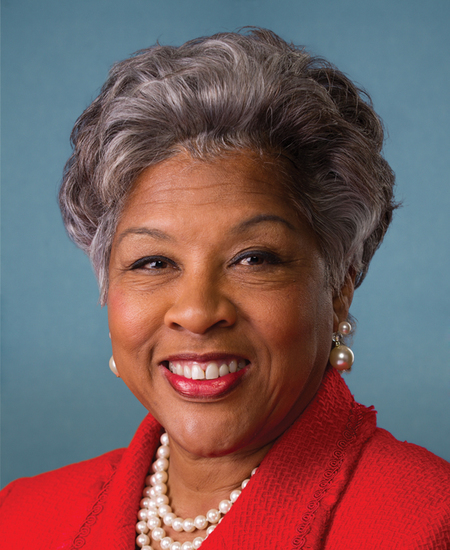
Rep. Joyce Beatty
Sponsored bills
Maddy summaryThe Hunger-Free Future Act of 2025 amends the SNAP program to require that any update to the thrifty food plan must not increase food insecurity. It mandates that adjustments to the diet cost must continue following existing rules while explicitly ensuring updates do not worsen food insecurity, defined as households lacking adequate food due to insufficient money or resources. This directly affects SNAP beneficiaries by setting a new standard for how the program's cost calculations are reviewed. The bill changes the procedural requirement for SNAP re-evaluations without altering benefit amounts or eligibility rules.
Maddy summaryHR 2948, the Safer Neighborhoods Gun Buyback Act of 2025, authorizes $360 million annually from 2025-2027 to fund gun buyback programs across the country. The bill creates a grant program for states, local governments, tribal governments, and eligible gun dealers to collect firearms from individuals using "smart prepaid cards" that cannot be used to purchase guns. Participants would pay 125% of a gun's market value (with possible increases for modified weapons) and must destroy all collected firearms and ammunition within 30 days. The program requires criminal background checks on all collected weapons and prohibits reselling any guns obtained through the initiative, with a new federal criminal provision making it illegal to use these cards for firearm transactions.
Maddy summaryHRES 332 is a resolution designating April 11-17, 2025, as "Black Maternal Health Week" to raise awareness about maternal health disparities affecting Black women and birthing people in the U.S. It references CDC data showing Black women are 2-3 times more likely to die from pregnancy-related causes than White women and that the U.S. has the highest maternal mortality rate among developed nations. The resolution emphasizes the need to address systemic inequities contributing to these outcomes without creating new laws or funding. It serves as a symbolic recognition to amplify community-led efforts, such as those by the Black Mamas Matter Alliance, rather than implementing policy changes.
Maddy summaryHR 2910, the Youth Workforce Readiness Act of 2025, establishes a federal grant program to fund community-based organizations in creating after-school and out-of-school-time workforce readiness programs for youth aged 6-18. The bill authorizes $100 million annually (2026-2030) to support activities like career pathway planning, paid work experiences (including apprenticeships), occupational skill training aligned with local job needs, and employer partnerships. It directly affects eligible youth - particularly those in underserved communities - and requires grantees to coordinate with schools, employers, and local workforce boards, while mandating youth councils to advise on program design. The program emphasizes measurable outcomes, including improved school attendance, skill development, and transitions to postsecondary education or employment.
Maddy summaryHRES 323 is a ceremonial resolution congratulating the Ohio State University football team on winning the 2025 College Football Playoff National Championship. It formally recognizes the team's victory, their 14-2 season record, and key players like quarterback Will Howard and linebacker Cody Simon. The resolution requests that the House present an official copy to Ohio State University President Walter Ted Carter Jr., athletics director Ross Bjork, and head coach Ryan Day. As a non-binding resolution, it has no policy impact or funding provisions - its sole purpose is to honor the team's achievement.
Maddy summaryThe Neighborhood Homes Investment Act creates a new tax credit for developers who build or rehabilitate affordable homes in distressed communities. The credit is calculated as the lesser of (1) the difference between development costs and sale price, (2) 40% of development costs, or (3) 32% of the national median home price. It applies only to homes sold to qualified homeowners with income up to 140% of area median income in designated "qualified census tracts" (areas with high poverty rates, low median home values, and low median family income). Developers must meet quality standards and repay the credit if the home is sold within 5 years of the affordable sale. This credit aims to address the "value gap" that prevents housing development in distressed communities by incentivizing affordable home construction and rehabilitation.
Maddy summaryThe Housing Supply Frameworks Act (HR 2840) directs the Department of Housing and Urban Development (HUD) to create federal guidelines and best practices for state and local governments to reform zoning rules that restrict housing supply. It focuses on practical changes like reducing parking minimums, allowing more housing types (e.g., duplexes, accessory dwellings), streamlining approval processes, and increasing density near transit - aiming to address a nationwide housing shortage affecting cost-burdened households. The guidelines, developed with public input from planners, developers, and community groups, are intended to help states and localities voluntarily adopt reforms that increase housing availability across income levels. States and localities that adopt these recommendations must report progress to Congress within five years, though the bill does not mandate specific changes or provide direct housing construction funds.
Maddy summaryHR 2884 establishes a National Center on Antiracism and Health within the CDC to address structural racism as a public health crisis. The center will research how racism impacts health outcomes, collect disaggregated data by race, ethnicity, and other factors, and develop antiracist interventions for public health systems. It requires CDC to create regional centers in minority communities, build a public data clearinghouse, and train health professionals on racism's health effects. The bill also directs the CDC to research police violence's public health impacts and develop prevention strategies, requiring annual reports to Congress on these efforts.
Maddy summaryThe Pursuing Equity in Mental Health Act (HR 2904) aims to reduce mental health disparities affecting racial and ethnic minority groups by modifying federal grant programs, requiring research on disparities, and funding targeted initiatives. It directs the Health and Human Services Secretary to prioritize grants for community health organizations serving minority populations, mandates a National Institutes of Health study on mental health research gaps in these groups, and establishes training programs for health professionals to address cultural competency in mental health care. The bill also requires a public outreach strategy developed with community input to reduce stigma and improve access to culturally appropriate care, alongside $20 million annually (2026-2031) for this effort. Additional funding includes $150 million yearly for NIH mental health research and $750 million yearly for the National Institute on Minority Health.