

Maddy summaryThe George Floyd Justice in Policing Act of 2025 would establish a National Police Misconduct Registry to track officer complaints, disciplinary actions, and misconduct records across all law enforcement agencies. It would require law enforcement agencies to implement body-worn camera programs with specific recording and retention policies, ban chokeholds and no-knock warrants in drug cases, and reform qualified immunity to make it easier to hold officers accountable for misconduct. The bill mandates comprehensive data collection on use of force incidents, requiring agencies to report detailed information about stops, searches, and force used, disaggregated by race, ethnicity, gender, and other demographics. These provisions would directly affect all Federal, State, and local law enforcement agencies that receive federal grant funding, with requirements for policy changes, training, and data reporting.
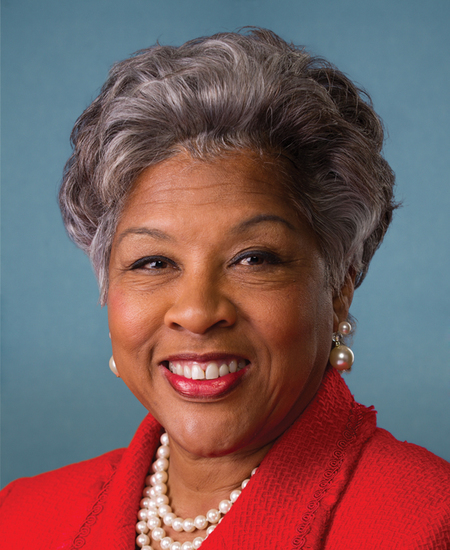
Rep. Joyce Beatty
Sponsored bills
Maddy summaryThe Azerbaijan Sanctions Review Act of 2025 requires the President to review within 180 days whether 53 specific Azerbaijani officials meet criteria for sanctions under the Global Magnitsky Human Rights Accountability Act. These officials include military commanders, security service heads, and judges implicated in human rights violations related to the Nagorno-Karabakh conflict. The review must include a detailed justification and determine if sanctions should be imposed on individuals linked to alleged war crimes, arbitrary detention, and torture of Armenians. The bill mandates this assessment without imposing new sanctions, focusing instead on evaluating existing legal authority for action.
Maddy summaryHR 5309, the Congressional Tribute to Constance Baker Motley Act of 2025, authorizes a posthumous Congressional gold medal for Constance Baker Motley, a pioneering civil rights attorney and judge. The bill directs the Treasury Secretary to strike the medal with her image and name, to be presented to her son, Joel W. Motley III, and her niece, Constance Royster. It also permits the sale of bronze duplicates at cost to cover expenses, with proceeds going to the U.S. Mint fund. This is a commemorative measure with no substantive policy changes, honoring Motley’s legacy as the first African-American woman appointed to a federal judgeship.
Maddy summaryThe RESULTS Act (HR 5269) changes how Medicare calculates payment rates for clinical diagnostic laboratory tests. It requires Medicare to collect data on private payor rates for widely available non-Advanced Diagnostic Laboratory Tests (non-ADLTs) from a qualifying independent claims data entity (a national nonprofit organization meeting specific criteria) rather than relying on data reported directly by laboratories. For tests where data is unavailable, the bill establishes default payment rates based on previous years' rates adjusted for inflation. The law also requires Medicare to publicly explain payment rates with supporting data, affecting Medicare beneficiaries, clinical laboratories, and private payors that provide services covered by Medicare.
Maddy summaryHR 1510, the Due Process Continuity of Care Act, expands Medicaid eligibility to cover individuals in jail or custody while awaiting trial or disposition of charges, at a state's option. This allows states to provide Medicaid benefits to this population without requiring them to be convicted first. The bill provides $50 million in planning grants to states to develop implementation plans, including assessing healthcare needs, recruiting providers (especially for behavioral health and substance use treatment), and creating electronic billing systems for correctional facilities and outpatient providers. States must also consult with stakeholders like jails, providers, and Medicaid advocates before finalizing their plans.
Maddy summaryHR 2808, the Homebuyers Privacy Protection Act, restricts how consumer reporting agencies share credit reports during mortgage applications. It prevents agencies from sending these reports to third parties unless the request is tied to a firm credit offer and the recipient has either the homebuyer’s explicit written consent or is directly involved in the mortgage (like the lender, loan servicer, or the homebuyer’s bank holding an active account). This directly affects homebuyers applying for residential mortgages by limiting unsolicited sharing of their credit information. The law amends the Fair Credit Reporting Act to strengthen privacy protections around mortgage-related credit data.
Maddy summaryThis bill requires most health insurance plans to cover HIV prevention services - including PrEP and PEP drugs, related lab tests, counseling, and monitoring - without cost-sharing (like copays or deductibles) or prior approval. It applies to private insurance, Medicare, Medicaid/CHIP, and federal employee health plans, directly affecting people who use HIV prevention medications. Key provisions mandate 100% coverage for FDA-approved HIV prevention drugs, eliminate cost-sharing for these services, and prohibit insurers from requiring preauthorization for them. The bill defines covered services to include all necessary components of HIV prevention care as outlined in current public health guidelines.
Maddy summaryHR 5126, the HIV Prevention Now Act, appropriates $2.165 billion for the CDC's National Center for HIV, Viral Hepatitis, STD, and Tuberculosis Prevention for fiscal year 2026. This funding is in addition to existing CDC appropriations and must be used exclusively by that specific center for its programs, with no transfer to other entities. The bill directly affects the CDC's public health operations by providing dedicated resources for prevention and treatment programs targeting HIV, viral hepatitis, STDs, and tuberculosis. It does not create new policies or alter eligibility but ensures sustained funding for existing prevention efforts at the federal level.
Maddy summaryHR 5115, the Protecting Older Americans Act of 2025, makes pre-dispute arbitration agreements unenforceable for age discrimination claims involving people aged 40 or older. The bill directly affects workers aged 40+ who face alleged age discrimination under federal, tribal, or state law, and their employers who might require arbitration. Key provisions require courts - not arbitrators - to decide if arbitration clauses apply in such cases, and prohibit enforcing these clauses for age discrimination disputes filed after the law’s enactment. This changes how age discrimination claims are resolved, ensuring affected individuals can pursue cases in court rather than mandatory arbitration.
Maddy summaryThis bill expands programs that employ service coordinators in federally assisted housing projects (like those under Section 202 of the Housing Act of 1959) to help residents access supportive services for housing stability, health, and aging in place. It requires housing owners to reserve $2,500 annually per project for coordinator training and establishes new grant programs with $225 million in annual funding (2026-2030) for hiring coordinators, prioritizing projects serving elderly/disabled residents or in rural/persistent poverty areas. Coordinators must meet training requirements and coordinate services without forcing residents to accept them. The bill also adds similar provisions for rural housing (Section 515) and public/Indian housing, with separate funding allocations.