

Intergenerational Financial Obligations Reform Act This bill requires the Congressional Budget Office, the Office of Management and Budget, and the Government Accountability Office to provide various reports that include a fiscal gap analysis and a generational accounting analysis. Under the bill, the fiscal gap generally refers to the sum of (1) the total amount of Treasury liabilities outstanding on the last day of the budget year, and (2) the discounted present value of the projected difference between federal spending and revenues during the period of the budget year and at least the next 75 fiscal years (excluding spending for net interest and principal payments on Treasury liabilities). A generational accounting analysis addresses the fiscal impact that projected federal spending and tax burdens will have on various generations of individuals.
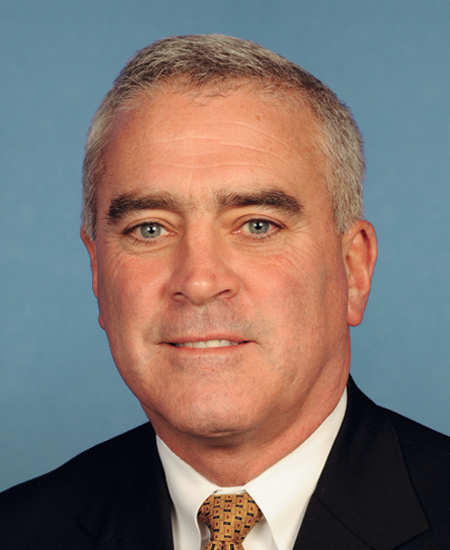
Rep. Brad R. Wenstrup
Sponsored bills
Patient Access to ESRD New Innovative Devices Act This bill requires the Centers for Medicare & Medicaid Services (CMS) to provide a certain payment adjustment under the Medicare end-stage renal disease (ESRD) prospective payment system. Specifically, the CMS must provide for a three-year temporary add-on payment adjustment for new medical devices used to diagnose, treat, or manage ESRD. (CMS regulations currently provide a two-year temporary add-on payment adjustment.)
Chinese Military and Surveillance Company Sanctions Act of 2021 This bill requires the President to impose property-blocking sanctions on Communist Chinese military companies upon certain findings. Specifically, if the President determines that imposing sanctions on a foreign person would address certain threats related to the financing of Chinese Communist military companies, the President must impose sanctions on that person provided that the person is identified (1) as a Communist Chinese military company in a specified report to Congress or in a November 17, 2020, executive order, or (2) by the Department of the Treasury as having engaged in transactions in the publicly traded securities (or derivatives) of a Communist Chinese military company.
This bill requires the Internal Revenue Service (IRS) to report to Congress on projections of the estimated tax gap (i.e., the difference between tax liabilities owed to the IRS and those liabilities that the IRS actually collects). The IRS may use artificial intelligence and related data analysis tools to calculate a tax gap projection. The bill also requires the Joint Committee on Taxation to issue periodic reports to the congressional tax committees on the tax gap projection. The bill restricts IRS funding to FY2021 levels for audits and enforcement until it publishes an updated tax gap projection. Funding is also restricted for certain purposes, including (1) targeting U.S. citizens who exercise their First Amendment rights, (2) targeting a group for regulatory scrutiny based on its ideological beliefs, and (3) auditing individual taxpayers with an adjusted gross income of less than $400,000. The bill directs the IRS to establish a fellowship program to recruit private sector tax experts to join the IRS to create and participate in the audit task force. The purposes of the tax force include performing audit case selection, educating IRS employees on emerging issues, auditing selected taxpayers, addressing offshore tax evasion, and identifying, mentoring, and training IRS junior employees with respect to audits.
Burn Pit Registry Expansion Act This bill expands the scope of the Airborne Hazards and Open Burn Pit Registry of the Department of Veterans Affairs by including burn pits located in Egypt and Syria under the definition of open burn pits . The registry allows certain veterans and service members to document their exposures and report health concerns related to exposure to toxic airborne chemicals and fumes caused by open burn pits (areas used for burning solid waste in open air without equipment) while serving in certain locations.
This bill prohibits smoking on the premises of any Veterans Health Administration facility. The bill defines smoking as the use of cigarettes, cigars, and pipes (i.e., the heating or combustion of tobacco), as well as the use of any electronic nicotine delivery system.
Afghanistan Withdrawal Oversight and Liability Act or the AWOL Act This bill prohibits using federal funds appropriated for FY2021 to provide support to the Taliban. The bill also requires reports and certifications related to Afghanistan. Specifically, no FY2021 funds may be used to (1) make payments or contributions of material support to the Taliban, or (2) provide relief from sanctions against the Taliban or its leaders. The bill requires the President to report to Congress on efforts to evacuate U.S. citizens and lawful permanent residents from Afghanistan. The President must also certify to Congress when all such individuals seeking evacuation from Afghanistan have been evacuated. The Department of State must periodically report to Congress on any agreements between the United States and the Taliban. Within seven days of the United States reaching an agreement with the Taliban, the State Department must provide to Congress all materials relevant to that agreement. The bill also requires the Office of the Inspector General of the State Department to report to Congress about the State Department's compliance with legal requirements in connection to agreements with the Taliban. Specifically, the office must assess compliance with a law that requires the State Department to provide certain information to Congress when the United States enters certain international agreements. The Department of Defense must report to Congress concerning U.S. equipment, property, and classified material that was destroyed, surrendered, or abandoned in Afghanistan during a period starting from February 29, 2020.
Havana Syndrome Servicemember Support Act This bill requires the Department of Defense (DOD) to establish a cross-functional team to address national security challenges posed by anomalous health incidents and to ensure that individuals affected by such incidents receive timely and comprehensive health care. DOD must brief Congress on the progress of establishing the team and the progress the team has made in carrying out its duties. Additionally, DOD must regularly brief Congress regarding DOD's efforts related to anomalous health incidents.
Strengthening Innovation in Medicare and Medicaid Act This bill makes a series of changes to requirements for the Center for Medicare and Medicaid Innovation, including additional testing parameters, procedural steps, and reporting requirements for models.
Harlem Hellfighters Congressional Gold Medal Act This bill provides for the award of a Congressional Gold Medal to the 369th Infantry Regiment, commonly known as the Harlem Hellfighters, in recognition of their bravery and outstanding service during World War I.