

Housing for Homeless Students Act of 2024 This bill extends eligibility for the low-income housing tax credit to homeless youth and veterans who are full-time students during a specified time period.
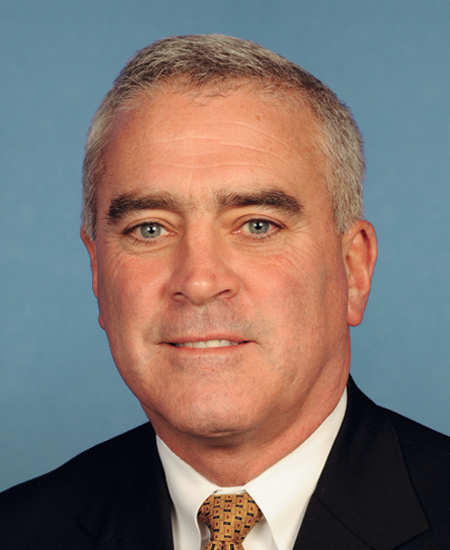
Rep. Brad R. Wenstrup
Sponsored bills
Maddy summaryThe JOBS Act of 2023 would expand Federal Pell Grant eligibility to cover certain short-term job training programs that prepare students for high-demand careers. It defines "eligible job training programs" as those offering 150-600 hours of instruction over 8-15 weeks, aligned with in-demand industry sectors, and leading to recognized credentials that help students meet hiring requirements and take licensure exams. The bill would allow students in these programs to receive Pell Grants under standard terms, with the minimum Pell Grant amount reduced from 10% to 5% of the maximum. It also requires accrediting agencies to evaluate these programs and creates data-sharing between Education and Labor departments to track program effectiveness.
Maddy summaryHJRES 107 is a congressional resolution seeking to block a Federal Communications Commission (FCC) rule published on January 22, 2024 (89 Fed. Reg. 4128). The resolution aims to disapprove the FCC's rule implementing digital discrimination protections under the Infrastructure Investment and Jobs Act, which would have required internet providers to prevent discriminatory practices. If passed, this resolution would nullify the FCC rule, preventing it from taking effect under the Congressional Review Act (Chapter 8 of Title 5, U.S. Code). The bill directly affects the FCC's regulatory authority over digital discrimination enforcement in broadband services.
Maddy summaryThis ceremonial resolution (HRES 985) expresses the U.S. House of Representatives' support for Catholic schools during the 50th anniversary of National Catholic Schools Week. It acknowledges Catholic schools' contributions to education, diversity, and community values - highlighting their 1.7 million students, 98.9% high school graduation rate, and role in serving diverse communities - while applauding the National Catholic Educational Association and the United States Conference of Catholic Bishops for organizing the event. The resolution has no binding effect or policy changes; it solely serves as a symbolic gesture of recognition.
Maddy summaryHR 7087, the MOMS Act, establishes a pilot program to provide evidence-based mental health support for pregnant and postpartum members of the U.S. Armed Forces and their beneficiaries (including family members). It requires the Defense Health Agency to integrate these prevention programs into existing maternal or pediatric care at military medical facilities, prioritizing diverse locations and removing barriers like childcare access. The bill mandates an advisory committee with military members, experts, and service organizations to guide implementation, along with annual reports tracking participation by demographics and a study on the program’s effectiveness. Funded at $5 million annually from 2025-2029, the pilot aims to reduce perinatal mental health conditions and improve military readiness.
Maddy summaryThis bill prohibits U.S. government agencies from contracting with or purchasing biotechnology equipment/services from specific Chinese companies deemed national security threats, including BGI, MGI, Complete Genomics, and WuXi Apptec. It directly affects U.S. federal agencies (for procurement decisions), these Chinese biotech firms (for U.S. market access), and their U.S. contractors using their equipment. Key provisions establish a formal list of "biotechnology companies of concern" and ban government use of their equipment/services, with limited waivers allowed for national security needs. The law focuses on preventing U.S. genetic data collection via these firms, which the government asserts could be accessed by Chinese authorities under Chinese law.
Maddy summaryHR 3667, the Social Security Child Protection Act of 2023, allows the Social Security Administration to reissue a child's Social Security number if it was compromised before the child turned 14. Specifically, it enables parents or guardians to request a new number by submitting verified evidence (under penalty of perjury) that the original card was stolen during delivery. The bill directly affects children under 14 whose SSN was issued under specific provisions and whose confidentiality was breached via stolen cards. The key mechanism requires the Commissioner to issue a new number and document the theft in the child's records upon verified request.
Maddy summaryThe Death Tax Repeal Act would eliminate the federal estate tax and generation-skipping transfer tax for estates of people who die on or after the bill's enactment date, and for generation-skipping transfers made after that date. It would also establish a new $10 million lifetime gift tax exemption (adjusted annually for inflation) and replace the existing gift tax rate schedule with a revised structure. These changes would primarily affect high-net-worth individuals and their heirs, as the estate tax and gift tax typically apply to large estates or gifts exceeding the new exemption threshold. The bill's provisions would take effect on the date of enactment, with transitional rules for the year the bill is signed into law.
Maddy summaryThe RIFLE Act of 2024 changes how the federal government handles violations by firearms licensees, affecting gun dealers and manufacturers who hold federal licenses. It creates a graduated penalty system where non-willful violations require the Attorney General to work with licensees to fix issues before taking action, while willful violations may lead to license suspension or revocation only after proper notice, hearing, and evidence of continued noncompliance. The bill establishes new procedures for administrative hearings, defines "willful" violations more clearly, and gives licensees 90 days to liquidate inventory after license expiration or revocation, with extensions possible for reasonable cause. These changes aim to create a more transparent process for addressing violations while maintaining public safety standards.
Maddy summaryHR 6762, the Protecting American Advanced Manufacturing Act, blocks tax credits for manufacturing components produced by companies linked to foreign adversaries (like China or Russia). It prohibits the Advanced Manufacturing Production Credit under tax code section 45X for any component made by a "disqualified entity," defined as companies with 10%+ ownership by foreign adversaries, subject to their control, or involved in prohibited financial arrangements (like debt or leases). This directly affects manufacturers relying on components from such entities, requiring them to source domestically or from non-adversary suppliers to qualify for the credit. The law takes effect for taxable years after its enactment, with the IRS given authority to establish implementation rules.