

United States Cadet Nurse Corps Service Recognition Act of 2021 This bill recognizes service as a member of the U.S. Cadet Nurse Corps between July 1, 1943, and December 31, 1948, as active duty service. The active duty designation entitles qualifying individuals to certain benefits afforded to veterans, such as burial benefits (not including interment or inurnment at Arlington National Cemetery) and honorary veteran status. Under the bill, the Department of Defense (DOD) must issue individuals who served in the corps during the specified period a discharge from their service under honorable conditions if such a discharge is warranted based on the duration and nature of the service. Such individuals are not entitled to Department of Veterans Affairs benefits aside from those related to burials and memorials. The bill also authorizes DOD to produce a service medal or other commendation, memorial plaque, or grave marker to honor the individuals.
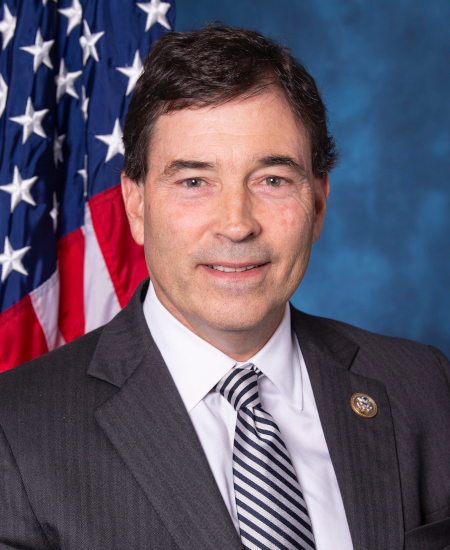
Rep. Troy Balderson
Sponsored bills
This resolution recognizes and appreciates the dedication and devotion demonstrated by the men and women of law enforcement. It also condemns calls to defund, disband, dismantle, or abolish the police.
Lower Costs, More Cures Act of 2021 This bill establishes and modifies several programs and requirements to address prescription drug prices. The bill modifies provisions under Medicare and Medicaid relating to prescription drug coverage and price transparency. Among other changes, the bill requires the Centers for Medicare & Medicaid Services to publish certain information, as reported by pharmacy benefit managers (PBMs), relating to generic dispensing rates, drug discounts and rebates, and payments between PBMs, health plans, and pharmacies; caps annual out-of-pocket spending under the Medicare prescription drug benefit; allows prescription drug plan sponsors under the Medicare prescription drug benefit to offer additional plans in a region; requires pass-through pricing models, and prohibits spread-pricing, for payment arrangements with PBMs under Medicaid; and allows states to include in the Medicaid Drug Rebate Program covered outpatient drugs that are provided as part of physician or outpatient hospital services. The bill also generally modifies other provisions relating to the regulation and costs of generic and brand-name drugs. Among other changes, the bill prohibits the manufacturer of a brand-name, generic, or biosimilar drug from entering into certain agreements to resolve or settle a patent infringement claim in connection with the sale of a drug or biological product; permanently allows high deductible health plans to waive deductibles for insulin and associated products; and establishes the position of Chief Pharmaceutical Negotiator in the Office of the U.S. Trade Representative.
Prohibiting IRS Financial Surveillance Act This bill prohibits the Department of the Treasury from requiring a financial institution to report the transfers into and out of a financial account. This prohibition does not apply to laws or regulations in effect on October 1, 2021.
Choose Home Care Act of 2021 This bill provides for coverage of home-based extended care services under Medicare. Specifically, the bill provides for coverage of services that are furnished to Medicare beneficiaries in their homes by home health agencies, including nursing care, meals and nutritional support, home medical supplies, nonemergency medical transportation, and care coordination. Coverage includes 30 days of post-hospital care and other periods of extended illness, as determined by the Centers for Medicare & Medicaid Services (CMS). Home health agencies that provide such services may receive additional payments in accordance with a specified methodology. The CMS may make payments for covered services furnished before 2022 during any period in which there is a public health emergency.
Addressing Care Timelines for Veterans Act or the ACT for Veterans Act This bill modifies the Veterans Community Care Program to extend the authorization period for emergency treatment in non-Department of Veterans Affairs (VA) medical facilities. Specifically, the bill requires the VA to deem as authorized emergency care or services provided by a non-VA health care provider to a covered veteran if such veteran applies for authorization within 96 hours (currently 72 hours under VA regulations) of admission for care. Covered veterans are those who are enrolled in the VA health care system or those who are not enrolled but are eligible for care due to a service-connected disability.
Israel Relations Normalization Act of 2021 This bill requires the Department of State to take certain actions promoting the normalization of relations between Israel, Arab states, and other relevant countries and regions. Specifically, the State Department must develop a strategy on expanding and strengthening the Abraham Accords (the term used to refer collectively to agreements between Israel and the United Arab Emirates and between Israel and Bahrain marking the public normalization of relations between the two Arab countries and Israel). The strategy must include a description of how the U.S. government will encourage further normalization of relations with Israel. In addition, the State Department must report on options for U.S. international efforts to promote the strengthening of ties between Israel, Arab states, and other relevant countries and regions. The State Department must also report on the status of the normalization of relations with Israel, including information on (1) laws that punish individuals for people-to-people relations with Israelis (i.e., anti-normalization laws), and (2) evidence of steps taken by Arab governments toward permitting or encouraging normalized relations between their citizens or residents and Israeli citizens.
This resolution expresses support for the designation of National Workforce Development Month.
This resolution supports the designation of National Clean Energy Week.
End Government Shutdowns Act This bill provides continuing appropriations to prevent a government shutdown if any appropriations measure for a fiscal year has not been enacted before the fiscal year begins or a joint resolution making continuing appropriations is not in effect. For an initial 120-day period, the bill provides appropriations to continue programs, projects, and activities for which funds were provided in the preceding fiscal year. The bill reduces the continuing appropriations by 1% after the first 120-day period and by an additional 1% for each subsequent 90-day period until the applicable appropriations legislation is enacted.