

Maddy summaryThe Brittany Clardy Missing and Murdered Black Women and Girls Act establishes a new Office within the Department of Justice to address the disproportionate rates of missing and murdered Black women and girls in the U.S. The Office will collect and analyze data on these cases - including case resolution times, Amber Alert usage, and trafficking links - and create a public dashboard for tracking. It also creates a grant program for community organizations to provide culturally appropriate prevention services, law enforcement training, and victim support. The Office must submit biennial reports to Congress with findings and recommendations to improve the criminal justice response to these cases. This bill directly affects Black women and girls facing violence, law enforcement agencies, and community organizations providing related services.
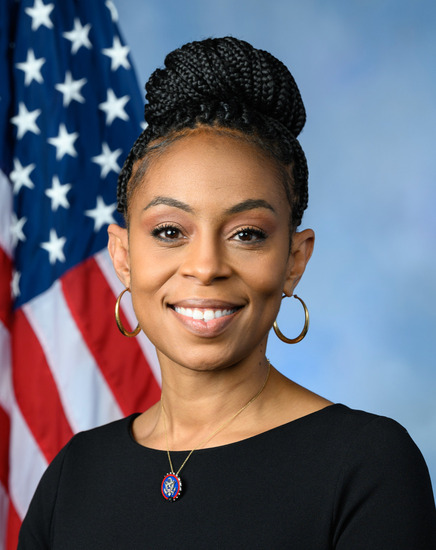
Rep. Shontel M. Brown
Sponsored bills
This resolution condemns all forms of discrimination and expresses support for policies to prevent and respond to hate crimes, including education and training on prevention and response.
Maddy summaryThis bill amends the Equal Credit Opportunity Act to require lenders to collect and report data on loans to LGBTQI-owned businesses. It specifically adds "LGBTQI-owned" to existing categories for data collection, includes sexual orientation, gender identity, and intersex status as protected characteristics in lending data, and defines an "LGBTQI-owned business" as one where over 50% of ownership/control and net profit/loss accrues to self-identifying LGBTQI individuals. The policy change directly affects financial institutions that report lending data to the government, mandating they track and disclose these new categories. This provides concrete data on lending practices for LGBTQI business owners, who face documented barriers in accessing credit.
Maddy summaryHR 6592, the Fight Book Bans Act, provides federal grants to reimburse public school districts for legal costs when they choose to keep instructional or library materials after parental objections. It directly affects school districts (covered local educational agencies) that select materials for students and handle challenges to their removal. The bill authorizes up to $100,000 per case in grants to cover attorney fees and court costs, provided the district didn’t remove the materials and wasn’t reimbursed by the state. Funding of $15 million is authorized for fiscal years 2024-2028. The grants are strictly for legal challenges to decisions not to remove materials, not for the content of the materials themselves.
Maddy summaryHR 6576, the Full-Service Community School Expansion Act of 2023, authorizes $500 million to $1 billion annually for fiscal years 2024-2028 to expand full-service community schools. The bill directly affects public elementary and secondary schools with at least 40% of students eligible for free or reduced-price lunch or identified for improvement under federal education law. Key mechanisms include funding planning grants to develop community-wide leadership teams, implementation grants for schools to provide integrated student supports (health, mental health, housing services), expanded learning opportunities (after-school programs, career training), and family engagement activities. The bill requires schools to establish collaborative leadership structures, maintain public transparency, and ensure services complement rather than replace existing programs. This legislation aims to create school environments that address students' academic, social, emotional, and health needs through coordinated community partnerships.
Maddy summaryHR 6527, the JUST Act of 2023, strengthens civil rights accountability within the USDA by requiring corrective actions for employees found to have engaged in discriminatory practices, retaliation, or misconduct (such as denying service receipts or delaying applications). It establishes a new Assistant Secretary for Civil Rights position to oversee compliance, creates an independent Civil Rights Ombudsperson office to assist program participants, and grants the Assistant Secretary authority to provide equitable relief - such as restoring denied benefits - to individuals who faced discrimination. The bill directly affects USDA employees, program applicants, and participants (including farmers and ranchers) by streamlining complaint resolution and shifting the burden of proof to the USDA in appeals. These changes aim to improve transparency and fairness in USDA program access.
Maddy summaryHRES 793 is a resolution passed by the U.S. House of Representatives calling on Hamas to immediately release all 199 hostages taken during Hamas' October 7, 2023 attack on Israel. The resolution condemns Hamas for the attack, the taking of hostages, and threats against hostages, while stating that holding hostages violates international humanitarian law under the Geneva Conventions. It demands the immediate release of all hostages and expresses sympathy for victims and their families. As a symbolic resolution, it does not create legal obligations but formally expresses the House's position.
Maddy summaryThis bill expands eligibility for VA-furnished headstones, markers, or medallions to include two groups: (1) enslaved individuals who accompanied military personnel during service, and (2) people who performed military functions despite being barred from service due to discrimination based on race, gender, sex, or ethnicity. The VA must create regulations within one year, defining "military function" and accepting evidence like pay records, diaries, or family bibles to verify eligibility. Requests must be made by direct descendants or approved representatives acting on their behalf. The bill requires the VA to submit an implementation report to Congress within 15 months of enactment.
Maddy summaryHR 6451, the Mental Health Justice Act of 2023, provides $250 million in federal grants to states, tribes, and localities to hire mental health professionals as first responders for specific emergencies. It directs these professionals to replace police in situations involving mental health crises, substance use, or intellectual/developmental disabilities - such as when a 911 caller describes a mental health emergency or a first responder identifies someone needing mental health support. The bill requires grantees to train responders in de-escalation techniques, link individuals to community-based services (not incarceration), and report on outcomes like reduced arrests or use of force. It also mandates data collection on demographics and prevents funneling people into institutional settings, with annual reports to Congress on program effectiveness.
Maddy summaryThe TREES Act of 2023 establishes a federal grant program to fund tree planting projects that reduce residential energy use. It provides 90% federal funding (up to $50 million annually) for projects in neighborhoods with high energy burdens, low tree canopy, or vulnerable populations like seniors and low-income households. Eligible applicants - including state/local governments, tribes, nonprofits, and power companies - must demonstrate how planting specific tree species will cut cooling and heating costs through shade and wind protection. The program aims to plant at least 300,000 trees yearly, prioritizing projects that maximize energy savings for households spending a high percentage of income on energy bills.