

Reducing Accidents In Locomotives Act or the RAIL Act This bill addresses safety requirements for rail carriers and trains transporting hazardous materials. Specifically, the Department of Transportation (DOT) must issue safety regulations for trains carrying hazardous materials to require that rail carriers (1) provide state emergency response commissioners with advance notice and information about the hazardous materials; (2) reduce blocked rail crossings; and (3) comply with certain requirements regarding train length and weight specifications, track standards, speed restrictions, and response plans. DOT must also establish requirements for wayside defect detectors. These are used by railway systems alongside the tracks to detect defects and failures (e.g., wheel bearing failures). Current federal regulations do not require their use, but federal guidance does address their placement and use. Under the bill, DOT must issue regulations establishing requirements for the installation, repair, testing, maintenance, and operation of wayside defect detectors for each rail carrier operating a train carrying hazardous materials. Further, these regulations must establish requirements that safety placards be able to withstand heat in excess of 180 degrees. The bill also increases the maximum fines DOT may impose on rail carriers for violating safety regulations, requires DOT to update rail car inspection regulations and audit the federal inspection program, phases out certain railroad tank cars by May 1, 2028 (one year sooner than required under current law), expands training for local first responders, and imposes a new fee on certain rail carriers.
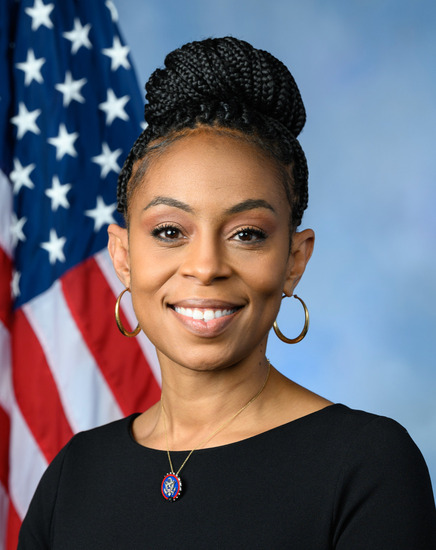
Rep. Shontel M. Brown
Sponsored bills
Maddy summaryThe HOME Investment Partnerships Reauthorization and Improvement Act of 2024 reauthorizes and updates the HOME Investment Partnerships Program, which provides federal funds to states and local governments to develop affordable housing. The bill increases annual funding from $5 billion in 2024 to $6.08 billion in 2028, modifies eligibility requirements for participating jurisdictions, and eliminates a deadline for committing funds. It reforms homeownership resale restrictions, establishes a home loan guarantee program with $2 billion in initial funding (increasing with inflation), and enhances protections for tenants in small-scale affordable housing (defined as housing with no more than 4 rental units). These changes aim to make the program more flexible and effective in creating and preserving affordable housing options for low- and moderate-income households.
Maddy summaryHR 7056, the Access to Family Building Act, establishes federal rights for individuals to access assisted reproductive technology (ART) like IVF without unreasonable restrictions, directly affecting patients seeking fertility treatments and health care providers offering ART services. The bill prohibits states from imposing limitations on ART that are more burdensome than those for comparable medical procedures, fail to advance safety, or unduly restrict access, while allowing health and safety regulations that are necessary and least restrictive. It creates federal enforcement mechanisms, including lawsuits by the Attorney General or affected individuals to challenge violating state laws, and preempts conflicting state regulations. The bill explicitly preserves state authority over health/safety regulations and does not alter existing state insurance coverage laws for ART.
Maddy summaryThe Stronger Communities through Better Transit Act establishes a new federal grant program to improve public transportation service. It provides funding to urban areas, states, and Indian tribes to cover up to 50% of public transit operating costs (up to 80% in persistent poverty areas and 100% for Indian tribes), with requirements to report on service frequency, access to jobs, and conduct community surveys. The program mandates that a majority of funds must benefit underserved communities and areas of persistent poverty, defined as census tracts with high poverty rates or minority populations. Recipients must maintain their transit funding levels and report on improvements in access to essential services. The bill authorizes $20 billion annually for fiscal years 2024-2027.
Maddy summaryThe Supporting Urban and Innovative Farming Act of 2023 establishes a new USDA office to provide technical assistance for urban and innovative agricultural operations, including rooftop farms, hydroponics, and community gardens. It authorizes competitive grants with mandatory annual funding starting at $15 million in 2024 (rising to $50 million by 2028) to support projects improving fresh food access in underserved areas, prioritizing microgrants for individual urban farmers and initiatives serving disadvantaged communities. The bill requires the USDA to collect and report data on urban farming locations, demographics, and production methods like vertical farming and aquaponics. These provisions directly affect urban farmers, community organizations, and local governments working to expand food production in cities.
Maddy summaryHR 5780, the Land-Grant Research Equity and Accountability Act, requires states to annually match federal research funds provided to eligible land-grant universities (1862 and 1890 institutions) with state or private funds equal to non-Federal contributions. It mandates that states submit annual attestations to the USDA confirming whether they can meet this matching requirement, with these reports published by the USDA and submitted to Congress yearly. The bill directly affects land-grant universities and their state governments by creating a formal process for tracking and reporting funding commitments. Key mechanisms include the annual state attestation, USDA publication of these reports, and mandatory outreach to state legislatures about matching obligations. This focuses on transparency and accountability in funding for agricultural research and extension programs.
Maddy summaryHRES 962 is a ceremonial resolution honoring Reverend Dr. Martin Luther King, Jr.'s legacy, specifically celebrating his 95th birthday on January 15, 2024. It symbolically affirms his teachings by condemning hate, discrimination, and prejudice against Black Americans, Indigenous people, Jewish, Asian-American/Pacific Islander, Muslim, Hispanic/Latino communities, and LGBTQ+ individuals. The resolution does not create new laws or affect any policies - it solely expresses the House's support for Dr. King's values of diversity, tolerance, and equality through non-binding statements. As a symbolic gesture, it has no legal effect or direct impact on any group or individual.
Maddy summaryThe Affordable Connectivity Program Extension Act of 2024 allocates $7 billion in funding for the Affordable Connectivity Program (ACP) during fiscal year 2024. The ACP provides subsidies to low-income households to help cover the cost of internet service and connected devices like laptops or tablets. This funding ensures the program can continue supporting eligible households throughout the year, with the money remaining available until fully spent. The bill extends existing program funding without changing eligibility criteria or service requirements.
Maddy summaryHR 6754, the School Violence Prevention Act, establishes a federal grant program to fund evidence-based violence prevention programs in schools located in communities with high rates of youth gun violence. The bill authorizes $25 million annually for 5-year grants to partnerships between state/local education agencies (meeting specific homicide or violent crime thresholds) and community nonprofits serving youth. Grantees must implement trauma-informed, culturally competent programs for K-12 students, focusing on skills like conflict resolution, mental health support, and community engagement, while collecting data on outcomes like graduation rates. The program requires annual reporting to the Secretary of Education and CDC, with evaluations to assess impacts on reducing youth violence risks.
Maddy summaryHR 6830, the "Books Save Lives Act," requires covered schools (elementary/secondary schools receiving federal funds) and public libraries receiving federal assistance to maintain staffed libraries with diverse book collections. These collections must include books written by, illustrated by, or about individuals from underrepresented communities - defined as racial/ethnic minorities, LGBTQ+ individuals, religious minorities, or people with disabilities. The bill states that excluding such "covered books" could be used as evidence of discrimination under civil rights laws like the Civil Rights Act of 1964. It also mandates a report on the impact of book-banning campaigns on these communities within 180 days of enactment.