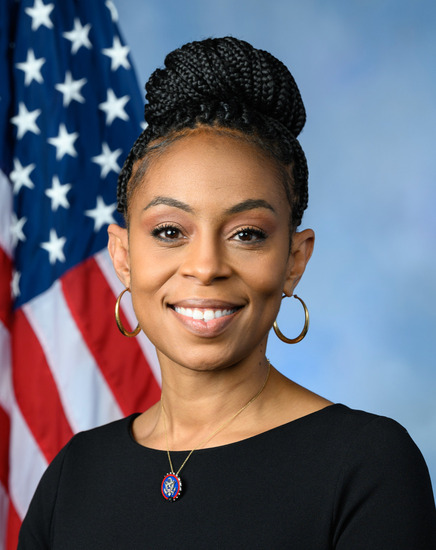
Photo of Shontel M. Brown
D United States House · District 11 · Ohio On the 2026 ballot

Rep. Shontel M. Brown

Compare
Total votes
2,501
all sessions
Attendance
100%
8 missed
Higher than 96% of chamber peers
With party
99%
of cast votes
Higher than 91% of chamber peers
Bipartisan score
1%
crosses aisle rarely
Lower than 92% of chamber peers
Sponsored
1,074
bills & resolutions
Near the chamber average
Committees
5
assignments
1,074 bills and resolutions

Sponsored bills

Total
1,074
Primary
46
Co-sponsor
1,028
This page
1,074
matching current filters
Primary HRES 1279
In committee · United States House · Lead sponsor
Expressing support for the designation of June 2024 as "Black Music Month".

Maddy summaryHRES 1279 is a non-binding House resolution expressing support for designating June 2024 as "Black Music Month." It honors Black musicians, creators, and communities whose contributions have shaped American music across genres like blues, jazz, hip-hop, and gospel. The resolution calls on all Americans to recognize the month through actions that elevate Black music's artistry, promote diversity, and spread awareness of its historical impact. It does not create new laws or allocate funding, but serves as a symbolic gesture to celebrate Black music's cultural significance. The resolution was introduced by multiple House members and refers to Black music's role in American history and the civil rights movement.

In committee Jun 5, 2024 0 co-sponsors
Co-sponsor HR 8525
In committee · United States House · Co-sponsor
George Floyd Justice in Policing Act of 2024

Maddy summaryThe George Floyd Justice in Policing Act of 2024 establishes a National Police Misconduct Registry to track complaints and disciplinary actions against officers, requiring all federal, state, and local law enforcement agencies to report use-of-force incidents with racial, gender, and age data. It bans chokeholds and carotid holds in police encounters, prohibits no-knock warrants in drug cases, and reforms qualified immunity to make it harder for officers to avoid accountability for misconduct. The bill mandates body cameras for federal officers, requires independent investigations of officer-involved shootings, and creates new data collection systems to monitor racial profiling and use-of-force patterns. It also includes provisions for civilian oversight boards, improved officer training on de-escalation and implicit bias, and restrictions on military equipment transfers to local police departments. This law affects all law enforcement agencies receiving federal funding under programs like Byrne and COPS grants.

In committee May 31, 2024 1 co-sponsor
Co-sponsor HR 8568
In committee · United States House · Co-sponsor
First Rhode Island Regiment Congressional Gold Medal Act

Maddy summaryThis bill authorizes Congress to award a gold medal to the First Rhode Island Regiment, a historically significant Revolutionary War unit composed of Black, Indigenous, and white soldiers who served together. The medal, designed by the Treasury Secretary, will be displayed at the Rhode Island State Library, with bronze duplicates available for sale to cover costs. The bill recognizes the regiment's role as one of America's first integrated military units, formed in 1778 when Rhode Island allowed enslaved people to enlist and gain immediate freedom. The medal serves as a commemorative honor, not a policy change, with no direct effect on current individuals or legislation.

In committee May 24, 2024 1 co-sponsor
Co-sponsor HR 3916
In committee · United States House · Co-sponsor
SCREENS for Cancer Act of 2024

Maddy summaryThe SCREENS for Cancer Act of 2024 reauthorizes and expands the National Breast and Cervical Cancer Early Detection Program (NBCCEDP), which provides free screenings and care coordination to low-income, uninsured, or underinsured women. It increases annual funding from $275 million (2024) to $500 million (2028) and explicitly adds "prevention" to the program’s mission, requiring it to reduce racial and ethnic disparities in cancer outcomes. The bill mandates the program to address barriers like social determinants of health and implement evidence-based strategies to boost screenings, particularly for underserved communities disproportionately affected by pandemic-related screening declines. This directly benefits millions of women, especially Black, Hispanic, and Asian women, who face higher cancer death rates and reduced access to care.

In committee May 24, 2024 1 co-sponsor
Primary HR 8469
In committee · United States House · Lead sponsor
Diverse Cybersecurity Workforce Act of 2024

Maddy summaryHR 8469, the Diverse Cybersecurity Workforce Act of 2024, requires the Cybersecurity and Infrastructure Security Agency (CISA) to establish a new program within its existing education initiative. The program targets underrepresented groups in cybersecurity, including racial and ethnic minorities, women, veterans, people with disabilities, older individuals (40+), those from low-income backgrounds, and people with nontraditional educational paths (like community colleges or HBCUs). CISA must tailor outreach to schools, unions, community colleges, and local workforce offices to promote cybersecurity careers in these communities. The bill authorizes $20 million annually (2025-2030) and mandates annual reports to Congress on the program's impact on workforce diversity.

In committee May 21, 2024 0 co-sponsors
Co-sponsor HR 8485
In committee · United States House · Co-sponsor
No Foreign Emoluments Without Congressional Consent Act

Maddy summaryHR 8485, the "No Foreign Emoluments Without Congressional Consent Act," prohibits senior federal officials - including the President, Vice President, Cabinet members, Members of Congress, and high-level presidential staff - from accepting foreign payments (such as from foreign governments or entities controlled by them) without prior congressional approval. It requires officials to submit detailed written notices to the Office of Government Ethics before accepting such payments, triggering a 90-day congressional review period during which Congress must approve via a specific concurrent resolution. The bill covers payments received during official service and for two years after leaving office, with strict penalties including civil fines up to $5,000 plus the payment's value or criminal charges for violations. Excluded are standard gifts or decorations under existing law and certain large investment entities meeting specific SEC criteria.

In committee May 21, 2024 1 co-sponsor
Co-sponsor HR 8323
In committee · United States House · Co-sponsor
Comprehensive Addiction Resources Emergency Act of 2024

Maddy summary# Summary of Legislative Text This is a comprehensive legislative proposal focused on addressing substance use disorder through public health approaches, with significant funding and program requirements. Key elements include: 1. **Major Funding Programs:** - **Subtitle A (Local Grants):** $3.0 billion annually (2024-2033) for local entities to provide prevention, treatment, and recovery services - **Subtitle B (State/Regional Grants):** $4.6 billion annually (2024-2033) for state-level programs - **Subtitle C (Other Grants):** $1.0 billion annually (2024-2033) for specific entities and underserved populations - **Subtitle D (Innovation/Training):** $1.5 billion annually (2024-2033) for training, research, and capacity building 2. **Key Program Requirements:** - Mandates for evidence-based treatment services across multiple levels of care - Requirements for cultural competency, particularly for Native American communities - Specific focus on harm reduction, prevention, and recovery support - Provisions for naloxone distribution and overdose reversal programs 3. **Regulatory Changes:** - New certification requirements for covered manufacturers, distributors, and dispensers of Schedule II controlled substances - Penalties for failure to submit certifications or submitting false certifications - Creation of a "Comprehensive Addiction Resources Fund" for penalty revenues 4. **Focus Areas:** - Prevention services (including trauma-informed approaches) - Early intervention services - Recovery support services - Harm reduction programs - Workforce development for treatment providers - Special attention to underserved populations (rural communities, racial minorities, formerly incarcerated individuals) 5. **Funding Priorities:** - 10% of funds for Native American communities - Specific requirements for cultural competency and language access - Mandated data collection and reporting systems This legislation represents a significant shift toward public health approaches to substance use disorder, emphasizing prevention, treatment, and recovery support rather than punitive measures, with substantial funding commitments over a decade.


In committee May 17, 2024 1 co-sponsor
Primary HR 8247
In committee · United States House · Lead sponsor
Uterine Fibroid Intervention and Gynecological Health Treatment Act of 2024

Maddy summaryThis bill directs the Health and Human Services Secretary to fund research on early detection and treatment of uterine fibroids, with a focus on reducing health disparities. It authorizes grants to states for screening programs (including advanced imaging), patient navigation services, and public education campaigns - prioritizing areas with socially vulnerable populations at higher risk. States receiving funds must implement evidence-based strategies to improve access to early intervention. The bill also requires regular reports to Congress on grant outcomes and research findings related to fibroid treatment disparities and related conditions like Asherman’s Syndrome.

In committee May 10, 2024 0 co-sponsors
Co-sponsor HR 8271
In committee · United States House · Co-sponsor
Showing Up for Students Act

Maddy summaryThis bill provides $280 million in funding for the Department of Education's Office for Civil Rights (OCR) for fiscal year 2024, with funds available through September 2025. The OCR investigates school discrimination complaints related to race, sex, disability, and other protected characteristics. This funding directly supports the OCR's ability to handle civil rights cases involving students and schools nationwide, without creating new student requirements or altering existing laws.

In committee May 7, 2024 1 co-sponsor
Co-sponsor HRES 1180
In committee · United States House · Co-sponsor
Recognizing the importance of diversity, equity, and inclusion efforts in medical education.

Maddy summaryHRES 1180 is a non-binding resolution recognizing the importance of diversity, equity, and inclusion (DEI) efforts in medical education. It affirms that a diverse medical workforce better serves the nation's diverse patient populations and supports medical schools in fostering inclusive environments to improve health equity. The resolution highlights existing disparities in health outcomes and representation, such as Black and Hispanic patients experiencing higher rates of chronic conditions compared to White patients, and notes that current medical school demographics (e.g., 10.8% Black or African American matriculants in 2023) do not reflect U.S. population diversity. It does not create new laws or funding but symbolically endorses DEI initiatives as essential for enhancing patient trust, clinical learning, and equitable care delivery.

In committee May 3, 2024 1 co-sponsor
Showing 471 to 480 of 1,074 bills
Previous 1 … 47 48 49 … 108 Next