

Maddy summaryHR 9878, the No Shame at School Act of 2024, requires schools to automatically certify students from households with unpaid meal fees for free or reduced-price meals (instead of allowing discretion), and mandates retroactive reimbursement for past unpaid meals. It directly affects school districts and students in households owing meal fees by prohibiting stigmatizing practices like special tokens, public lists of names, or withholding grades due to unpaid fees. Key provisions ban schools from physically segregating students, using debt collectors, or taking food away from students who owe fees, while requiring clear communication to households about meal applications. The bill defines "covered child" as any student enrolled in a participating school meal program whose household owes fees or is eligible for free/reduced meals.
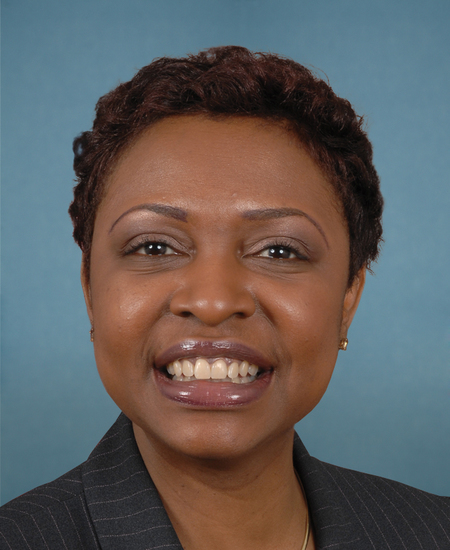
Rep. Yvette D. Clarke
Sponsored bills
Maddy summaryThis resolution formally censures Representative Glen Clay Higgins (LA-03) for a September 25, 2024, social media post containing racist remarks and false claims about Haitians. The bill requires Higgins to appear in the House chamber to receive the censure, with the resolution publicly read by the Speaker. It specifically references his post describing Haiti as "the nastiest country," falsely accusing Haitians of eating pets, and labeling them "slapstick gangsters and thugs." The censure is a formal disciplinary action by the House, not a policy change.
Maddy summaryHCONRES 130 is a symbolic concurrent resolution commending state and local governments that treat reproductive rights as human rights following the *Dobbs* decision. It recognizes efforts by cities like Austin, Texas, and Montgomery County, Maryland, to expand abortion access and condemn criminalization of pregnancy outcomes. The resolution affirms that reproductive rights are human rights, urges states to repeal restrictive laws, and references U.S. obligations under international human rights treaties. As a non-binding resolution, it does not create new laws or alter existing policies.
Maddy summaryHRES 1495 designates September 2024 as "Sickle Cell Disease Awareness Month" to raise public education about sickle cell disease (SCD), which affects approximately 100,000 people in the U.S., predominantly in African American communities. The resolution urges the Department of Health and Human Services to address access barriers for SCD treatments in Medicare and Medicaid, calls for increased National Institutes of Health research funding, and proposes forming a federal interagency cabinet to coordinate SCD policy. It also encourages public events during September to highlight early detection, treatments, and preventative care for SCD complications. As a symbolic resolution, it does not create new laws but directs federal agencies to prioritize equitable access and research for SCD.
Maddy summaryHR 9782, the Uterine Cancer Study Act of 2024, directs the U.S. Department of Health and Human Services (HHS) to study whether hair straighteners - specifically chemical products - may be linked to uterine cancer, with a focus on higher rates among women of color. The study will review existing research, examine impacts across racial and ethnic groups, and break down results by product type (e.g., dyed, bleached, or permed straighteners). HHS must submit a study methodology within 45 days of the bill’s enactment and complete the study, reporting findings to Congress within two years. The bill does not impose new regulations but may inform future FDA safety requirements for hair straightening products. This affects women of color disproportionately impacted by uterine cancer and the broader population using such products.
Maddy summaryHR 9082, the Summit of the Americas Act, authorizes the U.S. government to regularly host the Summit of the Americas every four years (or more frequently with funding) to strengthen cooperation with Western Hemisphere nations and partner groups. It specifically directs the Secretary of State to coordinate a separate "Cities Summit of the Americas" as part of each main summit, focusing on subnational city and regional leaders. The bill creates a new State Department implementation unit to track U.S. and partner commitments from these summits, requiring quarterly public updates and annual congressional reports for five years. This act directly affects the State Department's operations and U.S. diplomatic engagement with Western Hemisphere partners.
Maddy summaryHR 3433, the "Give Kids a Chance Act of 2024," requires pharmaceutical companies developing certain cancer drugs to conduct pediatric studies if the drugs target molecular pathways relevant to childhood cancers. It directly affects drug manufacturers submitting new applications for cancer treatments, particularly those combining previously approved adult cancer drugs or containing a single new active ingredient. The bill amends FDA regulations to mandate these pediatric investigations only when specific conditions are met, such as when a drug's molecular target is relevant to pediatric cancer growth. The FDA must issue implementing guidance within 12 months, and reports to Congress will track implementation and effectiveness starting 2 years after enactment.
Maddy summary# Summary of Health Equity and Accountability Act of 2024 This comprehensive legislation addresses multiple aspects of health care access, workforce development, and immigration policy with a strong focus on health equity. ## Key Themes 1. **Workforce Diversity**: Significant emphasis on increasing racial, ethnic, and socioeconomic diversity in the health care workforce 2. **Language Access**: Mandates for language access services for individuals with limited English proficiency 3. **Underserved Communities**: Targeted investments in medically underserved areas and communities 4. **Immigration Policy**: Modifications to programs that bring health care professionals to the U.S. ## Major Provisions ### Workforce Development - **$1 billion** for nursing education enhancement and modernization grants in underserved areas - **$552 million** for health professions workforce development in 2032 (increasing annually) - **$392 million** for health professions education programs in 2025 - New grants for schools of medicine and osteopathic medicine in underserved areas - Expansion of the Conrad State 30 program for foreign physicians to address physician shortages ### Language Access - Requires health care providers to provide language access services to individuals with limited English proficiency - Mandates translation services and interpretation services for all health care settings ### Diversity Initiatives - **David Satcher Public Health and Health Services Corps** to increase awareness of health career opportunities - **Louis Stokes Public Health Scholars Program** for underrepresented students - **Patsy Mink Health and Gender Research Fellowship Program** - **Paul David Wellstone International Health Fellowship Program** - **Edward R. Roybal Health Scholar Program** ### Immigration Policy - **Conrad State 30 program extension** through 2027 - **Physician retention** provisions to help foreign physicians stay in medically underserved areas - **Dual intent for physicians** seeking graduate medical training - **Clarifications to national interest waiver** requirements - **Automatic extension** of physician nonimmigrant status during residency transitions ### Funding - **Health Professions Workforce Fund** established with multi-year funding increasing from $392 million in 2025 to $552 million in 2032 - Specific allocations for nursing workforce development and health professions education This legislation represents a comprehensive approach to addressing health care disparities through workforce development, improved access, and policy changes to support a more diverse and equitable health care system.
Maddy summaryThis bill establishes a Diversity and Inclusion Administrator at the Department of Labor to increase African American participation in apprenticeship programs. It requires all new and renewing registered apprenticeship programs to submit plans for boosting African American enrollment, and authorizes competitive grants for programs targeting underrepresented groups in industries like construction, tech, and healthcare. Grant recipients must report on metrics including participant demographics, program completion rates, and job placement in related fields. The law directly affects African American youth and other underrepresented groups by mandating systemic changes to apprenticeship programs nationwide.
Maddy summaryThis resolution (HRES 1472) symbolically recognizes the heritage, culture, and contributions of Latinas in the United States. It highlights their economic impact (over 2 million Latina-owned businesses), societal roles (48,000+ active-duty Latinas in the military, 18% of women-owned businesses), and ongoing challenges like the pay gap (Latinas earn 57 cents for every dollar earned by White, non-Hispanic men). The resolution notes that Latinas represent 1 in 5 U.S. women and will comprise 25% of the female population by 2060. As a non-binding resolution, it does not create new policies or allocate funds, but formally honors their contributions and acknowledges the need for continued progress.