

Maddy summaryHR 1568 would establish the African Burial Ground International Memorial Museum and Educational Center at the National Historic Landmark site in Lower Manhattan, New York City, honoring the approximately 20,000 enslaved Africans buried there. The museum would examine African cultural traditions brought to the U.S. by enslaved people, explore the institution of slavery through exhibits and educational programs, and be associated with the National Museum of African American History and Culture. The National Park Service would operate the museum, with the Secretary of the Interior managing the facility in consultation with an advisory council composed of federal, state, and local officials. The bill authorizes $15 million for fiscal year 2025 and additional funding for subsequent years to support the museum's construction, operation, and educational programs. The museum would be located on property adjacent to the National Monument established at the burial ground site.
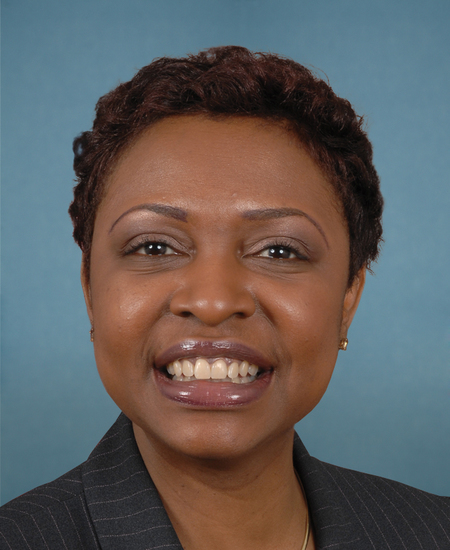
Rep. Yvette D. Clarke
Sponsored bills
Maddy summaryHRES 158 is a symbolic House resolution recognizing the third anniversary (February 2022-2025) of Ukraine’s defense against Russia’s full-scale invasion. It condemns Russia’s "unprovoked assault," highlights Ukraine’s resilience amid attacks (including targeting of civilians and infrastructure), and supports continued U.S. aid, sanctions on Russia, and use of frozen Russian assets to assist Ukraine. The resolution does not create new laws or allocate funds but formally reaffirms U.S. solidarity with Ukraine’s sovereignty and democratic efforts.
New Era of Preventing End-Stage Kidney Disease Act This bill establishes regional centers of excellence, postgraduate fellowships, and training for health professionals relating to the diagnosis and treatment of rare kidney disease. It also requires the Department of Health and Human Services (HHS) to conduct various studies on rare kidney disease. Specifically, it authorizes the National Institute of Diabetes and Digestive and Kidney Diseases to award funding to public and private nonprofit entities for establishing regional centers of excellence that will increase public awareness, conduct research, and develop resources for diagnosing and treating rare kidney diseases. A center may receive such funding for up to five years, unless extended by the institute. The bill also requires health professions schools receiving a grant from the Health Resources and Services Administration (HRSA) Centers of Excellence program to award fellowships for training on preventing, diagnosing, and treating rare kidney disease in disproportionately impacted populations. Also, the bill expands the priorities of HRSA’s Primary Care Training and Enhancement program to include training for health care workers to care for individuals with kidney disease. Additionally, HHS must conduct several studies and report to Congress on topics such as treating rare kidney disease in disproportionately affected populations, eliminating the need for dialysis or kidney transplants, and increasing public awareness of rare kidney disease.
Dentist and Optometric Care Access Act of 2025 or the DOC Access Act of 20 25 This bill prohibits private health insurance plans from setting rates for items and services, except for dental cleanings, provided by a doctor of optometry, of dental surgery, or of dental medicine (or an employer of such a doctor) for which the plan does not pay a substantial amount. Additionally, an agreement between a plan and such a doctor for limited scope dental or vision benefits may last longer than two years only with the prior acceptance of the doctor for each term extension. Plans also may not restrict such a doctor's choice of laboratories or suppliers. Such doctors may elect to waive the application of the payment amount and choice of laboratories provisions of this bill. The bill does not supersede state laws regarding health insurers and dental or vision benefit plans.
Maddy summaryHRES 149 is a symbolic resolution supporting International Mother Language Day (observed February 21) and highlighting the importance of preserving linguistic diversity. It encourages all U.S. citizens to observe the day through ceremonies and activities, referencing UNESCO’s work and the 25th anniversary of the day in 2025. The resolution does not create new policies, fund programs, or directly affect specific groups - it serves only to express congressional support for language preservation as part of cultural heritage.
Maddy summaryThis resolution (HRES 146) is a formal, non-binding statement of recognition by the U.S. House of Representatives honoring the Harlem Renaissance - a pivotal cultural, social, and political movement in American history. It commemorates the movement's role in reshaping African American identity, advancing civil rights, and fostering artistic expression from the 1910s through the mid-1930s, highlighting contributions in literature, music, visual arts, and social thought. The resolution specifically recognizes figures like Langston Hughes, Duke Ellington, and organizations such as the NAACP, while supporting efforts to preserve Harlem's cultural legacy. It has no policy impact or direct effect on individuals or communities, serving solely as a symbolic tribute to historical significance.
Maddy summaryHR 1456, the Gun Trafficker Detection Act, requires private firearm owners (non-licensed individuals) to report lost or stolen firearms to the Attorney General within 48 hours via a new web portal. It imposes civil penalties of up to $1,000 for first violations and $5,000 for repeat violations, and prohibits individuals with two or three penalty assessments from receiving firearms for 1 year or 5 years, respectively. The bill mandates law enforcement agencies to use 5% of crime grant funds to study lost/stolen firearm data collection and updates the National Instant Background Check System to include these new restrictions. It directly affects private gun owners and law enforcement agencies, focusing on reporting compliance and background check adjustments.
Maddy summaryHR 1449, the Energy Resilient Communities Act, creates a federal grant program to fund clean energy microgrids that support critical community infrastructure like hospitals, schools, and emergency facilities. Eligible entities - including states, local governments, nonprofits, and tribal agencies - can apply for grants covering up to 90% of costs for technical assistance, community outreach, or microgrid projects in environmental justice communities. Key provisions prioritize projects that reduce emissions, lower energy costs for low-income residents, minimize land use impacts, and ensure 40% of construction labor comes from local residents meeting specific criteria (e.g., displaced workers, environmental justice community members). The program authorizes $1.5 billion over 10 years, with at least 10% reserved for community-owned microgrid projects, and requires annual reporting on project outcomes and labor practices.
Maddy summaryHR 1410 expands access to mental health care for 9/11 responders and survivors by allowing licensed mental health providers (not just physicians) to conduct initial health evaluations and certifications under the World Trade Center Health Program. It adjusts the program’s funding formula to account for changing enrollment numbers by linking annual funding to the previous year’s enrollment ratio, and clarifies that deceased individuals are excluded from enrollment counts. The bill also extends the timeframe for adding new health conditions to the program’s list and requires a 2028 report assessing long-term funding needs through 2090. These changes aim to streamline eligibility, improve care access, and ensure sustainable funding for the program.
Maddy summaryThis bill extends a temporary tax provision for distilled spirits in Puerto Rico and the U.S. Virgin Islands. It amends the tax code to change the end date for a reduced tax coverage limit from January 2022 to January 2032. The change applies to distilled spirits imported into these territories after December 31, 2021. This directly affects businesses and consumers involved in the distilled spirits market in Puerto Rico and the Virgin Islands by maintaining the lower tax rate for a longer period.