

Maddy summaryHR 1657, the Humane Cosmetics Act of 2025, prohibits cosmetic companies from conducting or contracting animal testing for products sold in the U.S. beginning one year after the law takes effect. It also bans the sale or transport of cosmetics developed using such testing after that date, with limited exemptions (e.g., for foreign regulatory requirements or when no non-animal safety alternatives exist). The bill directly affects cosmetic manufacturers, retailers, and distributors by requiring them to shift to non-animal testing methods. The Food and Drug Administration (FDA) will enforce the law, including reviewing records and imposing civil penalties for violations.
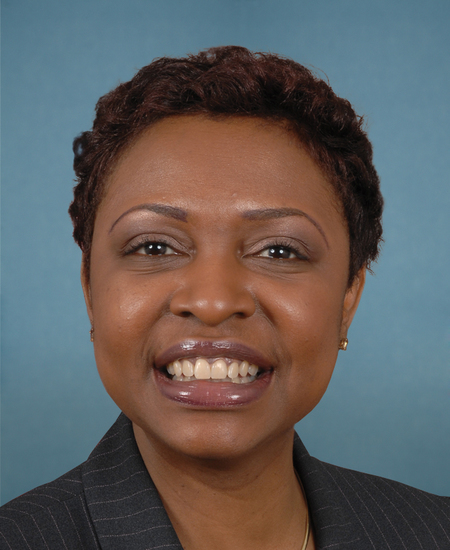
Rep. Yvette D. Clarke
Sponsored bills
Maddy summaryThe HEARD Act of 2025 directs the National Institutes of Health (NIH) to expand and coordinate research on rare diseases with a specific focus on health equity for minority populations. It requires NIH to establish a Coordinating Committee involving multiple federal agencies to develop a comprehensive plan for addressing rare diseases in minority communities, including research on epidemiology, diagnosis, and treatment. The bill creates new grant programs for data collection on rare diseases in minority populations, physician training programs on rare diseases, and scholarship/loan repayment programs for health professionals serving these communities, while also mandating reports to Congress on federal efforts to address these health disparities.
Maddy summaryThe PAST Act of 2025 amends the Horse Protection Act to ban harmful practices known as "soring," which deliberately cause pain to horses to exaggerate their gait for shows. It specifically prohibits devices like action devices (e.g., boots causing friction) and weighted shoes on Tennessee Walking Horses, Racking Horses, and Spotted Saddle Horses at events. The bill increases penalties, including escalating disqualifications for repeat offenses (180 days → 1 year → 3 years) and raises fines for violations to $5,000 per offense. It also requires stricter licensing for inspectors and mandates public posting of violation records to help event organizers enforce rules.
Maddy summaryThe American Dream and Promise Act of 2025 would create pathways to permanent residency for certain immigrant youth who entered the U.S. as children (Dream Act component) and for individuals from countries with Temporary Protected Status or Deferred Enforced Departure (American Promise Act component). To qualify, applicants must meet continuous physical presence requirements (since January 1, 2021 for Dream Act applicants, and for 3+ years for American Promise applicants), pass background checks, and satisfy educational or employment criteria. Conditional permanent resident status would be granted initially, with the option to convert to full permanent residency after meeting additional requirements like earning a degree, serving in the military for two years, or demonstrating three years of earned income. The bill includes fee exemptions for low-income applicants, establishes a grant program to assist applicants with legal help, and creates specific procedures for background checks and appeals.
Maddy summaryHRES 166 is a non-binding House resolution expressing U.S. support for the Iranian people's desire for a democratic, secular, and nonnuclear republic. It condemns the Iranian regime's terrorism, regional proxy wars, internal suppression of ethnic and religious minorities, and human rights abuses - including executions and repression of women-led protests. The resolution calls for holding the regime accountable through sanctions, supports the Ten-Point Plan for Iran’s democratic transition, and urges protection for Iranian political refugees in Albania. It does not create new laws but affirms U.S. policy alignment with Iranian protesters' demands.
Maddy summaryThis bill awards a Congressional Gold Medal to the 761st Tank Battalion (known as the "Black Panthers"), the first predominantly Black armored unit in World War II's European Theater. It recognizes their combat service from 1944-1946, including key roles in the Battle of the Bulge and breaking the Siegfried Line, despite facing racial prejudice during and after the war. The medal will be displayed at the National Museum of African American History and Culture, with bronze duplicates available for sale to cover costs. The bill commemorates the battalion's 130,000 enemy casualties inflicted, 50% casualty rate, and their 1978 Presidential Unit Citation. It does not create new laws or affect current policies.
Maddy summaryHR 1638, the CROWN Act of 2025, prohibits discrimination based on hair texture or hairstyle that is commonly associated with race or national origin, particularly affecting Black individuals who wear natural or protective styles like braids, locs, cornrows, twists, or Afros. The bill explicitly expands protections under existing federal civil rights laws (including the Civil Rights Act of 1964 and the Fair Housing Act) to cover hair-based discrimination in federally funded programs, housing, public accommodations, employment, and equal rights. It requires schools, employers, and other entities receiving federal funds to eliminate grooming policies that disproportionately target these hairstyles. The law clarifies that such discrimination violates federal law and provides enforcement through existing civil rights mechanisms.
Maddy summaryThis bill amends Medicare rules to allow nurse practitioners and physician assistants to certify diabetic shoe coverage for Medicare beneficiaries with diabetes, expanding the current requirement that only physicians could provide this documentation. It directly affects Medicare patients needing specialized footwear due to diabetes and healthcare providers like NPs and PAs who would now be authorized to meet the certification requirement. The key change modifies Section 1861(s)(12) of the Social Security Act to insert "nurse practitioner, or physician assistant" in all relevant sections of the documentation rules. This update simplifies access to covered diabetic shoes by broadening which healthcare professionals can issue the necessary certification.
Maddy summaryHR 1567 requires the Secretary of the Interior to conduct a study assessing the feasibility of establishing the African Burial Ground International Memorial Museum and Educational Center at New York City's African Burial Ground National Monument. The study will examine factors like available collections (including DNA samples from remains), potential locations (such as 22 Reade Street), community involvement, financial planning, and collaboration opportunities with institutions like the National Museum of African American History and Culture. The Secretary must submit a report to Congress within three years, detailing findings on costs, location options, and recommendations for the museum's potential development. This bill does not create the museum but sets the process for evaluating its future establishment.
Maddy summaryEthan's Law requires gun owners to store firearms securely in homes where minors live or where residents are legally prohibited from owning guns. It makes it unlawful to leave firearms unsecured if a minor or ineligible person could access them, with fines of $500 per violation and harsher penalties if injury or death occurs. The bill creates a federal grant program to help states implement similar secure storage laws and treats unsafe storage as negligence in legal cases. It directly affects households with children or residents who cannot legally possess firearms, aiming to reduce accidental shootings and unauthorized access.