

Maddy summaryHR 7125, the Stop Body Camera Paywalls Act, requires states and local governments seeking certain federal law enforcement grants to certify they do not charge fees for public access to body camera footage, dash camera footage, or prison surveillance recordings. To qualify for Byrne or COPS grant programs, applicants must confirm no financial barriers exist for the public requesting these specific video recordings. The bill makes certification mandatory for grant eligibility, directly affecting law enforcement agencies receiving federal funds under these programs.
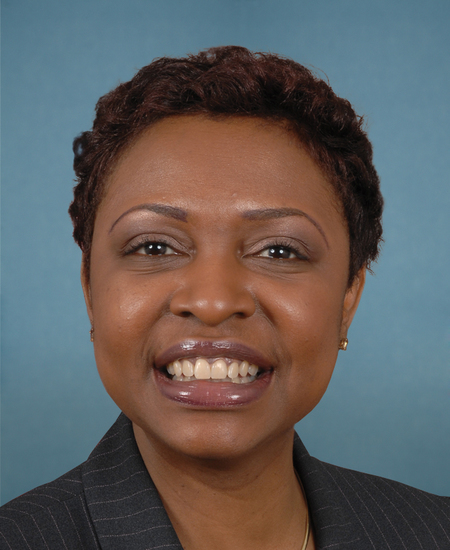
Rep. Yvette D. Clarke
Sponsored bills
Maddy summaryHRES 996 is a resolution introduced by multiple House members to impeach Kristi Lynn Arnold Noem, the Secretary of Homeland Security, for alleged violations of law and the Constitution. It outlines three articles of impeachment: obstructing congressional oversight by denying access to detention facilities and withholding funds, violating public trust through warrantless arrests and excessive force (including tear gas on children), and self-dealing by awarding federal contracts to associates without competitive bidding. If approved by the House, this resolution would formally charge Noem, triggering a Senate trial to determine her removal from office. The resolution itself does not enact new policy but initiates the constitutional impeachment process against a sitting Cabinet official.
Maddy summaryThis symbolic House resolution expresses U.S. congressional support for Iranian protesters demanding democracy and human rights. It condemns the Iranian regime's violent suppression of protests, including killings, mass arrests, and internet restrictions, while urging the regime to release political prisoners and restore communication access. The resolution reaffirms the Iranian people's right to self-determination through free elections and echoes a 2023 resolution (HCR 7) that similarly praised protesters. As a non-binding expression of support, it does not impose new policies or alter U.S. government actions.
Maddy summaryHRES 990 is a resolution recognizing the 113th anniversary of Delta Sigma Theta Sorority, Incorporated, founded in 1913 at Howard University. It honors the sorority's century of community service and global initiatives, including its focus on education, economic development, and international outreach. The resolution is symbolic and non-binding, celebrating the organization's legacy without creating new policy or affecting specific groups. It was introduced by multiple House members in January 2026.
Maddy summaryHR 6088, the *Restoring Food Security for American Families and Farmers Act of 2025*, repeals specific sections (10101-10108) from a prior reconciliation law. This action revives previous provisions related to food security programs that were modified by those repealed sections. The bill directly affects federal food assistance and agricultural support programs by restoring their prior legal framework. It does not create new policies but reverses recent changes to existing food security measures.
Maddy summaryThis concurrent resolution (HCONRES 69) commemorates the 15th anniversary of the January 8, 2011, Tucson shooting that killed six people and injured 13, including former Congresswoman Gabby Giffords. It honors the victims, survivors, and Giffords - now a prominent advocate for gun violence prevention - and recognizes her leadership in promoting civility and reducing gun violence. The resolution also commends Tucson residents and first responders for their resilience and reaffirms Congress’s commitment to respectful dialogue and opposing political violence. As a ceremonial resolution, it does not create new laws or policies.
Maddy summaryHR 4611 (EACH Act of 2025) requires all federally funded health programs - including Medicaid, Medicare, military health plans, and the Indian Health Service - to cover abortion services without restrictions, repealing the Hyde Amendment's long-standing ban on federal funding for most abortions. This directly affects millions of people enrolled in these programs, particularly low-income women, women of color (including 25% of Black women and 22% of Hispanic women on Medicaid), and young people. The bill mandates coverage in all federally administered health plans and prohibits state or private insurers from restricting abortion coverage in health insurance. It aims to eliminate current federal and state barriers that deny abortion access to people who rely on government health programs.
Maddy summaryThis bill prohibits landlords from charging application fees, tenant screening fees, and excessive late fees on "covered" rental properties - those with federally backed mortgages (like FHA, VA, or USDA loans) or HUD assistance. It caps late fees at 3% of monthly rent after a 15-day grace period and requires landlords to disclose total monthly costs, past tenant litigation, maintenance issues, and rent history for the past decade before signing leases. The law directs regulators like HUD to define "junk fees" and ban reporting unpaid fees to credit agencies. It directly affects renters in federally supported housing by limiting unexpected costs and increasing transparency.
Maddy summaryThis bill directs the President to restrict U.S. natural gas exports through regulations aimed at keeping domestic energy prices low. It requires the President to issue a rule prohibiting natural gas exports, with limited exemptions for national security or strategic allies that must be approved by Congress. The bill claims such restrictions would prevent projected price increases for households (up to $124 annually) and industries (up to $125 billion by 2050) cited in its findings. It directly affects U.S. energy consumers and industries reliant on domestic natural gas, as defined by the bill's stated purpose.
Maddy summaryHR 6870, the GRACE Act, sets a minimum annual refugee admission floor of 125,000 for the U.S., replacing prior flexible caps. It creates a new pathway allowing community groups or private sponsors to provide resettlement services (like housing and support) for refugees, reducing reliance on traditional resettlement agencies. The bill requires the President to submit quarterly public reports to Congress detailing actual admissions, progress toward annual goals, regional allocations, processing times, and security checks. This directly affects refugees seeking admission, resettlement agencies, and federal agencies managing refugee processing, with transparency mechanisms to track compliance.