

Maddy summaryHR 7252, the Restoring Community Trust Act of 2026, repeals Section 642 of the 1996 Illegal Immigration Reform and Immigrant Responsibility Act (8 U.S.C. 1373). This provision currently requires state and local government agencies to share information about individuals with federal immigration authorities. The bill removes this mandate, allowing states and localities to decide independently whether to share such information with federal immigration officials, consistent with their own laws. It does not prohibit voluntary cooperation but aims to restore state authority over internal operations and reduce legal uncertainty for local governments.
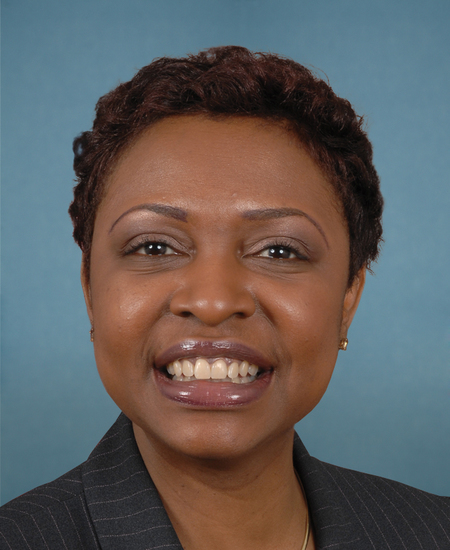
Rep. Yvette D. Clarke
Sponsored bills
Maddy summaryHCONRES 68 would require the President to remove U.S. military forces from Venezuela unless Congress has explicitly authorized their use through a declaration of war or a specific law. This applies to any U.S. Armed Forces currently stationed in Venezuela without such authorization. The resolution is based on the War Powers Resolution, which mandates congressional oversight of military deployments. It directs the immediate withdrawal of unapproved forces without adding new time limits or conditions.
Maddy summaryHRES 1018 is a resolution calling for the U.S. government and international partners to prioritize women's rights in Haiti's crisis response. It specifically demands ensuring at least 30% of Haiti's leadership positions (including security, humanitarian, and election roles) are held by women, funding services for gender-based violence survivors, and requiring gender-disaggregated data collection in all aid programs. The resolution also urges rebuilding U.S. Women, Peace, and Security programs and mandates that all policies address women's distinct needs in Haiti's transition. This resolution directly affects U.S. foreign policy implementation and Haiti's transitional government, emphasizing that women's inclusion is critical for stability.
Maddy summaryThe Language Access for All Act of 2026 requires federal agencies to ensure meaningful access to government services for people with limited English proficiency (LEP). Agencies must translate vital documents into languages commonly spoken in the U.S. (based on Census data), provide multilingual digital tools, interpretation services, and use bilingual staff as an alternative to professional interpreters. Each agency must create a language access plan within one year, detailing how it will serve LEP populations - including during emergencies - and annually certify compliance with technical standards. Noncompliance is treated as discrimination under civil rights law, with enforcement by the Department of Justice.
Maddy summaryHR 7190 would end immigration detention and electronic monitoring by requiring the immediate release of all detained noncitizens on their own recognizance within six months and repealing all federal laws authorizing detention. It prohibits using federal funds for detention facilities, ankle monitors, or immigration enforcement activities after specific deadlines (six months for monitors, two years for detention contracts). Instead, it establishes a new grant program to fund community-based wrap-around services - including housing, healthcare, mental health support, legal aid, and job training - provided voluntarily by non-profit organizations without surveillance or data sharing with federal agencies. The bill directly affects noncitizens currently held in detention or under electronic monitoring.
Maddy summaryHR 7183, the Youth Financial Learning Act, provides federal grants to state education agencies to integrate financial literacy education into public elementary and secondary schools. It directly affects schools by funding programs teaching consumer finance, credit, student loans, and financial aid through school-based curriculum, after-school partnerships with community organizations, and teacher training. Key provisions require states to provide 25% matching funds, prioritize high-need schools, ensure geographic diversity in program access, and use funds to supplement - not replace - existing education resources. The grants, available for up to four years, aim to enhance students' practical financial knowledge as part of a well-rounded education.
Maddy summaryHR 7173, the Follow the Science Act, restricts political appointees from influencing National Institutes of Health (NIH) operations and grant decisions. It prohibits most political appointees (defined broadly as those in policy-making roles) from being employed by NIH or participating in grant reviews, funding selections, or policy implementation. The bill requires the NIH Director to report on past political appointee involvement in these activities to Congress within 30 days of enactment. These changes aim to ensure NIH decisions are based on scientific merit rather than political influence, with limited exceptions for other federal agencies.
Maddy summaryHR 7124 prohibits the use of specific mobile biometric apps (Mobile Fortify and Mobile Identify) outside U.S. ports of entry, restricting them solely for border identification. It requires Homeland Security to remove these apps from all non-Department devices, ban sharing with other agencies, and destroy U.S. citizens' captured biometric data (photos/fingerprints) within 12 hours of collection at ports of entry. The bill directly affects U.S. citizens whose biometric data is collected during border processing. Key mechanisms include mandatory app removal, remote deactivation of unauthorized installations, and strict data destruction timelines.
Maddy summaryHRES 1004 is a symbolic House resolution honoring Dr. Martin Luther King, Jr.'s legacy by celebrating diversity and condemning hate. It specifically calls for the House to celebrate his 97th birthday on January 19, 2026, and to condemn harassment, discrimination, or prejudice targeting Black Americans, Indigenous people, Jewish, Asian-American/Pacific Islander, Muslim, Hispanic/Latino communities, and LGBTQ+ individuals. The resolution affirms Dr. King’s teachings on unity and equality but does not create new laws or impose obligations on any entity. As a ceremonial resolution, it has no legal effect and directly affects no individuals or groups.
Maddy summaryHR 7100 establishes a Department of Justice Task Force on Anti-Sikh Hate and Discrimination to address systemic bias against Sikhs. The Task Force must draft a formal definition of anti-Sikh hate for DOJ use, develop educational programs for law enforcement and schools, and produce annual reports on hate crimes and trends. It requires quarterly collaboration with Sikh organizations and translation of materials into Punjabi. The bill directly affects Sikhs in the U.S. (who face disproportionate targeting as noted in FBI data) and mandates federal agencies to improve hate crime data collection and response. This is a policy-focused measure to standardize definitions, enhance reporting, and support community safety through DOJ action.