

Maddy summaryThis bill removes a barrier for college students seeking food assistance by amending the SNAP program rules. It directly affects students enrolled at least half-time in recognized colleges or training programs, who were previously automatically ineligible unless they met separate requirements. The key change eliminates the prior restriction (in section 6(e)) that barred most higher education students from SNAP, allowing them to qualify under the new provision in section 3(m)(5)(F). The changes take effect January 2, 2024.
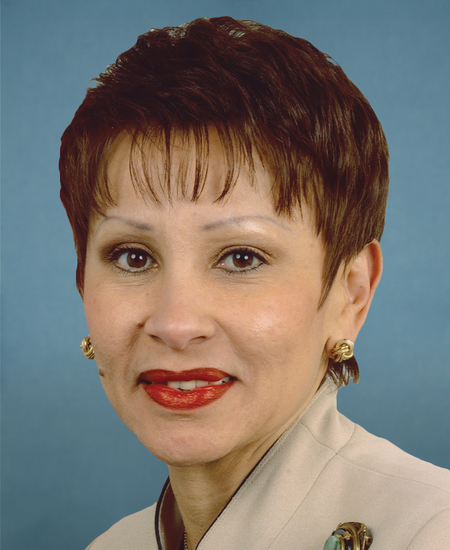
Rep. Nydia M. Velázquez
Sponsored bills
Maddy summaryThe Closing the Meal Gap Act of 2023 amends the Food and Nutrition Act to update how SNAP (Supplemental Nutrition Assistance Program) benefits are calculated. It replaces the "thrifty food plan" with a "low-cost food plan" based on a specific 4-person family diet, requiring the government to reevaluate this plan by 2029 and every 5 years after. The bill also updates medical expense deductions, eliminates time limits on benefits, and allows Puerto Rico to join SNAP with specific transition requirements. These changes directly affect SNAP recipients, particularly in Puerto Rico, Hawaii, and Alaska, by adjusting benefit calculations to better reflect current food costs.
Maddy summaryHRES 459 is a resolution expressing the House of Representatives' support for designating June 2, 2023, as "National Gun Violence Awareness Day" and June 2023 as "National Gun Violence Awareness Month." It encourages the public to wear orange, promote gun safety awareness, and discuss community safety measures during this time, particularly highlighting the summer months when gun violence often increases. The resolution references statistics on gun violence deaths and pays tribute to victims like Hadiya Pendleton, but does not create new laws or impose requirements.
Maddy summaryHRES 432 is a non-binding House resolution designating May as "Sex Ed For All Month" to promote inclusive, comprehensive sex education. It encourages schools, governments, and health organizations to adopt evidence-based programs that are medically accurate, culturally responsive, and inclusive of LGBTQ+ youth and racial/ethnic minorities. The resolution specifically recommends curricula covering consent, sexual health, and equity while discouraging programs that withhold critical information or perpetuate stereotypes. As a symbolic resolution, it does not create new laws but aims to influence policy discussions around youth sexual health access.
American Aviation Diversity Act This bill authorizes appropriations for the Federal Aviation Administration's Minority Serving Institutions (MSI) Intern Program. (This program is open to all eligible undergraduate and graduate college students who attend an accredited college or university. A focus of the MSI intern program is providing opportunities to eligible students from groups that have been underrepresented in aviation, aeronautics, and science, technology, engineering, or mathematics (STEM), such as African Americans, Asian Americans and other Pacific Islanders, Hispanics, Native Americans, Native Hawaiians or other Pacific Islanders, persons with disabilities, student veterans, and women.)
Enhancing Questions to Understand Intentions for Pregnancy Act of 2023 or the EQUIP Act of 2023 This bill requires the Centers for Disease Control and Prevention to provide eligible health organizations with demonstration program grants to implement routine screenings about people's pregnancy intentions in order to provide better contraceptive and prepregnancy care.
Maddy summaryThe Cady Housh and Gemesha Thomas Student Suicide Prevention Act of 2023 requires states to establish a policy mandating annual suicide prevention training for school staff and high school students (grades 9-12). The training must be evidence-based, cover recognizing suicide warning signs, appropriate responses, and referrals to mental health services, while including cultural competency. It allocates $48 million in federal funds, with at least 15% dedicated to supporting this training program, and requires states to collaborate with mental health experts. The bill directly affects school staff and high school students in states that adopt the policy and receive federal funding.
Maddy summaryHR 3619, the Toxic-Free Beauty Act of 2023, bans the intentional addition of specific chemicals - including formaldehyde, certain parabens, phthalates, mercury, and two dyes - to cosmetic products sold across state lines. It directly affects cosmetic manufacturers and retailers, requiring them to reformulate products to remove these substances. The ban prohibits these chemicals in cosmetics introduced into interstate commerce starting January 1, 2025. This policy change updates federal safety standards under the Federal Food, Drug, and Cosmetic Act to restrict the use of identified chemicals in beauty products.
Maddy summaryThis bill establishes research programs to study health impacts of cosmetic chemicals on communities of color and professional salon workers. It requires manufacturers to provide translated safety data sheets for professional cosmetics in multiple languages, including Spanish, Vietnamese, Chinese, and Korean. The bill funds two resource centers: one focused on beauty justice for communities of color and another specifically for salon worker health and safety. It also allocates funds for research into developing safer cosmetic alternatives, particularly for products marketed to women and girls of color and used by salon workers.
Cosmetic Fragrance and Flavor Ingredient Right to Know Act of 2023 This bill imposes disclosure and labeling requirements on cosmetic products that contain certain ingredients. A cosmetic product that fails to meet such requirements may not be sold. Within two years of this bill's enactment, a cosmetic product's labeling or packaging must include a full list of its ingredients, as well as a specified statement that directs consumers to the brand owner's website for the health impacts of any ingredient that (1) is identified on specified lists of harmful or potentially harmful chemicals, such as chemicals identified as carcinogenic to humans by the Environmental Protection Agency or toxic air contaminants under California regulations; or (2) must be disclosed under certain European Union laws and is present in a product above specified concentrations. The Food and Drug Administration must publish and periodically update on its website a list of the ingredients subject to this requirement. Within one year of this bill's enactment, a brand owner must disclose the full list of ingredients for each cosmetic product on its website, as well as whether a cosmetic product contains any fragrance or flavor ingredient that is subject to this bill's labeling or packaging requirement and, if so, the ingredient's functional purpose.