

Maddy summaryThe Equality Act (HR 15) would amend federal civil rights laws to explicitly prohibit discrimination based on sexual orientation and gender identity in public accommodations, housing, employment, credit, and jury service. It amends the Civil Rights Act of 1964 to include sexual orientation and gender identity as protected characteristics under existing sex discrimination provisions. The bill would require businesses, housing providers, employers, and government entities to provide equal access and services without regard to a person's sexual orientation or gender identity. It includes specific definitions for gender identity and sexual orientation to clarify protections across all covered areas. The law would apply to all entities covered by the Civil Rights Act of 1964, including those receiving federal funding.
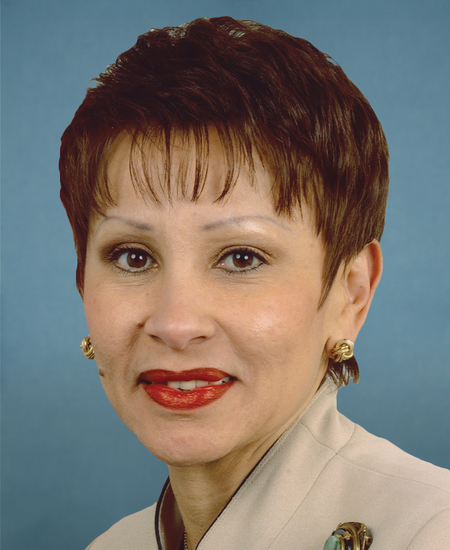
Rep. Nydia M. Velázquez
Sponsored bills
Maddy summaryThis symbolic House Resolution (HRES 526) reaffirms U.S. commitment to refugee safety and well-being, introduced around World Refugee Day (June 20, 2023). It cites UNHCR data showing over 108 million displaced people globally and highlights historically low U.S. refugee admissions (11,411 in FY2021, 25,465 in FY2022). The resolution calls on U.S. officials to restore asylum protections, meet robust refugee admissions goals, support host countries, and advance refugee rights through international partnerships. It does not create new law but expresses bipartisan support for strengthening U.S. leadership in refugee protection.
Maddy summaryHR 4209, the Incentivizing Safe and Sound Banking Act, prohibits senior executives at large banks from selling securities they received as compensation if the bank faces regulatory issues. It directly affects senior executives at bank holding companies, bank subsidiaries, or banks with over $50 billion in assets that receive a poor regulatory rating (3-5) or fail to resolve issues noted by regulators within a deadline. The bill automatically blocks such stock sales until the bank fixes the problem to the regulator's satisfaction. This provision aims to align executive compensation with bank stability by preventing sales during periods of regulatory concern. The law amends the Federal Deposit Insurance Act to implement these restrictions.
Maddy summaryThis bill requires large standalone banks (those without a parent bank holding company) to follow the same enhanced supervision and prudential standards as bank holding companies with similar asset sizes. It amends the Financial Stability Act of 2010 to close a regulatory gap where these standalone banks previously faced fewer oversight requirements. The key mechanism mandates that banks with total consolidated assets comparable to covered bank holding companies must undergo identical stress testing, capital planning, and risk management processes. This directly affects large, independent banks that operate without a parent financial holding company but have significant assets.
Maddy summaryThis bill requires financial regulators to reclaim compensation from bank executives and directors whose negligence caused a bank's failure. It allows the FDIC to claw back salaries, bonuses, and other compensation received in the two years before the bank failed (with no time limit for fraud), and imposes fines of up to $25,000 per day for negligent conduct. Executives found responsible for a bank's failure may also face orders prohibiting them from working in any insured bank. The law directly affects executives and directors of failed institutions like Silicon Valley Bank, Signature Bank, and First Republic Bank. It amends the Federal Deposit Insurance Act and Dodd-Frank Act to strengthen accountability mechanisms without limiting existing regulatory powers.
Maddy summaryHR 4121, the Right to Contraception Act, establishes a federal statutory right for individuals to access contraceptives and contraception services without government restriction or coercion, directly affecting all people seeking reproductive care and health care providers. The bill prohibits state or federal laws that limit access to contraceptives (defined broadly to include devices, drugs, and fertility methods), prevent individuals from obtaining or using them, or allow providers to refuse services based on personal beliefs. It preempts conflicting state laws, requires any restrictions to be justified by "clear and convincing evidence" of advancing access with no less restrictive alternative, and allows private lawsuits to challenge violations. The Act applies nationwide to all health care providers and individuals, protecting access regardless of factors like race, income, or location.
Maddy summaryHR 4052, the National Infrastructure Bank Act of 2023, would establish a federally chartered National Infrastructure Bank to address the estimated $2.6 trillion infrastructure financing gap identified by the American Society of Civil Engineers. The bank would provide loans, loan guarantees, and blended financing for infrastructure projects in transportation, energy, environmental systems, broadband, and community development, with a total loan limit of $5 trillion. Projects must demonstrate public benefits including economic growth, job creation, environmental improvements, and community development, with priority given to disadvantaged communities and projects meeting specific criteria. The bank would be capitalized with up to $500 billion through the purchase of Treasury securities and other means, operating under a 25-member Board of Directors with oversight mechanisms to ensure accountability.
Maddy summaryThe Cleaner Air Spaces Act of 2023 creates a federal grant program to help air pollution control agencies establish clean air centers and provide free air filtration units to low-income households with vulnerable members during wildfire smoke events. It directly affects households in low-income communities that include individuals at high risk from wildfire smoke due to health conditions, disability, or age. The program requires agencies to partner with community organizations, set up accessible clean air centers in smoke-prone areas, distribute at least 1,000 free air filtration units per program (with one replacement per unit), and collect usage data through surveys. The bill authorizes $30 million over three years for these grants, with a requirement for agencies to report program outcomes to Congress within three years.
Maddy summaryThis bill requires publicly traded companies to disclose voluntary self-identified data on the race, ethnicity, gender, and veteran status of their board members, board nominees, and executive officers in annual reports or proxy statements. Companies must also report whether they have diversity policies for these groups, with disclosures required annually or in the next annual report if no proxy statement is filed that year. The Securities and Exchange Commission must analyze this data annually, publish trends, and establish a diversity advisory group to study strategies for improving board diversity. The bill focuses solely on transparency and reporting requirements without mandating specific diversity outcomes.
Maddy summaryHR 4172, the Hate Crimes Commission Act of 2023, establishes a 12-member United States Commission on Hate Crimes to investigate trends and improve responses to hate crimes. The commission, appointed by Senate and House leaders plus the Attorney General and Secretary of Health and Human Services, will examine hate crime increases since 2015, factors driving them, and strategies to reduce underreporting to the FBI’s National Incident-Based Reporting System. It will also assess successful bias prevention efforts and online hate crime prevalence. Within one year of its formation, the commission must submit a report to Congress and the President with recommendations for federal agencies and community-based prevention programs. This bill directly affects local law enforcement agencies through reporting requirements and federal agencies through proposed policy changes.