

Protect Sexual and Reproductive Health Act of 2023 This bill requires the Department of Health and Human Services (HHS) to undertake activities to promote access to sexual and reproductive health and well-being. The bill renames HHS's Office of Population Affairs as the Office of Sexual and Reproductive Health and modifies its responsibilities. Among other activities, the office must develop and implement a strategy to promote sexual and reproductive health and well-being. This strategy must include recommendations to integrate sexual and reproductive health equity and reproductive justice into federal programs. HHS must also award grants for improving access to sexual and reproductive health care to nonprofit or community-based organizations that assist individuals seeking abortion services through programs that are unbiased and medically and factually accurate. Additionally, HHS and the Director of the White House Gender Policy Council must jointly establish an interagency task force to coordinate and promote federal programs and activities related to sexual and reproductive health and well-being.
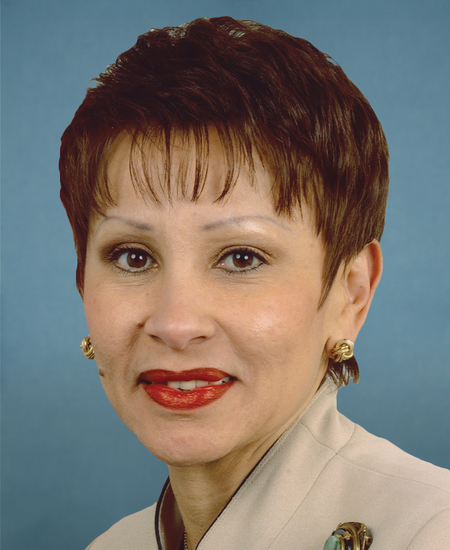
Rep. Nydia M. Velázquez
Sponsored bills
Maddy summaryHR 4270 creates a federal grant program to fund green roofs on public elementary and secondary schools. It provides grants for planning, installing, and maintaining vegetated roofs that improve energy efficiency, reduce stormwater runoff, and offer educational opportunities. Schools serving communities where at least 30% of students are from low-income households receive priority, and grants require ADA compliance and plans for local workforce hiring. The program includes 5 years of maintenance funding after installation to ensure long-term energy savings and environmental benefits.
Maddy summaryHR 4268, the Reproductive Health Travel Fund Act of 2023, would provide $350 million annually (2024-2028) in federal grants to nonprofit organizations that help individuals cover travel and logistical costs for accessing abortion care across state lines. The bill directly supports people living in states with abortion bans or severe restrictions who must travel for care, including expenses like transportation, lodging, childcare, meals, and lost wages. Grants may not fund abortion procedures themselves but cover related logistical barriers identified in the bill’s findings, such as increased travel times and costs post-Dobbs. Eligible organizations must provide unbiased, medically accurate assistance, with priority given to those serving individuals traveling to access abortion services.
Maddy summaryHR 3519, the Hot Foods Act of 2023, amends the Food and Nutrition Act of 2008 to allow Supplemental Nutrition Assistance Program (SNAP) benefits to be used for hot foods or hot food products ready for immediate consumption at participating retailers. This change directly affects SNAP recipients who purchase such hot foods and retailers that sell them. The key provision removes the previous exclusion of hot foods from SNAP eligibility, while adding a limit that no more than 50% of a retailer's total gross sales from SNAP can come from hot foods. The bill clarifies that hot foods can be purchased for home or immediate consumption, aligning SNAP rules with current retail practices for prepared foods.
Maddy summaryThe SAFE Act of 2023 extends a 2018 law that prohibits slaughtering animals for human consumption to include horses, donkeys, and other equine animals, such as ponies. It amends Section 12515 of the Agriculture Improvement Act of 2018 by updating the language to replace "dog or cat" with "dog, cat, or equine" in both the section title and the main prohibition. This change directly affects the livestock industry and slaughter facilities by banning the processing of equines for food. The bill modifies existing law without adding new enforcement mechanisms, closing a gap in animal protection.
Maddy summaryThis bill appropriates $11.5 billion from unobligated Treasury funds for fiscal year 2023 to replenish the Disaster Relief Fund. The funds directly support disaster relief efforts under the Robert T. Stafford Disaster Relief Act for major disasters declared by the federal government. The bill designates these funds as an emergency requirement under budget rules, allowing them to bypass standard budget scoring procedures. It does not create new policy or alter eligibility for disaster assistance - only provides funding to maintain existing relief programs.
Maddy summaryThe LGBTQI+ and Women's History Education Act of 2023 would provide $2 million annually for five years to develop educational resources about women's and LGBTQI+ history for K-12 classrooms. The bill directs the Smithsonian's National Museum of American History to create inclusive teaching materials that address historical gaps where women and LGBTQI+ individuals, particularly those of color and with disabilities, have been underrepresented. These resources would include digital content, print materials, and professional development for teachers to help implement more comprehensive curricula. The bill aims to address findings showing only 13% of named historical figures in textbooks are women and that LGBTQI+ history is often omitted or marginalized in school curricula. The program would require annual reports to Congress on how funds are used, with the program set to sunset in 2028.
Maddy summaryHR 4289 prohibits "buy now, pay later" financing for firearms classified as "assault weapons" under the bill. It bans such loans for consumers purchasing these weapons and makes it illegal for dealers, manufacturers, or importers to accept funds from these loans for assault weapon sales. The law defines assault weapons to include rifles with features like folding stocks, detachable magazines, or pistol grips, and pistols with specific attachments or capacity limits. Violations carry $100,000 civil penalties assessed by the Attorney General. This directly affects consumers seeking to finance these weapons and the businesses selling them.
Maddy summaryHJRES 76 proposes renaming the Robert E. Lee Memorial in Arlington National Cemetery to the "Arlington House National Historic Site." This procedural bill would replace all official references to the memorial with the new name and repeal two prior resolutions (1955 and 1972) that established the memorial. The change affects how the site is identified in federal laws, documents, and records but does not alter its management or historical significance. The bill focuses solely on the official designation, not on policy changes or historical interpretation.
Maddy summaryThis bill establishes the John Lewis Civil Rights Fellowship Program within the Fulbright exchange system to honor civil rights leader John Lewis and advance U.S. foreign policy through global civil rights education. It creates a new fellowship for U.S. early- to mid-career professionals, selecting at least 25 annually for 10-month programs to conduct research or intern with approved organizations in countries participating in Fulbright exchanges. Fellows must complete a work plan, attend an orientation in Washington, DC, and present findings at an annual summit, with the State Department covering costs for travel, lodging, and expenses. The program requires annual reports on participant demographics and program effectiveness, and expires seven years after enactment.