

Maddy summaryThe FABRIC Act amends the Fair Labor Standards Act to establish new protections for workers in the garment industry. It prohibits piece-rate pay, requiring employers to pay hourly wages that meet or exceed minimum wage standards, while allowing incentive bonuses. The bill creates joint liability for "brand guarantors" (brands that contract with garment manufacturers) for labor violations, and requires garment manufacturers and contractors to register with the Department of Labor, providing detailed business and employee information. The law also establishes an Undersecretary of the Garment Industry and a support program to fund workforce development and equipment for U.S. garment manufacturers. These provisions directly affect garment workers, manufacturers, contractors, and major fashion brands that contract with them.
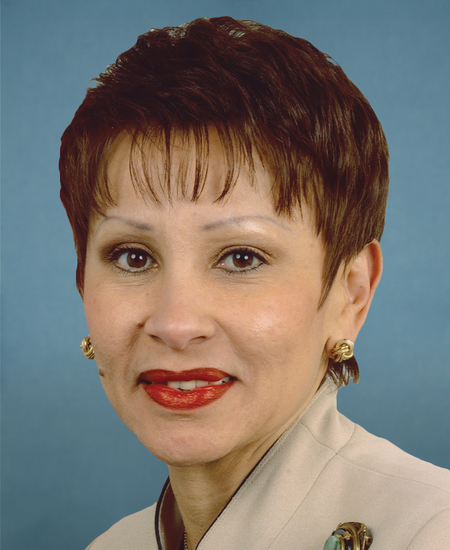
Rep. Nydia M. Velázquez
Sponsored bills
Maddy summaryHRES 682 is a symbolic resolution designating the week beginning September 11, 2023, as "National Hispanic-Serving Institutions Week." It does not create new programs or funding but formally recognizes Hispanic-Serving Institutions (HSIs) for their role in educating Hispanic students and underserved communities. The resolution calls for the public to observe the week with ceremonies during Hispanic Heritage Month, highlighting HSIs' contributions to higher education access and economic mobility. This resolution affects no specific entities or policies, as it is purely commemorative.
Maddy summaryHR 5454, the *Fairness in Shaping Small Business Contracting Policies Act of 2023*, adds the Administrator of the Small Business Administration (SBA) as a voting member to the Federal Acquisition Regulatory Council (FAR Council), which sets rules for federal procurement. This change directly affects the SBA and the FAR Council by requiring the SBA Administrator to participate in decisions about how the government contracts with businesses. The bill also mandates two reports: first, within 90 days of enactment, the SBA must detail staffing needs and recommend improvements for its new role; second, annually, the SBA must report on delays in issuing rules related to federal contracting actions and suggest ways to speed up the process. These provisions aim to integrate small business perspectives more formally into federal procurement rulemaking.
Maddy summaryHR 5436, the Expand Emergency Housing Act, modifies housing funding rules to expand emergency assistance. It waives a public service expenditure cap for fiscal year 2024 funds dedicated to preventing, preparing for, and responding to homelessness and emergency rental assistance. The bill also requires HUD to revise regulations so emergency grant payments (up to 6 consecutive months) provided to individuals or families do not count as "income payments" for eligibility purposes. This directly benefits people facing housing instability by making emergency aid easier to access without reducing their eligibility for other assistance programs.
Maddy summaryHR 5428, the No Tax Breaks for Union Busting (NTBUB) Act, prevents employers from deducting certain expenses related to influencing workers' decisions about union representation. It targets spending on tactics like anti-union meetings, workplace surveillance, or consultants during organizing campaigns, making these costs non-deductible for tax purposes. Employers must report such expenses on their tax returns, including details about the activities and amounts spent. The bill aims to remove tax incentives for employer interference in union elections, aligning with federal labor law protections for workers' collective bargaining rights.
Women's Business Centers Improvement Act of 2023 This bill reauthorizes the Women's Business Center Program through FY2027, raises the cap on individual center grants, establishes an accreditation program for grant recipients, and revises the duties of the Office of Women's Business Ownership. Specifically, the bill modifies the Women's Business Center Program to enable the Small Business Administration (SBA) to provide initial and continuation grants to eligible entities to operate women's business centers for the benefit of women-owned small businesses. The SBA must also publish standards for a program to accredit entities that receive grants from the Women's Business Center Program, and such entities' receipt of continuation grants shall be contingent upon their obtaining accreditation.
Maddy summaryThe Small Business Development Centers Improvement Act of 2023 updates how the Small Business Administration supports small business development centers, women's business centers, and SCORE (Service Corps of Retired Executives). It requires annual reporting on program activities including participant demographics, jobs created, and capital secured, and establishes a working group to improve data collection systems. The bill allows small business development centers to use up to 10% of program funds for marketing and collect fees from private partnerships. It also restricts new grants to entities that previously received SBDC funding and limits the SBA's ability to create new entrepreneurial development programs without specific congressional authorization.
Maddy summaryHR 5322, the Time Off to Vote Act, requires most private employers (with 25+ employees) to provide two consecutive hours of paid leave for employees to vote in federal elections. Employers must grant this leave upon request, can schedule it during early voting periods if permitted by state law, and cannot include lunch breaks in the leave period. The bill prohibits retaliation against employees who take this leave and ensures it does not affect accrued employment benefits. Violations could result in civil penalties up to $10,000 per offense, enforced by the Department of Labor.
Maddy summaryThe Sustaining Our Democracy Act creates a federal program to provide states with annual funding to improve election administration and increase voting access. It allocates $2 billion each year from 2024-2033 through the State Election Assistance and Innovation Trust Fund to support activities like upgrading voting equipment, training election workers, and expanding voting access for underserved communities, people with disabilities, and voters on Indian lands. States must submit detailed plans for using funds, which cannot be used for activities that restrict voting access or target election officials. The Act establishes an Office of Democracy Advancement and Innovation to administer the program, monitor fund usage, and oversee compliance with its requirements.
Maddy summaryHR 5295, the Expanding the VOTE Act, modifies Section 203 of the Voting Rights Act to expand language access for voters. It requires states and localities to provide voting materials (including ballots and instructions) in the language of covered language minority groups, with new provisions for American Indian and Alaska Native languages requiring tribal government consultation for unwritten languages. The bill creates $15 million in grants to help jurisdictions provide voting materials in languages that don’t currently trigger Section 203 coverage, while mandating continued provision for those groups in future elections. It also directs a study to evaluate lowering population thresholds for language protections and expanding the definition of covered languages.