

Maddy summaryThis bill creates a 5-year pilot program where the U.S. Department of Housing and Urban Development (HUD) will insure loans for homeowners who want to convert their basement spaces into safe, habitable rental units. The program, limited to 150,000 loans, requires all converted spaces to meet state and local building safety standards and comply with HUD regulations. It prioritizes properties in areas prone to natural hazards, as identified through consultation with FEMA and NOAA. The program aims to expand affordable rental housing options by making basement conversions financially feasible for homeowners.
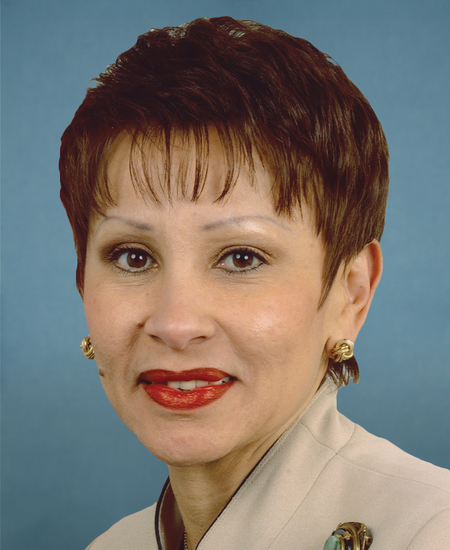
Rep. Nydia M. Velázquez
Sponsored bills
Maddy summaryThe Working Dog Commemorative Coin Act (HR 807) directs the U.S. Treasury to mint three types of commemorative coins honoring working dogs' service: $5 gold coins, $1 silver coins, and half-dollar coins with specific weight and composition requirements. Each coin will carry a surcharge ($35 for $5 coins, $10 for $1 coins, $5 for half-dollars) that will be paid directly to America's VetDogs to support their programs providing service dogs for veterans, the disabled, and others. The coins will be issued in 2027 with designs reflecting working dogs' roles in military, detection, therapy, and assistance work. The legislation specifies that all surcharge revenue must fund America's VetDogs' operations without creating new government programs. This is a commemorative measure focused on honoring working dogs' contributions through coin sales, with all surcharge funds going to a specific nonprofit organization.
Maddy summaryThe Honoring Family-Friendly Workplaces Act establishes a federal certification program for employers that implement specific family-supportive policies. To earn certification, employers must offer paid family leave (at least 12 weeks annually for reasons like childbirth, adoption, or caring for a sick family member), paid sick days separate from other leave, childcare subsidies or on-site infant care, flexible scheduling after parental leave, and lactation support. The program, administered by the Secretary of Labor, is voluntary and requires employers to apply and demonstrate compliance with these requirements. It directly affects employers seeking recognition for their family-friendly workplace practices, not employees or existing legal obligations.
Maddy summaryThis bill establishes a Truth and Healing Commission to investigate the history and impacts of U.S. Indian Boarding School policies on Native American communities, including cultural, emotional, and physical effects on survivors, descendants, and tribal communities. The Commission will document these impacts through research, public meetings, and testimony, working with two advisory committees focused on Native American perspectives and Federal agency coordination. The Commission will operate for six years, with annual reports to Congress and a final report containing recommendations for Federal action. The bill also includes provisions for managing burial sites related to boarding schools and ensures the Native American Graves Protection and Repatriation Act applies to remains found on Federal lands related to these schools.
Maddy summaryThis bill modifies the SBA's 504 loan program to better support small manufacturers. It increases the maximum loan amount for manufacturing projects from $5.5 million to $6.5 million, reduces upfront contribution requirements for small manufacturers (to 5% in most cases), and eliminates extra collateral requirements for these businesses. The bill also simplifies loan closing procedures by allowing lenders to adjust project costs up to 10% or correct minor errors like property addresses. These changes directly affect small manufacturers seeking SBA 504 loans for real estate, equipment, or facility improvements under the program.
Maddy summaryHR 10244, the Improving SBA Engagement on Employee Ownership Act, requires the Small Business Administration (SBA) to actively participate in federal meetings about employee ownership and cooperatives. Specifically, the SBA Administrator must attend working groups or engagements hosted by other federal agencies - either when invited or based on prior relationships. The bill also updates outreach requirements to include investors and limited partners in Small Business Investment Company (SBIC) programs. Within 180 days of enactment, the SBA must implement these changes through its existing Employee Ownership and Cooperatives Promotion Program. This bill directly affects SBA operations and its engagement with employee-owned businesses and related investors.
Maddy summaryHR 10210 establishes a National Plan for Epilepsy to coordinate federal efforts in preventing, diagnosing, treating, and curing epilepsy. It requires the Secretary to create an Advisory Council with patient representatives, caregivers, medical experts, and researchers, and mandates annual assessments and reports to Congress on progress and recommendations. The law directly affects millions of people with epilepsy in the U.S. (nearly 3 million adults and 456,000 children) and directs federal agencies like NIH and CDC to share data and improve services. Annual reports will track progress toward reducing uncontrolled seizures, improving care access, and addressing disparities in epilepsy care.
Maddy summaryThis bill protects donors (including individuals, manufacturers, and distributors) and nonprofits from legal liability when providing menstrual products - such as pads, tampons, cups, or liners - in good faith to people in need. It shields them from lawsuits related to the product's condition, age, or packaging, as long as the items meet all federal, state, and local safety standards (even if not commercially sellable). The protection does not apply if gross negligence or intentional harm causes injury. The law directly supports access to essential menstrual products for vulnerable individuals through nonprofit distribution networks.
Maddy summaryThis bill establishes federal grants to expand training and support services for unpaid caregivers of people with Alzheimer's disease or related dementia. It authorizes funding for organizations like senior centers, area agencies on aging, and community health centers to provide direct caregiver support, requiring at least 50% of grant funds to go directly to services (not administration) and limiting administrative costs to 10%. Priority is given to nonprofit organizations serving underserved communities, including minority, low-income, and disability communities. The program, funded for fiscal years 2025-2029, aims to improve access to culturally appropriate caregiver resources nationwide.
Maddy summaryThis bill establishes an Office of Credit Risk Management within the Small Business Administration to oversee the SBA's 504 loan program. It requires the Office to conduct random file reviews of 504 loan closings (with 60-day reporting), supervise certified development companies (CDCs), and enforce rules through formal actions or fees. CDCs are directly affected, facing mandatory file reviews, potential penalties for violations (up to $250,000), and new fees based on their loan portfolio size. The bill also mandates SBA rules for CDCs to comply with environmental review requirements under the National Environmental Policy Act.