

Maddy summaryThe Food Deserts Act creates a federal grant program to help establish grocery stores in underserved communities by funding state revolving funds. States receive capitalization grants (up to $150 million for FY2022) to provide low-interest loans to grocery stores that meet specific criteria, such as selling unprocessed, affordable healthy foods and matching 20% of the loan with non-federal funds. Priority is given to stores hiring local workers, offering nutrition education, sourcing from local farms, and having established supply chains. The program directly supports grocery store operators in areas with limited access to fresh food, aiming to improve community health outcomes through increased access to nutritious options.
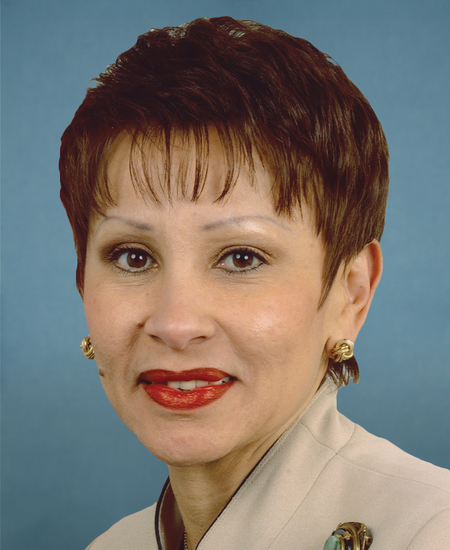
Rep. Nydia M. Velázquez
Sponsored bills
Safe Charging Electrical Bikes and Scooters Act This bill establishes a program to provide grants for the installation of publicly accessible lithium-ion battery power charging stations for electric bicycles and scooters. Under the program, the Department of Transportation (DOT) may award grants to local governments for the acquisition or installation of safe lithium-ion battery power stations and storage for electric bicycles or scooters in public places. Public places include any public road or other publicly accessible location, such as parking facilities at public buildings and public parks or publicly accessible parking facilities owned or managed by private entities. DOT must also develop a publicly available educational program about the health and safety risks related to these types of lithium-ion batteries and how to buy, store, and charge the batteries. Further, DOT must conduct a study on the number of uncertified lithium-ion batteries for electric bicycles and scooters that are currently available in the U.S. market. DOT must report on the study and provide recommendations for legislative or regulatory action to ensure the availability of certified and affordable lithium-ion batteries in the U.S. market.
Maddy summaryThe TRACK Act of 2023 requires federal agencies (including HHS, NIH, Defense, and Veterans Affairs) to create a public database tracking all government funding for biomedical research and development. It compiles specific details about contracts, grants, licensing agreements, and tax benefits related to drug, device, and therapy development - including funding amounts, recipient organizations, product names/prices, and patent information. The database must be searchable by the public within one month of the bill’s enactment and updated every two weeks. This directly affects federal agencies managing biomedical funding and the private companies, institutions, and researchers receiving that support. The goal is to increase transparency about how taxpayer dollars fund medical product development.
This resolution expresses support for the goals and ideals of Endometriosis Awareness Month. Endometriosis is a painful condition in which the tissue that normally lines the inside of the uterus grows outside the uterus.
Maddy summaryThis bill expands the U.S. Postal Service's (USPS) subpoena authority for investigations into specific violations. It allows the Postmaster General to issue subpoenas requiring production of records and testimony related to "covered offenses," including postal law violations, mail-related crimes under Title 18, certain federal laws, and mail-related drug offenses under the Controlled Substances Act. Subpoenas can demand records (like documents or evidence) and testimony from custodians about those records' authenticity, though they cannot require testimony in investigations under section 3005(a). The bill also restricts approval of subpoenas to the General Counsel, a Deputy General Counsel, or the Chief Postal Inspector.
Maddy summaryThis bill authorizes a Congressional Gold Medal to honor the "Hello Girls" - female telephone operators who served in the Army Signal Corps during World War I. They provided critical battlefield communications in France (connecting 26 million calls), wore military uniforms, and faced combat risks, but were denied veteran benefits for 60 years due to being classified as civilian contractors. The medal recognizes their pioneering service, devotion, and the decades-long struggle to gain military recognition. The award follows similar recognition for other WWII women veterans and aims to correct the historical injustice they faced.
Maddy summaryHRES 219 is a symbolic resolution (not a binding bill) expressing the House’s support for inclusive public schools. It urges schools to adopt historically accurate, diverse educational materials that reflect the nation’s diversity, foster parent-educator partnerships, and eliminate discrimination based on race, disability, LGBTQ+ identity, or other factors. The resolution emphasizes creating safe, well-rounded learning environments that prepare all students for success while protecting students’ civil rights. It directly affects public school districts, educators, families, and students by encouraging practices that promote equity and inclusion.
This resolution expresses support for the designation of COVID-19 Victims and Survivors Memorial Day to memorialize the lives lost to the COVID-19 pandemic.
Maddy summaryHRES 185 is a non-binding House resolution declaring racism a public health crisis in the United States. It directly affects communities of color - including Black, Latino, Native American, and Asian American populations - who experience significant health disparities like higher infant mortality rates, shorter life expectancy, and worse outcomes for conditions like heart disease and diabetes. The resolution cites evidence showing racism meets all four public health crisis criteria (widespread impact, unfair distribution, preventable, and lacking current solutions) and calls for a nationwide strategy to dismantle systemic racism and address its health impacts. It does not create new laws or funding but urges federal agencies to prioritize racial equity in health policy.
Maddy summaryHR 1499, the Good Jobs for Good Airports Act, requires airports receiving federal funding to pay covered service workers a minimum wage of at least $15 per hour (or higher if state/local laws or federal standards require it) and provide minimum fringe benefits. It directly affects workers in specific airport roles like security, ticketing, concessions, cleaning, and ramp services at small, medium, or large hub airports. The bill mandates annual certification from airport operators to verify compliance with these wage and benefit standards, tied to eligibility for federal airport grants under the Infrastructure Investment and Jobs Act. It does not override stricter state or local laws but ensures minimum standards for workers supporting airport operations.