

Raise the Age Act of 2023 This bill establishes new restrictions on the sale or transfer of certain semiautomatic firearms to individuals under 21 years of age. Specifically, this bill makes it unlawful for a licensed gun dealer, importer, manufacturer, or collector to sell or deliver a semiautomatic center-fire rifle or semiautomatic center-fire shotgun that has (or has the capacity to accept) an ammunition feeding device with a capacity of more than five rounds to an individual who the licensee knows or has reasonable cause to believe is under age 21. The prohibition does not apply if the individual under age 21 is a full-time law enforcement officer or active-duty member of the Armed Forces. The bill also requires the Federal Bureau of Investigation to report on the operation of its public access line, including a description of information sharing protocols and recommendations for improving such protocols.
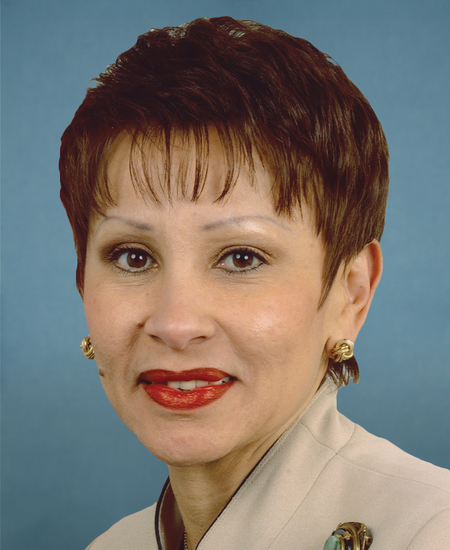
Rep. Nydia M. Velázquez
Sponsored bills
Maddy summaryHR 2899, the STOP Violence Act of 2023, adds $20 million in federal grants to help states, local governments, and nonprofits prepare public assembly facilities (like schools, malls, and event venues) for mass violence. The funds are specifically for providing compensation, training, and technical assistance to these facilities to enhance their safety measures against incidents such as active shooter attacks or targeted violence. The bill defines "mass violence" to include active shooter incidents (where someone uses a firearm to kill or attempt to kill in a crowded area) and targeted violence (where an assailant identifies a specific person, group, or institution before attacking). These grants aim to directly support facilities that host large gatherings of people, focusing on practical safety improvements.
Secure Background Checks Act of 2023 This bill extends federal restrictions on the receipt, possession, shipment, and transportation of firearms and ammunition to two new categories of persons: persons who fail to meet the minimum age requirements imposed by federal law and by the law of their resident state; and persons who are out-of-state residents and do not qualify for an exception, such as the temporary loan or rental of a firearm for lawful sporting purposes. Additionally, the bill imposes criminal penalties—a fine, a prison term of up to 10 years, or both—on an individual who ships, transports, or receives a firearm or ammunition while under indictment for a crime punishable by imprisonment for a term exceeding 1 year.
End Gun Violence Act of 2023 This bill extends federal restrictions on the sale or disposition of firearms and ammunition to a new category of persons: persons who have been convicted in any court of a violent misdemeanor within the preceding five years.
Maddy summaryThe Right to Read Act of 2023 defines an "effective school library" as one with certified librarians, adequate resources, and support for digital and information literacy. It requires states and school districts to ensure all students, particularly those in under-resourced schools, have access to such libraries through new reporting requirements and funding mechanisms. The bill provides $500 million annually for literacy programs and mandates biennial data collection on school library resources. It also protects staff from liability for following right-to-read policies and requires school libraries to uphold First Amendment rights by providing diverse reading materials without political bias.
Ending Qualified Immunity Act This bill eliminates the defense of qualified immunity in certain civil actions for deprivation of rights. Qualified immunity is a judicially created doctrine that protects government officials from being held personally liable for constitutional violations. The bill provides that, under the statute allowing a civil action alleging deprivation of rights under color of state law, it shall not be a defense or immunity to any such action that (1) the defendant was acting in good faith or believed that his or her conduct was lawful at the time it was committed; (2) the rights, privileges, or immunities secured by the Constitution or federal laws were not clearly established at the time of their deprivation; or (3) the state of the law was such that the defendant could not reasonably have been expected to know whether his or her conduct was lawful.
Maddy summaryThe Water Affordability, Transparency, Equity, and Reliability Act of 2023 establishes a new trust fund funded by increasing the corporate tax rate from 21% to 24.5% to support water infrastructure and affordability programs. It allocates funds to clean water programs (42%), safe drinking water funding (42.5%), household water wells (1%), colonias assistance (0.5%), Indian health services (3%), and water operator job training (0.5%). The bill requires the EPA to conduct a study and submit a report on water affordability, discrimination in water services, public participation in regionalization, and data collection related to service disconnections. It includes specific provisions for colonias, household water wells, and job training programs for water system operators to improve water access and equity.
Maddy summaryThis bill establishes a comprehensive framework to address environmental justice by requiring federal agencies to identify and address disproportionately adverse environmental and health effects on communities of color, low-income communities, and Tribal and Indigenous communities. It creates a White House Environmental Justice Interagency Council to coordinate federal efforts, mandates that agencies develop environmental justice strategies, and requires consideration of cumulative impacts in permitting decisions for pollution sources. The bill also establishes grant programs for environmental justice communities, creates training requirements for federal employees, and includes specific provisions for safer cosmetics and economic revitalization in fossil fuel-dependent communities. These provisions aim to ensure fair treatment and meaningful involvement of all people in environmental decision-making processes, directly affecting federal agencies and communities disproportionately burdened by environmental hazards.
This bill expresses the sense of Congress that (1) medication abortion is appropriately approved and regulated under federal law, and (2) federal law preempts any in-person dispensing requirements or telehealth restrictions with respect to medication abortion under state law.
Maddy summaryThis resolution (HRES 316) designates the week of April 9-15, 2023, as "National Young Audiences Arts for Learning Week." It expresses congressional support for recognizing arts education programs run by Young Audiences Arts for Learning, a nonprofit network that provides arts-integrated learning in schools. The resolution honors the organization’s work, which serves over 4 million students annually through programs in 30+ affiliates across the U.S. As a non-binding resolution, it has no legal effect but aims to raise awareness about arts education’s role in student development.