

United States-Israel PTSD Collaborative Research Act This bill establishes a grant program for collaborative efforts between the United States and Israel to advance research on post-traumatic stress disorders. The Department of Defense, in coordination with the Department of Veterans Affairs and the Department of State, shall award grants to eligible academic institutions or nonprofit entities in the United States. Work shall be conducted by the eligible entity and an entity in Israel under a joint research agreement.
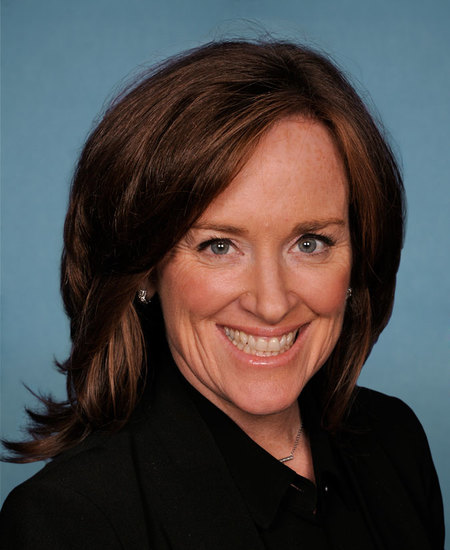
Rep. Kathleen M. Rice
Sponsored bills
COVID-19 Whistleblower Protection Act This bill establishes whistleblower protections for government contractors and private sector workers who may witness waste, fraud, or abuse or be victims of misconduct with respect to a COVID-19 (i.e., coronavirus disease 2019) pandemic-related program, project, or activity. Specifically, employers may not discharge, demote, or otherwise discriminate against such protected individuals who disclose information concerning fraud, misuse, or other misconduct related to COVID-19 program funds. A protected individual may submit to the Department of Labor a complaint alleging a violation of these protections and Labor may adjudicate such complaints and award relief in accordance with the Internal Revenue Service whistleblower procedures.
Real Economic Support That Acknowledges Unique Restaurant Assistance Needed To Survive Act of 2021 or the RESTAURANTS Act of 2021 This bill temporarily establishes and provides funding for the Restaurant Revitalization Fund, from which the Department of the Treasury shall make grants to eligible food and beverage purveyors to cover specified costs such as payroll, operational expenses, and paid sick leave. For the grant program's initial period, Treasury must (1) prioritize awarding grants to marginalized and underrepresented communities, and (2) only award grants to eligible food and beverage purveyors with annual revenues of less than $1.5 million in 2019. For tax purposes, grant amounts are excluded from the recipient's gross income. An entity that received a loan under the Paycheck Protection Program established to support small businesses in response to COVID-19 (i.e., coronavirus disease 2019) may not apply for or use a restaurant revitalization grant for the same expenses for which the entity received the paycheck protection loan. Further, a grant applicant may request an additional amount to cover the cost of providing 10 days of paid sick leave to its employees. Treasury must report a list of grant recipients with the amount each recipient received, as well as demographics and other specified information.
Supporting State and Local Leaders Act This bill repeals the prohibition against granting state and local governments a tax credit for paid sick and paid family and medical leave.
Family and Medical Insurance Leave Act or the FAMILY Act This bill entitles every employee to a family and medical leave insurance (FMLI) monthly benefit payment of two-thirds of the employee's regular pay, limited to a maximum of $4,000, for not more than 60 days of qualified caregiving. The bill establishes the Office of Paid Family and Medical Leave within the Social Security Administration to administer the FMLI program. An FMLI benefit payment must be coordinated with any periodic benefits received under a state or local temporary disability insurance or family leave program. The bill imposes a tax on employers, employees, and self-employed individuals to fund FMLI benefits. It also establishes the Federal Family and Medical Leave Insurance Trust Fund to hold tax revenues.
Scientific Integrity Act This bill revises provisions regarding the release of scientific research results by federal agencies. Each agency that funds, conducts, or oversees scientific research must (1) adopt and enforce a scientific integrity policy that includes requirements such as that scientific conclusions are not based on political considerations, and (2) submit such policy to the Office of Science and Technology Policy (OSTP) for approval. Each agency must make such policy available to the public and submit such policy to Congress. Agencies and the OSTP must periodically review the policies. The Government Accountability Office shall review implementation of the policies. Each agency shall (1) appoint a Scientific Integrity Officer, (2) establish a process for dispute resolution consistent with the scientific integrity policy, and (3) establish a specified training program for current and new employees.
Air Traffic Noise and Pollution Expert Consensus Act of 20 21 This bill requires the Federal Aviation Administration to enter into an arrangement with the National Academies of Sciences, Engineering, and Medicine to examine and report on the various health impacts of air traffic noise and pollution.
No Congressional Gun Loophole Act This bill prohibits the Capitol Police Board from allowing Members of Congress or their staff to carry firearms on the grounds of the U.S. Capitol or in its buildings. Members and their staff may store firearms in their cars in Capitol complex garages if their possession complies with the firearms laws of the District of Columbia and the firearms are locked with gun locks while on the complex. Current board regulations allow Members of Congress to keep firearms in their offices; the regulations also allow Members and their staff to transport unloaded and securely wrapped firearms within the Capitol grounds. Firearms are prohibited inside the chambers of the Senate and the House of Representatives, as well as in adjacent lobbies and cloakrooms, the galleries, the Marble Room of the Senate, and the Rayburn Room of the House, unless approved by the Sergeants at Arms for security purposes.
Aviation Manufacturing Jobs Protection Act of 202 1 This bill makes available payroll assistance to eligible aviation employers impacted by the COVID-19 (i.e., coronavirus disease 2019) public health emergency. Specifically, aviation employers demonstrating at least a 15% decline in revenues and economic conditions that justify assistance may enter an agreement with the Secretary of the Treasury to receive up to 50% of the amount of total compensation for the 25% of its workforces most at risk of permanent reduction or furlough, excluding senior executive and highly-compensated employees. Assistance under this program is available through April 30, 2023, and Treasury must establish an application process and minimum eligibility requirements for participation in the program not later than 10 days after the enactment of this bill.
Flood Resiliency and Taxpayer Savings Act of 2021 This bill requires federal agencies to take specified actions to evaluate and mitigate the risk of floods to federally funded projects. Specifically, the bill directs federal agencies to evaluate the potential for flooding throughout the planned lifetime or duration of a federally funded project to reduce the risk of financial and property losses and prevent the disruption of critical services during floods. Further, federal agencies must consider certain data and information (e.g., the most recent flood insurance rate map published by the Federal Emergency Management Agency) when evaluating whether a federally funded project is in a floodplain. If the agency determines the data and information are not adequate for understanding the flood risks to the project, then the agency must use an alternative design standard outlined by the bill. Finally, the bill directs the Federal Interagency Floodplain Management Task Force to issue guidelines for federal agencies related to flood risk management.