

Maddy summaryHR 1610 would modernize Medicare coverage for chiropractic care by removing the current restriction that limited beneficiaries to one chiropractic service per visit. It expands coverage to include all services provided by licensed chiropractors within their state-authorized scope, aligning Medicare with VA, military, and private insurance practices. The bill requires chiropractors to complete a Secretary-approved educational webinar to cover non-spinal services, while still allowing payment for spinal manipulation treatments without this requirement. This directly affects Medicare beneficiaries seeking chiropractic care and chiropractors seeking Medicare reimbursement for their services.
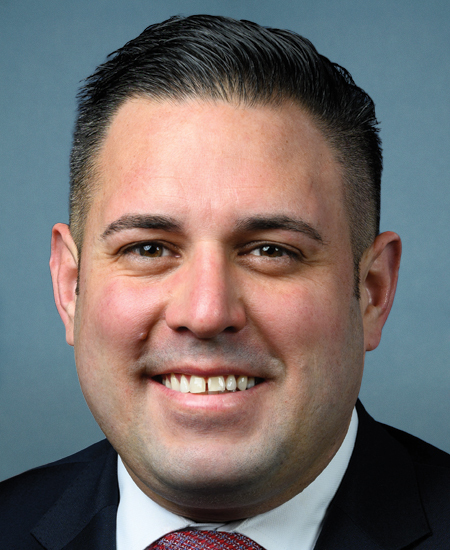
Rep. Anthony D’Esposito
Sponsored bills
Maddy summaryHR 957, the Public Safety Retirees Healthcare Protection Act of 2023, increases a tax exclusion for public safety retirees. It amends the Internal Revenue Code to raise the amount excluded from taxable income for health and long-term care insurance premiums paid from retirement distributions - from $3,000 to $6,000 annually. This change directly affects public safety officers (like police and firefighters) who have retired and receive government retirement benefits. The provision applies to taxable years beginning after December 31, 2023, providing greater tax relief for these retirees' healthcare costs.
Maddy summaryThis bill creates a specific exemption to prevent Social Security and Medicare payments from being delayed when the federal debt limit is reached. It allows the Treasury Secretary to issue new debt obligations solely to cover full Social Security and Medicare benefits without counting those new obligations against the existing debt limit. This directly affects millions of beneficiaries who rely on these programs for retirement, disability, and healthcare payments. The exemption remains in effect until Congress passes a new law that increases the overall debt limit.
Maddy summaryHR 589, the MAHSA Act, imposes U.S. sanctions on Iran's Supreme Leader, President, and affiliated entities responsible for human rights abuses and terrorism. It targets the Supreme Leader's Office, the President's cabinet, security forces involved in the crackdown following Mahsa Amini's death, and entities financing abuses. The bill requires the President to annually determine and apply existing sanctions - like property blocking and visa bans - against these individuals and entities. This directly affects Iran's top leadership and security apparatus, aiming to hold them accountable for abuses including the Morality Police's role in Amini's detention and the subsequent violent suppression of protests.
Maddy summaryHR 549, the Metastatic Breast Cancer Access to Care Act, removes waiting periods for disability and Medicare coverage for people diagnosed with metastatic breast cancer. Specifically, it amends Social Security Act sections to allow immediate eligibility for disability insurance benefits (eliminating the standard waiting period) and immediate Medicare coverage (waiving the 24-month waiting period) for these patients. The bill directly affects individuals with metastatic breast cancer who would otherwise face delays in accessing critical benefits. These changes apply to applications filed or benefits beginning after the bill's enactment date. The law makes no other policy changes beyond these specific eligibility adjustments.
Maddy summaryHR 497, the Freedom for Health Care Workers Act, eliminates a federal requirement for healthcare workers in Medicare and Medicaid programs to be vaccinated against COVID-19. The bill directly affects healthcare providers who treat patients under these federally funded programs by preventing the enforcement of the November 2021 HHS rule mandating staff vaccinations. Its key provision prohibits the Department of Health and Human Services from implementing, enforcing, or creating a similar rule regarding vaccination for these workers. This bill changes the policy by removing a specific vaccine mandate for providers in Medicare and Medicaid programs.
Maddy summaryHR 9488, the SHIELD Act, requires political committees in federal elections to verify specific details before accepting online credit or debit card donations. It mandates that donors disclose their card's verification number and confirm their billing address is in the U.S. (or provide U.S. identification if abroad), while banning the acceptance of gift cards or prepaid cards for contributions. The bill directly affects political committees (campaigns) and online donors, changing how digital campaign contributions are processed. Key provisions include mandatory disclosure of card details, address verification, and a complete prohibition on gift/prepaid card donations for federal election contributions.
Maddy summaryHR 1584, the Plum Island National Monument Act, establishes Plum Island, New York, as a national monument to protect its natural ecosystems, historical sites, and cultural heritage. The bill designates the Secretary of the Interior as the managing agency, requiring coordination with other federal departments through written agreements for lands within the monument area. It mandates the development of a management plan within three years of funding, which must then be submitted to specific congressional committees. This act directly affects the federal management of Plum Island and sets the framework for conservation and public access to the site.
Maddy summaryHR 9668, the SHIELD Against CCP Act, establishes a DHS Working Group to assess and coordinate efforts against specific threats posed by the Chinese Communist Party. The Working Group examines issues like immigration system exploitation (e.g., identity theft, human trafficking), predatory economic practices (e.g., forced labor, IP theft), and threats to critical infrastructure, including fentanyl trafficking and cybersecurity risks. It requires DHS to produce annual threat assessments for Congress, coordinate with federal and local partners, and report on program efficacy, with the Working Group terminating after seven years. The bill directly affects DHS operations and its collaboration with intelligence and fusion centers to address these security concerns.
Maddy summaryThis bill establishes a commission to study whether the Weitzman National Museum of American Jewish History in Philadelphia should be transferred to the Smithsonian Institution. The commission, composed of 8 members appointed by congressional leaders with expertise in Jewish American history and museum administration, will examine the museum's collections, financial status, governance, and feasibility of transfer within two years. The commission must submit a report detailing findings, a fundraising plan, and legislative recommendations for any potential transfer. The bill does not transfer the museum but creates a process to evaluate the possibility.