

Maddy summaryThe Healthy Babies Act of 2023 requires the U.S. Department of Agriculture to update the WIC program's food regulations within one year to include infant food combinations and dinners in the approved supplemental foods list. This change directly affects low-income infants and young children enrolled in WIC by expanding the types of foods they can receive through the program. The bill mandates a specific regulatory update without altering WIC's funding, eligibility rules, or existing food categories. It applies to the Child Nutrition Act of 1966, which governs the WIC program's food provisions.
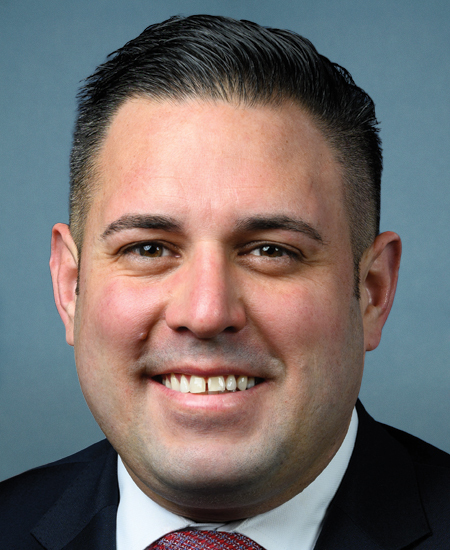
Rep. Anthony D’Esposito
Sponsored bills
Maddy summaryThis bill clarifies legal pathways for victims of terrorism to collect judgments against foreign states that sponsor attacks. It removes barriers by updating references in federal law to ensure victims can pursue claims under Section 2333(d)(1) without being blocked by prior legal interpretations. The bill also expands the definition of "national of the United States" to include U.S.-organized entities for these cases, making it easier for more victims to qualify. These changes apply to all pending or future lawsuits filed after the bill's enactment.
Maddy summaryHR 3203, the Stop Chinese Fentanyl Act of 2023, expands U.S. sanctions to target Chinese entities and government officials involved in fentanyl trafficking. It redefines "foreign opioid trafficker" to specifically include Chinese government bodies (like the National Narcotics Control Commission) and officials who fail to prevent fentanyl trafficking or cooperate with U.S. efforts. The bill also extends the statute of limitations for enforcement from 5 to 10 years under key laws and requires annual presidential reports to Congress on sanctions effectiveness. These changes directly affect Chinese government agencies and officials responsible for regulating or failing to combat fentanyl-related activities.
Maddy summaryThis bill directs the U.S. Treasury to mint commemorative coins marking the Marine Corps' 250th anniversary in 2025. It authorizes three coin types: $5 gold coins (max 50,000), $1 silver coins (max 400,000), and half-dollar coins (max 750,000), with surcharges of $35, $10, and $5 respectively. The surcharge proceeds will fund the Marine Corps Heritage Center's educational programs, with no net cost to taxpayers as the Treasury must recover all minting costs through the surcharges. The coins can only be issued during 2025, and the Treasury must ensure all costs are covered before distributing funds to the Heritage Foundation.
Maddy summaryHR 984, the Commitment to Veteran Support and Outreach Act, authorizes $50 million annually (2024-2028) for grants to states and tribes to improve outreach to veterans and their families. The bill provides funding to hire more county/Tribal veterans service officers, expand existing outreach programs, and ensure equitable access to benefits for vulnerable groups like American Indian veterans, elderly veterans, and women veterans. States and tribes must submit detailed plans, track how quickly veterans receive benefits, and report annually on progress toward outcome measures set by the Veterans Affairs Secretary. Grants must supplement, not replace, existing state/local funding and prioritize areas with critical officer shortages or high veteran suicide rates.
Maddy summaryHR 4157, the "Not Just a Number Act," requires the Department of Veterans Affairs (VA) to produce annual reports on veteran suicide rates and their connection to VA healthcare and benefits. The reports must break down suicide rates by age, gender, and race, and examine how engagement with VA services (like Vet Centers, healthcare enrollment, benefits claims, and housing loans) correlates with suicide trends. The bill also mandates a VA toolkit for state/local coroners to improve veteran suicide death reporting, and a study on creating a dedicated VA suicide prevention office. These measures aim to standardize data collection and identify effective prevention strategies, directly affecting VA operations, congressional oversight, and veteran care systems.
Maddy summaryHR 4769, the PFAS Alternatives Act, funds research and training to develop PFAS-free turnout gear for firefighters. It authorizes $25 million annually (2024-2028) for grants to eligible organizations to research, develop, and test next-generation gear without per- and polyfluoroalkyl substances (PFAS), which are linked to firefighter cancer risks. The bill requires partnerships with firefighting organizations to ensure research translates into practical training and gear care guidance, including decontamination protocols. It also allocates $2 million yearly for training programs on proper gear use and maintenance, aiming to reduce exposure to hazardous chemicals during fire operations.
Maddy summaryHR 4701 designates all fentanyl-related substances - including their isomers, salts, and structurally similar compounds - as Schedule I controlled substances under the Controlled Substances Act. This means any substance meeting the bill's broad chemical definition (like modifications to fentanyl's molecular structure) is automatically illegal without approval, directly affecting drug manufacturers, pharmacies, and law enforcement. The key mechanism is expanding the legal definition to cover a wide range of chemical variations that could otherwise evade current drug scheduling. This policy change aims to close loopholes used to traffic fentanyl analogs by making their legal status clear without requiring individual case-by-case scheduling.
Publish Overdose and Suicide Tracking For American Safety Today Act of 2023 or the POST FAST Act of 2023 This bill requires the Centers for Disease Control and Prevention to publish data about suicides and drug overdoses in the United States for a given month within 60 days of the end of that month.
Maddy summaryHR 4795, the Fentanyl Kills Act, reclassifies illegal fentanyl trafficking as attempted murder under federal law. If convicted of trafficking fentanyl (including manufacturing, distributing, or selling related chemicals), individuals would face the same penalties as those for attempted murder. The bill broadly defines trafficking to cover activities like producing fentanyl precursors intended for U.S. distribution. This policy change directly affects drug traffickers by imposing stricter criminal penalties for fentanyl-related offenses.