

No Fortune for Fraud Act This bill prohibits a Member of the House of Representatives from receiving compensation for a biography, a media appearance, or other creative work if the Member is convicted of specified felony offenses (e.g., bribing public officials or defrauding the government) or offenses related to violations of campaign finance laws. A Member who violates the prohibition shall be subject to a civil penalty of up to $10 million for each violation.
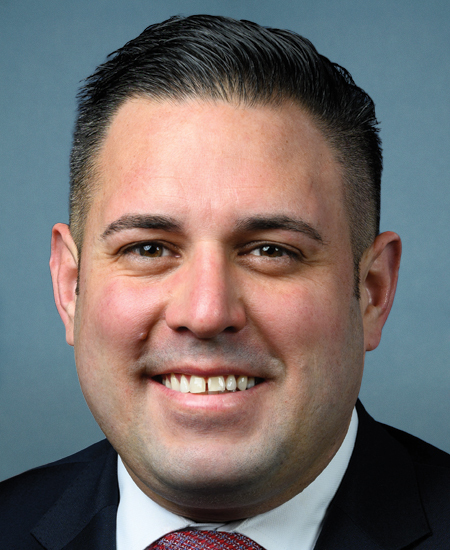
Rep. Anthony D’Esposito
Sponsored bills
Maddy summaryThis resolution supports designating September 22 as "National Military and Veterans Suicide Awareness Day" to raise public awareness about suicide prevention among active-duty service members and veterans. It does not create new policies or funding but aims to highlight mental health challenges like PTSD and depression that contribute to higher suicide rates in these communities. The resolution emphasizes reducing stigma and encouraging help-seeking during Suicide Prevention Awareness Month (September). It directly affects military personnel, veterans, and the public by promoting national attention to this issue through a designated awareness day.
Maddy summaryHRES 670 is a non-binding resolution expressing the House of Representatives' sense that all 50 states should include the September 11, 2001, terrorist attacks in elementary and secondary school curricula. It aims to ensure students learn about this historical event to honor the 2,977 victims and remember its significance, though it does not require states to change education standards. The resolution highlights the attacks as a pivotal moment that shaped U.S. national security and calls for continued remembrance through education. As a procedural resolution, it carries no legal force but seeks to encourage state-level curriculum decisions.
Maddy summaryHR 1501, the UAS Act, bans the Department of Homeland Security (DHS) from operating, procuring, or renewing contracts for unmanned aircraft systems (UAS/drones) or related components (like flight controllers, software, or detection systems) manufactured in or using technology from "covered foreign countries" (nations identified as foreign adversaries by U.S. intelligence). DHS can request a waiver for national security reasons, but must notify Congress within 14 days. The bill requires DHS to submit a security report to Congress within 180 days detailing existing UAS systems, threat assessments, and potential security risks from foreign-made UAS. This applies solely to DHS operations, not general public drone use.
Maddy summaryHRES 668, the BUDS Resolution, amends House rules to allow bipartisan joint sponsorship of public bills and resolutions by one majority-party and one minority-party member. This change directly affects House members seeking to co-sponsor legislation with cross-party support, updating the existing rules for naming cosponsors and submitting constitutional authority statements. The key mechanism requires that for joint sponsorship, one sponsor must represent the majority party and the other the minority party, with both sponsors sharing responsibility for related procedural steps. This procedural adjustment streamlines the process for bipartisan co-sponsorship without altering legislative policy.
Maddy summaryThis bill requires the Bureau of Prisons to develop and implement a strategy for scanning all incoming mail at federal prisons to stop fentanyl and other synthetic drugs from entering facilities. It directs the Bureau to evaluate existing scanning technology within 180 days and submit a detailed plan to Congress within 90 days, including how to provide digital copies of mail to inmates within 24 hours and physical copies within 30 days (if safe). The strategy must achieve 100% mail scanning capacity at all federal prisons, prioritize high-security facilities, and include a budget proposal for fiscal years 2024-2026. This directly affects federal prisons, inmates, and Bureau employees by changing mail processing procedures to enhance safety and reduce staffing burdens from manual mail checks.
Maddy summaryThis bill authorizes $700 million in federal grants to fund cancer prevention programs for firefighters, including multi-cancer early detection testing with a $1,750 per-test spending limit. It creates a voluntary program allowing firefighters to share anonymized test results with the CDC and FEMA to identify cancer trends in the profession, while protecting personal privacy. The legislation amends existing law to establish these prevention and research mechanisms, directly supporting firefighters exposed to cancer risks through early detection and data analysis.
Maddy summaryHR 5184, the School Security Enhancement Act, amends existing education law to allow schools and school districts to use current funds for specific security upgrades. It directs local educational agencies to spend funds already allocated under the Elementary and Secondary Education Act on evidence-based security measures like controlled access points (e.g., metal detectors), bullet-resistant doors, crisis notification systems for law enforcement, and infrastructure to help first responders during emergencies. The bill directly affects schools seeking to strengthen campus safety using existing resources, without requiring new federal funding. Key provisions include installing technology for remote building control during crises and systems to quickly notify parents during safety incidents. All proposed security measures must align with evidence-based effectiveness where available, as determined by the state.
Maddy summaryThis bill requires phone calls, texts, and chats to 9-8-8 (the national suicide prevention and mental health crisis hotline) to be routed to the nearest participating crisis center within 90 days of enactment, while protecting caller privacy by not revealing precise location. It mandates all phone carriers to transmit every 9-8-8 call or text - including those from prepaid or non-initialized handsets - and updates phone systems to allow direct 9-8-8 dialing without extra steps. The law affects crisis centers (by directing calls to their area), callers (through improved routing and privacy), and phone carriers (by requiring transmission compliance). These changes aim to make the 9-8-8 system more efficient and accessible for those seeking mental health support.
This resolution condemns Iran for the 1988 massacre of political prisoners. It also urges the Biden Administration and U.S. allies to publicly condemn the massacre and to pressure Iran to provide information to the families of the victims.