

Maddy summaryThis bill (HR 9255) is a simple naming resolution that renames a specific U.S. Postal Service facility. It designates the post office at 114 John Street in New York, New York, as the "Jack Greenberg Post Office." The bill requires all federal references to the building (in laws, maps, documents, etc.) to use the new name. This is a procedural change affecting only the official name of that single post office location.
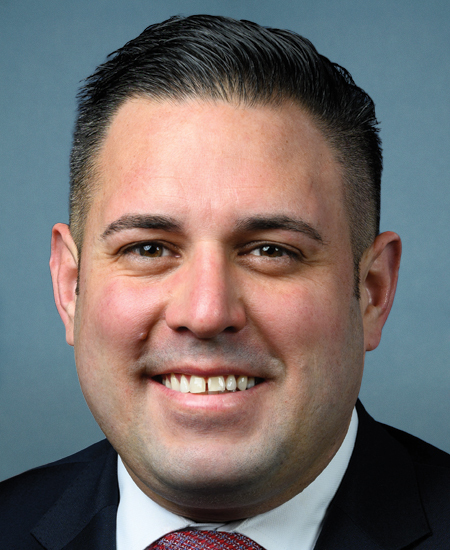
Rep. Anthony D’Esposito
Sponsored bills
Maddy summaryThe Counter SNIPER Act (HR 9282) establishes a formal process for presidential and vice-presidential candidates seeking protective details from the U.S. Secret Service. If the Secretary of Homeland Security denies a request, they must provide a written explanation within 14 days, detailing the criteria not met, and allow candidates to request reconsideration with supporting evidence. The Secretary must then issue a final written decision within 14 days of the reconsideration request. Additionally, the bill requires the Director of the U.S. Secret Service to be appointed by the President with Senate confirmation.
Maddy summaryHR 9274, the SHAWL Act, establishes two new Smithsonian museums: the National Museum of the American Latino and the American Women’s History Museum. It authorizes both museums to be located within the National Mall’s "Reserve" area, overriding prior restrictions, and requires federal agencies managing potential sites to transfer jurisdiction to the Smithsonian after notifying congressional committees. The bill mandates that both museums accurately represent diverse cultures, histories, and viewpoints within Latino and women’s communities through exhibits and programs, requiring input from a broad range of community experts. It also requires the Smithsonian to submit biennial reports to Congress detailing compliance with these representation requirements.
Maddy summaryThis bill increases funding for replacing insecure communication networks from $1.9 billion to $4.98 billion and allocates $3.08 billion for fiscal year 2024. It overhauls the Affordable Connectivity Program (ACP) by requiring all providers to use the National Verifier for eligibility checks, ending eligibility based on providers' own low-income programs, and removing device subsidies. The bill also mandates new antifraud controls, requires providers to certify households won't face early termination fees, and demands a report on program effectiveness within one year. These changes directly affect low-income households receiving subsidized broadband and internet service providers participating in the ACP.
Maddy summaryThis bill reauthorizes the Debbie Smith DNA Backlog Grant Program, which provides federal funding to state and local law enforcement agencies to reduce backlogs in processing DNA evidence from crime scenes. It extends the program's funding period from fiscal years 2024 through 2029 (previously ending in 2024). The bill also updates audit requirements to ensure grant funds are used properly through 2029. This directly affects law enforcement agencies that receive these grants to accelerate DNA analysis for criminal investigations.
Maddy summaryHRES 1393 requires all full-time employees of the U.S. House of Representatives to complete active shooter training during each congressional term. The training must be finished within 60 days of starting the job (or by December 31 of the year the second session begins for current staff) and can be completed remotely using existing House resources like video programs. The Office of the Sergeant at Arms will administer the training, which may be combined with other required staff training. The resolution also offers the training to other House staff (including interns and part-time employees) but does not require them to complete it.
Maddy summaryThis bill imposes sanctions on individuals and entities within the Palestinian Authority (PA) and Palestine Liberation Organization (PLO) that administer or support a system paying terrorists and their families. It targets PA/PLO officials, specific entities like the Commission of Prisoners, and financial institutions processing these payments, requiring property blocking, visa bans, and restrictions on U.S. financial transactions. The sanctions apply if the PA/PLO continues payments described in the Taylor Force Act (2018), which previously mandated ending such payments. The bill terminates if the Secretary of State certifies the PA/PLO has ceased these payments.
Maddy summaryHR 9158 requires U.S. colleges and universities to immediately report to the Student and Exchange Visitor Information System (SEVIS) if a student holding an F-1 or J-1 visa supports a designated foreign terrorist organization. This applies to students on temporary visas for academic or exchange programs who endorse or participate in activities linked to such groups. If verified, the State Department would revoke the student's visa, and Homeland Security would begin removal proceedings. The bill targets specific visa holders directly affected by terrorism-related activity, with no broader policy changes beyond this reporting and enforcement mechanism.
Maddy summaryHRES 1382 is a non-binding resolution expressing the House of Representatives' view that Americans should resolve political disagreements without threats or violence, citing recent incidents like the 2011 shooting of Rep. Giffords and increased threats against election officials. It calls on political leaders of all parties to consistently and often condemn political violence, including after the recent assassination attempt on former President Trump. The resolution does not create new laws but formally states the House's position on this issue.
Maddy summaryThe 9/11 Responder and Survivor Health Funding Correction Act of 2024 makes several key changes to the World Trade Center Health Program that serves 9/11 responders and survivors. It allows licensed mental health providers (not just physicians) to conduct mental health evaluations for program participants and extends the time period for adding new health conditions from 90 to 180 days. The bill also adjusts enrollment calculations by removing deceased individuals from program counts and provides $2.97 billion in new funding for fiscal year 2024 with a minimum annual funding level of $20 million for 2025. These changes aim to improve access to care while ensuring stable, long-term funding for the program that provides medical services to those affected by the 9/11 attacks.