

Maddy summaryHR 8282, the "Illegitimate Court Counteraction Act," imposes U.S. sanctions on foreign individuals or entities supporting the International Criminal Court (ICC) in investigating or prosecuting "protected persons." Protected persons include U.S. military personnel, officials, and allied personnel (from non-ICC member countries) who are not under ICC jurisdiction. The bill requires the President to block assets and deny visas to targeted foreign persons and their immediate family members within 60 days of the ICC attempting such actions. It mandates congressional notification of sanctions and allows termination if the ICC ceases all such efforts against protected persons. The law focuses on restricting U.S. economic and travel access to ICC supporters targeting specific U.S. and allied personnel.
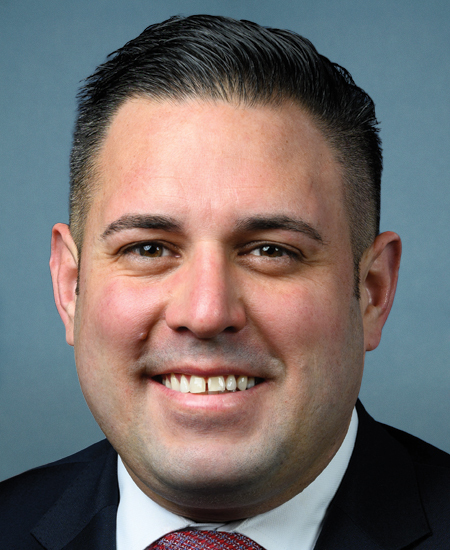
Rep. Anthony D’Esposito
Sponsored bills
Maddy summaryThe CREATE AI Act of 2023 establishes a National Artificial Intelligence Research Resource (NAIRR) to improve access to AI research tools, computational resources, data, and educational materials for researchers and students across the United States. The NAIRR will provide computational resources, curated datasets, educational tools, and access to AI testbeds, with special emphasis on supporting groups historically underrepresented in STEM fields. Governed by a Steering Subcommittee chaired by the Director of the Office of Science and Technology Policy and managed by a Program Management Office within the National Science Foundation, the NAIRR includes specific requirements for ethical AI development, privacy protections, and security measures. The resource will be accessible to researchers at U.S. institutions of higher education, nonprofits, government agencies, and certain businesses, with priority given to projects addressing privacy, ethics, civil rights, and AI safety.
Maddy summaryThis bill amends an existing reporting requirement in the 2023 National Defense Authorization Act. It changes the provision to require the Department of Homeland Security to submit annual reports on counter-illicit cross-border tunnel operations, rather than just one report after developing a strategic plan. The bill does not create new programs or alter border security policy; it only modifies the frequency of required reporting. This procedural change directly affects the Department of Homeland Security's reporting obligations.
Maddy summaryHR 9479 would create a refundable tax credit for individuals with medical expenses related to in vitro fertilization (IVF). The credit covers up to $30,000 annually in qualified IVF costs (such as medical procedures), minus any credits claimed in prior years. It applies to expenses for the taxpayer or their spouse (for joint filers) and prevents double benefits by reducing other deductions for the same expenses. This policy change would take effect for expenses paid after the bill's enactment.
Maddy summaryThe HOPE Act of 2024 would establish HOPE Accounts, tax-advantaged savings accounts for paying qualified medical expenses. These accounts would allow individuals to save for medical costs with tax-free growth and distributions, with contribution limits of up to $4,000 per month for self-only coverage or $8,000 for family coverage. To qualify, individuals must have minimum essential health coverage and cannot have other health savings accounts like HSAs or FSAs. Contributions are generally not deductible but may be excluded from gross income for lower-income individuals, and distributions for qualified medical expenses would be tax-free. The bill also includes rules for employer contributions and coordination with existing health savings mechanisms.
Maddy summaryHR 9374, the Stand with Israel Act, prohibits U.S. federal funds from being used to support the United Nations or its entities if they restrict Israel's full participation as a member state. The bill specifically blocks funding for any UN body that expels, downgrades, or suspends Israel's membership or limits its ability to participate equally with other nations. This affects U.S. government contributions to the UN, requiring the Department of State and other agencies to halt funding for such UN actions. The key mechanism is a new provision in the UN Participation Act that mandates this funding restriction whenever Israel's UN participation is impaired.
Maddy summaryThe SAFER at the Border Act prohibits the U.S. Department of Homeland Security from temporarily admitting (paroling) certain individuals at the border. It defines "known terrorists" (those arrested, charged, or convicted for terrorism), "suspected terrorists" (reasonably suspected of terrorism), and "special interest aliens" (those with potential terrorism links based on travel patterns). The bill explicitly bans parole for these individuals, even for humanitarian reasons or public benefit, and also prohibits parole for refugees. Additionally, it allows states to sue the Department of Homeland Security if they suffer financial harm exceeding $100 from the parole of such individuals.
Maddy summaryThe Save our Safety-Net Hospitals Act of 2024 modifies Medicaid payment rules to better support hospitals serving large numbers of low-income patients. It removes a restriction that previously prevented some safety-net hospitals from receiving full reimbursement for care provided to these patients. The bill allows these hospitals to count payments from Medicare and other programs when calculating their Medicaid reimbursement, ensuring they are fully compensated for services. This change applies to fiscal years beginning October 1, 2021, and prevents states from recouping past payments made under the old rules.
Maddy summaryThis bill ensures that Khalid Shaikh Mohammad, Walid Muhammad Salih Mubarak Bin ‘Attash, and Mustafa Ahmed Adam al Hawsawi - detainees held at Guantanamo Bay for their alleged roles in the September 11, 2001, attacks - remain subject to military trial under Chapter 47A of Title 10, United States Code, regardless of any plea agreements they may have entered. It explicitly allows the death penalty as a sentencing option in their trials and mandates strict confinement conditions: solitary confinement at Guantanamo Bay, no contact with foreign nationals, no unauthorized psychological treatment, and no transfer to the U.S. mainland or any other country. The bill directly affects only these three individuals and modifies procedural and sentencing rules for their specific cases.
Maddy summaryThe Safer Skies Act of 2024 requires certain smaller airlines to adopt the federal security screening program currently used by larger carriers. Specifically, it mandates that airlines operating passenger planes with more than 9 seats (that do not use TSA checkpoints, offer individual seats in advance with public schedules) must comply with the Aircraft Operator Standard Security Program within 360 days of enactment. The Transportation Security Administration must revise its rules to enforce this new requirement. This directly affects regional carriers that currently skip standard airport security screenings but serve passengers under these specific operational conditions. The bill extends existing security standards to cover these previously exempt airlines without creating new security protocols.