

Maddy summaryHR 1478 requires federal firearm dealers to implement physical security measures, including locked cabinets, security systems, and video surveillance, to prevent gun thefts. The bill mandates quarterly inventory checks, extends background check record retention from 24 hours to 90 days, and repeals restrictions that prevented the ATF from disclosing crime gun trace data. It increases penalties for violations, including fines up to $20,000 and license suspension or revocation for repeated failures. The bill directly affects all federally licensed firearm dealers, manufacturers, and importers by holding them accountable for security failures and recordkeeping. This legislation aims to reduce gun trafficking by strengthening enforcement and transparency in the firearm industry.
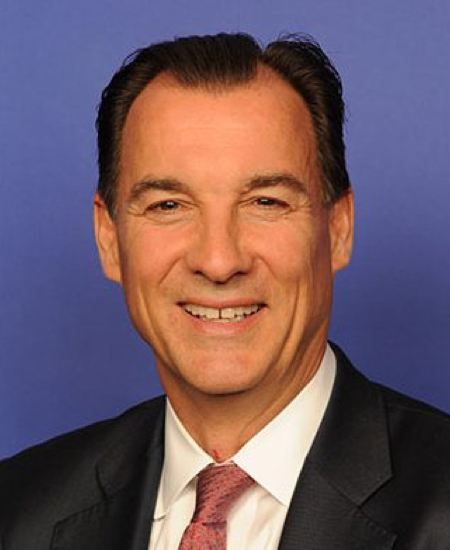
Rep. Thomas R. Suozzi
Sponsored bills
Maddy summaryHR 1491, the Small Business Energy Loan Enhancement Act, increases the maximum loan amount for energy-related small business loans under the Small Business Investment Act of 1958 from $5.5 million to $10 million. This directly affects small businesses seeking financing for energy efficiency or renewable energy projects by doubling their potential loan access. The bill requires the Small Business Administration to submit annual reports to Congress detailing which industries and geographic areas received these enhanced loans. These changes aim to expand access to capital for qualifying energy projects without altering eligibility criteria.
Maddy summaryHR 1321, the "More Homes on the Market Act," increases the tax exclusion for gains from selling a primary residence. It doubles the exclusion amount from $250,000 to $500,000 for single filers and from $500,000 to $1,000,000 for married couples filing jointly. The bill also adds automatic annual inflation adjustments to these amounts starting in 2023, ensuring the exclusion keeps pace with rising costs. This change directly affects homeowners who sell their primary residence and meet the ownership and use requirements under current tax law. The policy modifies the Internal Revenue Code to make selling a home less financially burdensome for qualifying homeowners.
Maddy summaryThis bill authorizes the U.S. President to lend or lease defensive military equipment to Taiwan’s government to strengthen its ability to defend against potential aggression from China’s military, including scenarios like naval blockades, amphibious assaults, or missile strikes. It requires Taiwan to pay for damaged or lost equipment and to repay the U.S. for defense services or construction over 12 years, with interest rates subject to congressional review. The bill mandates a 90-day report to Congress assessing Taiwan’s defense needs, supply chain challenges, and timelines for delivering and integrating military equipment. It does not create new policy but establishes procedures for U.S. defense support to Taiwan under specific conditions.
Maddy summaryThe Richard L. Trumka Protecting the Right to Organize Act of 2023 strengthens workers' rights to organize unions by making it harder for employers to interfere with organizing efforts. Key provisions include changing the definition of "employee" to make it more difficult to classify workers as independent contractors, prohibiting employers from threatening to permanently replace striking workers, and requiring employers to provide voter lists for union elections. The bill also creates a new electronic voting system for union elections, strengthens whistleblower protections for workers reporting labor violations, and increases penalties for unfair labor practices. These changes directly affect workers seeking to form unions, employers who may interfere with organizing, and labor organizations. The bill aims to make it easier for workers to exercise their right to collective bargaining under the National Labor Relations Act.
Maddy summaryThe RISEE Act of 2023 creates a National Oceans and Coastal Security Fund to support coastal communities and ecosystems. It allocates 37.5% of offshore wind revenue directly to eligible coastal states using a formula based on tidal shoreline length, coastal population density, and distance from offshore wind projects. States must use these funds for coastal protection, habitat restoration, infrastructure, or fisheries research, with strict annual reporting requirements to the Department of the Interior. The bill prohibits using these funds for litigation or creating marine monuments, ensuring resources directly support coastal community needs.
Maddy summaryHR 726, the Veterans for Mustangs Act, amends the Wild Free-Roaming Horses and Burros Act to require the Secretary of the Interior to prioritize recruiting military veterans for training in on-range fertility control methods for wild horse and burro populations. The bill mandates that veterans complete a certification program (like the PZP applicator course) and receive appropriate compensation, with the Bureau of Land Management allowed to contract these veterans for management activities without classifying them as federal employees. This directly affects military veterans seeking employment opportunities and the Bureau of Land Management’s approach to managing wild horse populations. The key change is embedding veteran recruitment into the standard process for implementing fertility controls, replacing previous management language with specific veteran-focused provisions.
Maddy summaryHR 1088, the Shirley Chisholm Congressional Gold Medal Act, authorizes a posthumous Congressional Gold Medal to honor Congresswoman Shirley Chisholm, the first African-American woman elected to Congress (1968) and the first Black candidate for a major party's presidential nomination (1972). The bill directs the Treasury Secretary to design and strike a gold medal featuring Chisholm's image, which will be presented by Congress and then permanently displayed at the Smithsonian Institution. Duplicate bronze medals may be sold to the public to cover production costs, with proceeds deposited into the U.S. Mint fund. This bill commemorates Chisholm's legacy and achievements without creating new laws or affecting any current policies.
Maddy summaryThe HELP Copays Act (HR 830) changes how health insurance plans calculate patient cost-sharing. It requires that payments made by third parties (like pharmacies, charities, or discount programs) toward medical costs count toward a patient's deductible, copay, or out-of-pocket limit. This directly affects insured individuals who receive financial assistance, discounts, or product vouchers for healthcare expenses. The law ensures these external payments reduce the patient's actual out-of-pocket costs more quickly, aligning with existing Affordable Care Act and Public Health Service Act requirements.
Maddy summaryThis bill authorizes a single Congressional Gold Medal to honor all U.S. Army Dustoff crews who served during the Vietnam War (1962-1973). It recognizes their critical role in evacuating nearly 900,000 wounded personnel, including U.S., South Vietnamese, and allied forces, under extreme combat conditions. The medal, designed with input from the Secretary of Defense, will be presented to the U.S. Army Medical Department Museum for permanent display. Duplicate bronze medals may be sold to cover costs, but the primary action is the commemorative recognition of these crews' service.