

Maddy summaryHRES 1473 is a non-binding resolution passed by the U.S. House of Representatives that condemns racism, bigotry, and misinformation targeting Haitian people and their descendants. It celebrates the historical contributions of Haitian Americans to U.S. society, including founding cities (like Chicago via Jean Baptiste Point du Sable), advancing civil rights (W.E.B. Du Bois), and enriching healthcare, education, and culture. The resolution specifically calls on all Americans to reject racist tropes and misinformation, and urges elected officials to promote inclusivity and responsible communication. It was introduced in response to recent false claims that fueled threats against Haitian communities, such as the bomb threats in Springfield, Ohio.
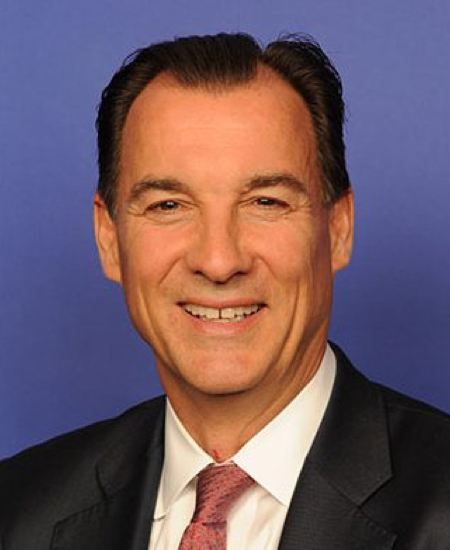
Rep. Thomas R. Suozzi
Sponsored bills
Maddy summaryHR 9675, the Homeward Bound Act, delays and revises federal rules governing dog imports for specific groups. It postpones the application of a 2024 HHS rule for 18 months, directly affecting military personnel stationed abroad, U.S. diplomats/consular staff, their families, and individuals with service animals seeking to import dogs from rabies-low-risk countries. The bill requires the HHS Secretary to revise regulations within 10 days to allow all-age dog imports at any U.S. port of entry from these countries and waive microchipping requirements for dogs born before the law's enactment. These changes aim to simplify import processes for covered individuals while maintaining rabies risk standards.
Maddy summaryThis bill amends the Justice for United States Victims of State Sponsored Terrorism Act to establish a fifth round of payments for eligible victims of state-sponsored terrorism, requiring all authorized payments to be distributed by December 31, 2024. It directs specific funds into the Victims of State Sponsored Terrorism Fund, including $898 million from the Binance case settlement and 50% of annual unobligated balances from DOJ and Treasury forfeiture funds starting December 1, 2024. The bill mandates annual payments beginning January 1, 2025, for eligible claimants and requires the Special Master to submit annual reports on fund activity to Congress, including detailed deposit and disbursement records. It directly affects victims of state-sponsored terrorism, the Special Master administering the fund, and federal agencies managing forfeiture funds.
Maddy summaryThis bill creates a new occupational category (code 31-1123) within the federal Standard Occupational Classification system specifically for direct support professionals (DSPs) who assist people with intellectual or developmental disabilities. It directly affects DSPs, state agencies, and federal data collectors by reclassifying their work - currently grouped under home health aides - into a distinct category. The key mechanism is revising the SOC system to better track DSP workforce data, address high turnover rates (43% nationally), and recognize their unique role in promoting clients' independence and community inclusion. This change aims to improve data accuracy for addressing staffing challenges, without altering service delivery or benefits.
Maddy summaryThis bill requires the Department of Homeland Security (DHS) to submit annual reports detailing staffing plans for all Joint Task Forces, with specific focus on Joint Task Force-East. It mandates annual briefings to four congressional committees on staffing adequacy and resource allocation for Joint Task Force-East, including cost and timeline plans if shortages are identified. The bill also requires a one-time report comparing the cost and effectiveness of Joint Task Force-East's Portsmouth, Virginia headquarters to alternative locations. These reports must begin by December 23, 2024, and continue annually thereafter.
Maddy summaryThis bill expands online privacy protections under the Children's Online Privacy Protection Act to cover teens aged 12-17, in addition to children under 13. It requires website and app operators to obtain verifiable consent from parents for children and from teens themselves before collecting personal information. The bill restricts operators from using collected data for individual-specific advertising to children or teens and mandates clear notices about data practices. Operators must provide users with the right to access, delete, and correct personal information they've collected. These requirements apply to websites, online services, and mobile applications that collect information from children or teens or have actual knowledge a user is a child or teen.
Maddy summaryThe Kids Online Safety Act (HR 7891) would require major online platforms (with high revenue or user numbers) to implement safety features for children and teens, including default protective settings, parental controls, and age verification. It would mandate platforms to report annually on risks to minors and their safety measures, and prohibit advertising harmful products (like tobacco, alcohol, or gambling) to minors. The bill directly affects social media platforms, online video games, and video streaming services that are used by minors, with the goal of preventing mental health harms, compulsive usage, and cyberbullying.
Maddy summaryThis bill amends VA law to add a specific representative from the National Association of State Veterans Homes (NASVH) to the Geriatrics and Gerontology Advisory Committee. The new member must hold a professional nursing home administration license and will consult with the NASVH president on matters related to the association. The change directly affects the VA committee's composition, ensuring input from state veterans home organizations on geriatric care policies.
Maddy summaryThe NO FAKES Act of 2024 establishes legal rights for individuals (living or deceased) to control how their voice and visual likeness are used in digital replicas (highly realistic computer-generated representations that are readily identifiable as the individual). It requires authorization from the individual or their designated right holder for any digital replica, with specific rules for licenses (including 10-year limits for living individuals, 5-year limits for minors, and post-mortem rights for 10 years with possible 5-year renewals). The bill creates civil liability for unauthorized production or distribution of digital replicas, with exceptions for news, documentaries, commentary, and other protected uses. Online services are provided safe harbors if they follow notice-and-takedown procedures for unauthorized digital replicas after receiving proper notifications. The law preempts some state laws but leaves others in place, and applies to conduct occurring after the bill's enactment date.
Maddy summaryHR 9568, the SAW Act, makes it illegal to intentionally use a motor vehicle to run over, strike, or kill wolves or coyotes on U.S. public lands (excluding tribal trust lands). The law prohibits this action except when avoiding personal injury, protecting property, or conducting authorized wildlife management. Violators face fines up to $5,000, up to one year in prison, or both. The Secretary of the Interior is responsible for investigating violations and can collaborate with state and local law enforcement. This bill specifically targets motor vehicle use against wolves and coyotes on federal lands, with no broader wildlife protections.