

Maddy summaryHR 994, the Oral Health Literacy and Awareness Act of 2023, directs the Health Resources and Services Administration (HRSA) to launch a federal public education campaign focused on improving oral health knowledge. The campaign will target specific groups including children, pregnant women, the elderly, people with disabilities, and racial/ethnic minority populations (such as Indigenous and Native Hawaiian communities), using culturally and linguistically appropriate methods. It requires evidence-based prevention education on issues like tooth decay, gum disease, and oral cancer across HRSA programs like community health centers and maternal health services. The bill authorizes $750,000 annually for fiscal years 2023-2027 and mandates a congressional report on the campaign’s effectiveness within three years.
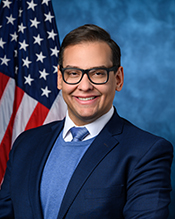
Rep. George Santos
Sponsored bills
Maddy summaryThis bill prohibits federal funding from being provided to healthcare facilities that refuse treatment to patients based on their COVID-19 vaccination status. It specifically blocks funds under Medicare (Title XVIII), Medicaid (Title XIX), and CHIP (Title XXI) from going to such facilities. The law directly affects hospitals, clinics, and other providers receiving federal healthcare funding by requiring them to offer treatment regardless of vaccination status. The key mechanism is withholding all federal funds authorized by law from any facility engaging in this practice.
Maddy summaryThis bill is a procedural declaration with no policy changes. It formally declares the AR-15 style rifle chambered in .223 Remington or 5.56x45mm NATO as the "National Gun of the United States" under Section 2. The bill does not impose new regulations, restrictions, or funding, and directly affects no individuals or entities beyond this symbolic designation. It is purely a ceremonial resolution with no practical legislative impact.
Maddy summaryThis bill would require the U.S. to withhold funding for the UNRWA (United Nations refugee agency for Palestinians) unless the State Department certifies UNRWA staff, materials, and facilities comply with specific conditions. Key conditions include confirming no ties to terrorism or anti-Israel rhetoric (like denying Israel's right to exist or promoting BDS), no misuse of UNRWA resources for terrorist activities, and adherence to international financial audits. It also caps U.S. contributions to UNRWA at levels comparable to Arab League countries and mandates annual reports to Congress on phasing out UNRWA support. These changes directly affect U.S. foreign aid decisions for Palestinian refugees in Jordan, Lebanon, Syria, Gaza, and the West Bank.
Maddy summaryHR 997, the English Language Unity Act of 2023, would establish English as the official language of the United States government. It requires all federal government functions, including laws, regulations, and public communications, to be conducted in English, with exceptions for national security, disability education, census activities, and public health. The bill also sets uniform English language standards for naturalization, requiring applicants to read and understand the Declaration of Independence, Constitution, and U.S. laws, with naturalization ceremonies conducted solely in English. This legislation directly affects federal agencies, government communications, and individuals seeking U.S. citizenship.
Protecting Kids from Candy-Flavored Drugs Act This bill establishes enhanced criminal penalties for certain federal drug offenses involving the manufacture or distribution of candy-flavored controlled substances or similar products for minors. Specifically, the bill imposes enhanced criminal penalties for a federal drug offense that involves manufacturing, creating, distributing, dispensing, or possessing with intent to distribute a controlled substance listed in schedule I or II that is combined with a candy or drink, marketed to appear similar to a candy or drink, or modified by flavoring or coloring to appear similar to a candy or drink. To be subject to an enhanced penalty, the individual must have knowledge or reasonable cause to believe that the controlled substance will be distributed, dispensed, or sold to an individual who is under 18 years of age.
Maddy summaryThis bill requires states receiving Medicaid funds for family planning services to submit standardized abortion data to the CDC annually. Specifically, states must report 10 mandatory data points (including maternal age, gestational age, race, ethnicity, procedure type, and survival status) by December 31 of the prior year, starting two years after enactment. Failure to submit accurate data or submitting false information could result in loss of Medicaid funding for family planning services in the following fiscal year. The law aims to create uniform national abortion data collection, addressing current gaps where some states report no data at all. The CDC will maintain a standardized surveillance system and publish annual reports by the third year following the data year.
This resolution expresses the sense of the House of Representatives that (1) for purposes of federal law, a person's sex means the person's biological sex at birth; and (2) distinctions between the sexes are justified in certain settings, laws, and policies.
Maddy summaryHR 936, the Tanning Tax Repeal Act of 2023, repeals a 10% federal excise tax on indoor tanning services that was originally enacted under the Affordable Care Act. This bill directly affects tanning salons and businesses providing indoor tanning services by eliminating their obligation to pay this tax on customer services. The repeal applies to services performed after the bill's enactment date, removing the tax provision from the Internal Revenue Code. The bill does not create new requirements or alter other tax policies, solely removing this specific tax.
Maddy summaryThis bill amends the Higher Education Act to require colleges and universities receiving federal funding to disclose gifts or contracts exceeding $5,000 from groups connected to China's government, Communist Party, or military. It mandates annual reports on joint activities with such groups and requires institutions to publicly post all agreements with them on their websites. The law defines "affiliated" organizations broadly to include state-owned enterprises, think tanks receiving significant Chinese funding, and entities with Chinese officials on their boards. Reports must be filed by January 31 or July 31 each year, detailing donor names, agreement terms, and supporting documentation.