

This resolution deems certain conduct of members of antifa as domestic terrorism and designates antifa as a domestic terrorist organization. The resolution calls on the Department of Justice to (1) prosecute crimes of domestic terrorism by antifa, and (2) use all available tools and resources to combat the spread of such terrorism by antifa.
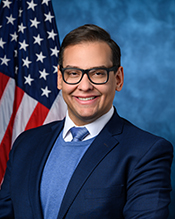
Rep. George Santos
Sponsored bills
Maddy summaryHR 1388 authorizes the minting of commemorative coins to honor the 1865 Sultana steamboat disaster, the deadliest maritime tragedy in U.S. history. It specifies three coin types ($5 gold, $1 silver, and half-dollar) with defined weights and compositions, to be sold at face value plus surcharges ($35, $10, and $5 per coin, respectively). All surcharges collected will fund the Sultana Historical Preservation Society for museum development, including exhibits, artifact preservation, and facility construction. The coins are legal tender but intended for collectors, with sales limited to a one-year period starting January 2023.
Maddy summaryThis bill requires the President to assess the inflation impact of major executive orders before issuing them. For any executive order projected to cost at least $1 billion annually in budget effects (excluding emergency relief, national security actions, or treaty implementation), the President must prepare a statement estimating its effect on inflation - whether it has no impact, quantifiable impact, or significant but undeterminable impact. Federal agencies must provide necessary data to support this assessment, and the President must submit an annual report to Congress detailing all such assessments. The bill does not change inflation policy but mandates a new procedural review for major executive actions.
This resolution expresses that Secretary Pete Buttigieg (1) has failed to keep the American people safe in his duties as Secretary of Transportation, (2) has failed to ensure goods flow efficiently through the U.S. economy, (3) has lost the confidence of the American people, and (4) should resign.
Maddy summaryHR 1260, the SALT Relief Act, increases the federal tax deduction limit for state and local taxes (SALT) from $10,000 to $50,000 annually. This change directly affects taxpayers in high-tax states who itemize deductions, allowing them to deduct more of their state income, property, and sales taxes. The bill amends Section 164(b)(6)(B) of the Internal Revenue Code to implement this higher deduction limit. It applies to tax returns filed for taxable years beginning after December 31, 2022.
Maddy summaryHR 1229, the "Stop CRT Act," codifies Executive Order 13950 into law and restricts federal funding for entities teaching specific concepts about race. It prohibits federal grants to organizations that teach any of six specified ideas, including that race determines moral worth, the U.S. is fundamentally racist, or individuals bear responsibility for historical actions based on race. The bill directly affects schools, nonprofits, and other recipients of federal funds by banning support for educational content matching these prohibitions. Key provisions require federal agencies to deny funding to any entity advancing these concepts, making the executive order legally binding. This policy change alters how federal funds are distributed based on mandated educational content.
Maddy summaryHR 1228 prohibits the U.S. military and Department of Defense-operated academic institutions from promoting specific anti-American or racist theories in training. It bans military programs that teach ideas such as "the U.S. is fundamentally racist," "the Constitution is fundamentally racist," or that "an individual’s worth is determined by race." The bill explicitly states it does not restrict protected speech, research access, or educational contexts that clearly disavow military endorsement of such theories. This directly affects military training curricula, workshops, and educational materials within the armed forces.
Maddy summaryHR 503, the "No TikTok on United States Devices Act," would require the President to block all U.S. transactions with ByteDance Limited (TikTok's parent company) within 30 days of enactment, effectively banning TikTok on U.S. devices. This uses emergency economic powers to prohibit financial dealings involving ByteDance or any entity it owns that handles TikTok data. The bill includes exceptions for national security, law enforcement, and security research activities. It also mandates a 120-day report from intelligence agencies assessing Chinese government access to U.S. user data via TikTok.
Stop CCP Fentanyl Act This bill imposes sanctions on various Chinese government officials and entities. It also establishes a cause of action against China’s government or Chinese government officials for certain harms stemming a fentanyl-related overdose. Specifically, the bill requires the President to impose visa- and property-blocking sanctions on (1) the president of China, (2) the chairman of the Chinese Communist Party (CCP), (3) China’s State Council, and (4) China’s Politburo Standing Committee. The President may waive the sanctions upon certifying that (1) China’s government and the CCP have taken all reasonable measures to prevent the flow of fentanyl produced in China into the United States, and (2) the intelligence community has determined that amount of fentanyl from China and the deaths resulting from overdoses of such fentanyl has dropped 98%. This bill also authorizes a U.S. national or lawful permanent resident to sue certain Chinese government officials or the Chinese government for the death of an immediate family member caused by an overdose by fentanyl (or fentanyl analogue) manufactured using fentanyl precursors from China. Property blocked pursuant to sanctions under this bill may be used to satisfy a judgment from such a lawsuit.
Maddy summaryHR 1012, the Cardiac Arrest Survival Act of 2023, creates a uniform federal liability shield for individuals and entities involved in using or managing automated external defibrillators (AEDs) during cardiac emergencies. It protects AED users (including non-professionals), property owners/managers where AEDs are located, and AED owners/acquirers from civil lawsuits - unless harm resulted from gross negligence, willful misconduct, or a licensed professional acting within their scope of practice. The law overrides inconsistent state "Good Samaritan" laws, ensuring consistent protection regardless of AED signage, registration, or user training. This aims to encourage wider AED deployment in public spaces by reducing liability concerns for businesses and property owners.