

Maddy summaryHR 1202, the REDI Act, amends the Higher Education Act to allow medical and dental residents to temporarily pause federal student loan payments without accruing interest during their internship or residency programs. This directly affects borrowers with federal student loans who are enrolled in qualifying medical or dental training programs. The key provision adds a new rule (paragraph 6) ensuring these borrowers qualify for a deferment period where they don't pay principal and interest accrues at 0%. The change modifies existing loan rules to explicitly include medical/dental residents under the "in-school" deferment category. This policy change provides immediate financial relief during a critical training phase for healthcare professionals.
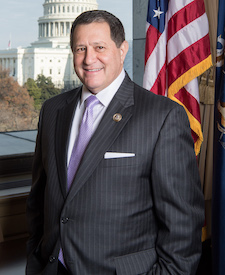
Rep. Joseph D. Morelle
Sponsored bills
Maddy summaryThis bill establishes safety and operational rules for tethered drones used by emergency services. It requires these drones to have redundant flight controls and automatic landing if tethered, and sets specific airport proximity rules: 0.25 miles from airports (or 0.5 miles in approach paths), with air traffic control approval needed for closer operation. The law directly affects fire departments, police, search and rescue teams, and other emergency service organizations using tethered drones during emergencies. It mandates the FAA to issue implementation guidance within 90 days of enactment.
Maddy summaryHR 1124, the Federal Death Penalty Abolition Act of 2023, would eliminate the federal death penalty by repealing provisions in over 30 sections of U.S. Code that currently allow for capital punishment in various criminal offenses. The bill would affect anyone convicted of a federal crime that currently carries the death penalty, including murder during drug trafficking, terrorism, and other violent crimes. It would remove the death penalty as a sentencing option for these offenses and require resentencing for those already under a death sentence. The bill also makes related changes to military justice procedures that currently permit capital punishment.
Maddy summaryThe RISEE Act of 2023 creates a National Oceans and Coastal Security Fund to support coastal communities and ecosystems. It allocates 37.5% of offshore wind revenue directly to eligible coastal states using a formula based on tidal shoreline length, coastal population density, and distance from offshore wind projects. States must use these funds for coastal protection, habitat restoration, infrastructure, or fisheries research, with strict annual reporting requirements to the Department of the Interior. The bill prohibits using these funds for litigation or creating marine monuments, ensuring resources directly support coastal community needs.
Maddy summaryHR 724, the Arctic Refuge Protection Act, repeals the existing oil and gas program for the Arctic National Wildlife Refuge in Alaska and designates approximately 1.56 million acres of the refuge's coastal plain as federal wilderness. This bill directly affects the Arctic Refuge by permanently prohibiting oil and gas leasing and development in that specific area. The key mechanism is adding the designated land to the National Wilderness Preservation System under the Wilderness Act, requiring it to be managed for its natural conditions. This change legally protects the area from future fossil fuel extraction activities.
Maddy summaryHR 1088, the Shirley Chisholm Congressional Gold Medal Act, authorizes a posthumous Congressional Gold Medal to honor Congresswoman Shirley Chisholm, the first African-American woman elected to Congress (1968) and the first Black candidate for a major party's presidential nomination (1972). The bill directs the Treasury Secretary to design and strike a gold medal featuring Chisholm's image, which will be presented by Congress and then permanently displayed at the Smithsonian Institution. Duplicate bronze medals may be sold to the public to cover production costs, with proceeds deposited into the U.S. Mint fund. This bill commemorates Chisholm's legacy and achievements without creating new laws or affecting any current policies.
Maddy summaryThis bill authorizes a posthumous Congressional gold medal for Constance Baker Motley, a pioneering civil rights attorney and federal judge. It directs the Treasury to strike a gold medal featuring her image and name, to be presented to her son, Joel Motley III, and niece, Constance Royster. The medal is a commemorative tribute recognizing her historic contributions to civil rights and her service as the first African-American woman appointed to a federal judgeship. No new policies or programs are created; the bill solely honors her legacy through a commemorative medal.
Maddy summaryThe HELP Copays Act (HR 830) changes how health insurance plans calculate patient cost-sharing. It requires that payments made by third parties (like pharmacies, charities, or discount programs) toward medical costs count toward a patient's deductible, copay, or out-of-pocket limit. This directly affects insured individuals who receive financial assistance, discounts, or product vouchers for healthcare expenses. The law ensures these external payments reduce the patient's actual out-of-pocket costs more quickly, aligning with existing Affordable Care Act and Public Health Service Act requirements.
Maddy summaryThis bill expands health care coverage under TRICARE for military dependents. It eliminates a separate premium for young adults aged 21-26 enrolled in the TRICARE Young Adult Program, meaning they will no longer pay an extra fee for coverage. The bill also removes an eligibility restriction that previously limited coverage for some dependents in this age group. These changes directly affect military service members' adult children and spouses who rely on TRICARE Young Adult coverage. The policy update simplifies enrollment and reduces out-of-pocket costs for these beneficiaries.
Maddy summaryThis bill authorizes a single Congressional Gold Medal to honor all U.S. Army Dustoff crews who served during the Vietnam War (1962-1973). It recognizes their critical role in evacuating nearly 900,000 wounded personnel, including U.S., South Vietnamese, and allied forces, under extreme combat conditions. The medal, designed with input from the Secretary of Defense, will be presented to the U.S. Army Medical Department Museum for permanent display. Duplicate bronze medals may be sold to cover costs, but the primary action is the commemorative recognition of these crews' service.