

Maddy summaryThe Military Spouse Hiring Act expands the Work Opportunity Tax Credit to include military spouses. Employers who hire a spouse of an active-duty military member - certified by a local agency as meeting eligibility requirements on the hiring date - can claim this tax credit. The credit reduces the employer's federal tax liability for hiring such individuals. This provision applies to new hires after the bill's enactment date.
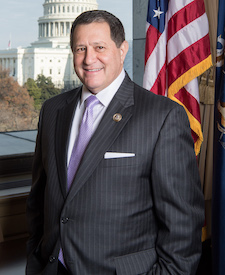
Rep. Joseph D. Morelle
Sponsored bills
Maddy summaryThe Peace Corps Reauthorization Act of 2023 makes several key updates to support Peace Corps volunteers. It increases readjustment allowances from $125 to $375, establishes protocols for safely returning volunteers whose service was interrupted by catastrophic events, and improves health care provisions including mental health services. The bill extends noncompetitive hiring eligibility for returning volunteers for up to three years and implements a zero-tolerance policy for illegal drug use. It also adds protections against retaliation for volunteers who report issues related to waste, fraud, or safety concerns. These changes aim to better support volunteers before, during, and after their service.
Maddy summaryThe Air Carrier Access Amendments Act of 2023 updates the 1986 Air Carrier Access Act to improve accessibility for travelers with disabilities. It creates a private right of action (allowing individuals to sue for violations), sets new standards for accessible aircraft (including boarding equipment, seating, lavatories, and communication systems), and requires airports to provide accessible facilities and digital services. The bill establishes clearer complaint procedures with the Department of Transportation, including a 120-day investigation timeline and specific civil penalties for violations like delayed assistance or damage to assistive devices. These changes directly affect air carriers, foreign air carriers, and travelers with disabilities who face barriers such as inaccessible aircraft and inadequate assistance. The legislation aims to address ongoing issues including damaged assistive devices, inaccessible aircraft features, and inappropriate treatment of service animals.
Maddy summaryThe DERAIL Act requires the Secretary of Transportation to update federal regulations within 90 days to define a "high-hazard flammable train" as any train carrying at least one tank car of flammable liquid or gas, plus additional safety-related materials. Railroad carriers must report within 24 hours after a derailment involving toxic-by-inhalation materials to the National Response Center, state officials, local authorities, and Tribal governments. The report must specify all toxic-by-inhalation materials on the train. This bill directly affects railroad companies and the Department of Transportation by establishing new safety reporting standards for hazardous material incidents.
Maddy summaryThis resolution (HRES 184) formally recognizes and celebrates Black History Month as an annual observance in February. It highlights the significance of the 2023 theme "Black Resistance," acknowledging historical and ongoing Black American efforts to overcome oppression. The resolution does not create new laws or policies but serves as a commemorative statement to raise awareness of Black achievements and resistance history. It directly affects public awareness, encouraging all Americans to recognize this history during February.
Reparations for Ukraine through Sovereign nation Support and Integration Act or the RUSSIA Act This bill directs the President to seek to enter into an agreement with other countries that have frozen the assets of Russia's central bank to (1) transfer the frozen assets into a single account at an international financial institution, and (2) distribute such assets to provide for the reconstruction of Ukraine after the cessation of hostilities in Ukraine.
Maddy summaryHR 1247 would award a Congressional Gold Medal to the Freedom Riders collectively, honoring their pivotal role in challenging segregation in interstate travel during the Civil Rights movement. The medal, to be struck by the U.S. Mint and displayed at the Smithsonian Institution, recognizes their nonviolent protests that led to the 1961 federal ban on segregation in interstate public facilities. This is a symbolic tribute with no legal effect, as the bill does not create new policies or alter existing laws.
Maddy summaryThe Richard L. Trumka Protecting the Right to Organize Act of 2023 strengthens workers' rights to organize unions by making it harder for employers to interfere with organizing efforts. Key provisions include changing the definition of "employee" to make it more difficult to classify workers as independent contractors, prohibiting employers from threatening to permanently replace striking workers, and requiring employers to provide voter lists for union elections. The bill also creates a new electronic voting system for union elections, strengthens whistleblower protections for workers reporting labor violations, and increases penalties for unfair labor practices. These changes directly affect workers seeking to form unions, employers who may interfere with organizing, and labor organizations. The bill aims to make it easier for workers to exercise their right to collective bargaining under the National Labor Relations Act.
Maddy summaryThis resolution expresses the House's support for designating March 3, 2023, as "National Triple-Negative Breast Cancer Day." It aims to raise awareness about triple-negative breast cancer, which disproportionately affects young women, Black and Hispanic women, and those with BRCA mutations, and accounts for a significant portion of breast cancer deaths. The resolution highlights that this aggressive cancer type lacks targeted therapies and is distinct from other breast cancers due to its receptor-negative characteristics. As a non-binding awareness measure, it does not create new policies or alter existing laws.
Maddy summaryThis is a non-binding resolution expressing the House of Representatives' symbolic support for designating February 27-March 3, 2023, as "Public Schools Week." It does not create new laws, allocate funding, or directly affect any individuals or institutions. The resolution highlights the importance of public schools to democracy, equity, and student success through a series of supporting statements. As a procedural resolution, it has no legal effect beyond acknowledging the significance of public education.