

Maddy summaryThe Latonya Reeves Freedom Act of 2023 strengthens the Americans with Disabilities Act's requirement that individuals with disabilities receive long-term services and supports in community settings rather than institutions. It defines "community-based" services to include specific housing options where individuals with disabilities can live independently with maximum control over their lives, including access to integrated housing, employment, and community participation. The bill requires states to develop transition plans to move people from institutional settings to community-based services within 12 years, with measurable annual targets for reducing institutionalization. It establishes enforcement mechanisms through the Department of Justice and Department of Health and Human Services to ensure compliance with these requirements.
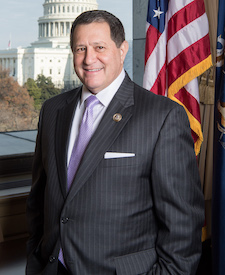
Rep. Joseph D. Morelle
Sponsored bills
Maddy summaryThe Puppy Protection Act of 2023 sets new standards for businesses that sell dogs (dealers), directly affecting pet stores and breeders operating under the Animal Welfare Act. It requires specific housing with space allowances based on dog size (e.g., 12-30 square feet per dog), temperature control (45-85°F), clean food twice daily, and daily exercise or socialization with humans/dogs for at least 30 minutes. The bill also mandates annual veterinary exams including dental care, strict breeding limits (e.g., age restrictions, maximum 2 litters in 18 months), and efforts to place retired breeding dogs in homes instead of selling them to other breeders. Regulations must be finalized within 18 months of enactment.
Maddy summaryHR 2665 delays Medicaid payment reductions for safety net hospitals by two years, changing the effective date from 2024 to 2026 under Section 1923(f)(7)(A) of the Social Security Act. This bill directly affects hospitals that serve high numbers of low-income and uninsured patients, providing them with additional time before facing reduced federal Medicaid payments. The key mechanism is a technical amendment to existing law, postponing an already scheduled payment adjustment without altering funding levels or eligibility. As a procedural bill, it does not create new programs or change hospital requirements.
Maddy summaryThis bill allows the Department of Veterans Affairs (VA) to use existing funds more flexibly to assist homeless veterans and veterans in HUD housing programs. It authorizes the VA to provide immediate needs like food, shelter, transportation for appointments, and communication devices (e.g., phones, tablets) to support veterans' stability and health. The law expands how VA funds can be applied beyond traditional housing assistance, focusing on urgent, practical support. It directly affects homeless veterans and those in HUD's housing assistance program by enabling faster, more adaptable aid. The bill amends existing VA law to improve responsiveness to veterans' immediate survival and health needs.
Maddy summaryHR 2413, the Dental Care for Veterans Act, reclassifies dental care as standard medical services under the VA's existing benefits structure, eliminating prior restrictions that treated dental care separately. It modifies how dental appliances are procured and establishes a phased eligibility timeline: veterans already eligible for dental benefits gain immediate access, while others qualify over 1-4 years based on their current benefit status. The bill affects all veterans currently covered under VA dental programs, changing their access to care without creating new funding. Key provisions streamline dental service delivery under Title 38, aligning it with other medical benefits.
Maddy summaryHR 1351, the "Save Oak Flat From Foreign Mining Act," repeals Section 3003 of the 2015 National Defense Authorization Act, which had mandated transferring 2,422 acres of Oak Flat in Arizona’s Tonto National Forest to foreign-owned Resolution Copper for mining. The bill withdraws this land from all mining activities, preventing Resolution Copper from using destructive block cave mining that would destroy the sacred site and harm water resources. Oak Flat, a National Register-listed Traditional Cultural Property sacred to Indigenous tribes, would be protected from a mine projected to deplete 775,000 acre-feet of groundwater over 40 years and create a 4,000-acre toxic waste dump. The legislation directly affects Resolution Copper (owned by Rio Tinto and BHP) and aims to halt the project that would obliterate cultural resources and exacerbate regional water shortages.
Maddy summaryHR 2584, the SAVE Act, creates a new federal criminal offense for assaulting or intimidating hospital employees while they're performing their duties, punishable by up to 10 years in prison, with enhanced penalties for using weapons, causing injury, or during public emergencies. The bill authorizes $25 million annually in federal grants to hospitals for violence prevention programs, including staff training, security technologies like panic buttons and video surveillance, and coordination with law enforcement. It defines "hospital" broadly to include various medical facilities such as long-term care hospitals, rehabilitation facilities, and critical access hospitals. The legislation directly affects hospital workers and medical facilities by establishing federal criminal penalties for violence against employees and providing funding to improve workplace safety. The law aims to address the rising problem of workplace violence against healthcare workers, which the bill states has increased since 2011.
Maddy summaryThe Family Violence Prevention and Services Improvement Act of 2023 amends the Family Violence Prevention and Services Act to improve services for victims of domestic violence, dating violence, and family violence. The bill authorizes $270 million annually for fiscal years 2024-2028, with specific allocations including 12.5% for Tribal grantees, 2.5% for culturally specific services, and funds for national hotlines and resource centers. It establishes a national domestic violence hotline, a National Indian Domestic Violence Hotline, and resource centers for Alaska Native and Native Hawaiian populations, requiring all services to be trauma-informed, culturally relevant, and accessible to underserved populations including racial and ethnic minorities, people with disabilities, and Tribal communities. The bill also mandates a study on financial stability support for survivors of domestic violence.
Maddy summaryHR 2630, the Safe Step Act, requires group health plans and health insurance issuers to establish a clear, transparent process for patients or their doctors to request exceptions to medication step therapy protocols. These protocols typically force patients to try cheaper drugs first before covering more expensive alternatives. The bill mandates that plans must approve exceptions when prior treatments failed, delay would cause serious harm, a treatment is unsafe, or a patient is stable on a previously approved drug, with strict 72-hour (or 24-hour in emergencies) decision timelines. It also requires plans to publish the exception process online and limit documentation requests to only necessary medical information. This law directly affects health insurers, employers offering health plans, and patients using step therapy for prescription drugs.
Securing Access to Lower Taxes by ensuring Deductibility Act or the SALT Deductibility Act This bill repeals the temporary restrictions in taxable years 2018 through 2025 on the deductibility of state and local taxes.