

Maddy summaryHR 1756, the Dairy Pricing Opportunity Act of 2023, requires the U.S. Department of Agriculture to hold national hearings within 180 days of enactment to review the Federal milk marketing system, specifically focusing on the formula used to set the Class I skim milk price (the price for milk used in fluid products like milk and cheese). The bill mandates that the Secretary of Agriculture collect input from dairy producers and the industry on this pricing formula and other related matters during these hearings. It also amends federal law to require dairy processors to report detailed cost and yield information for all products made at their facilities, with the Secretary required to publish reports on this data every two years. This bill directly affects dairy producers, processors, and the regulatory framework governing milk pricing.
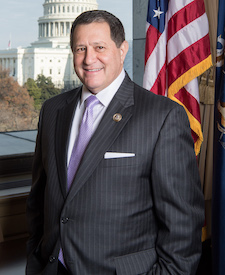
Rep. Joseph D. Morelle
Sponsored bills
Maddy summaryThis bill establishes a comprehensive framework to address environmental justice by requiring federal agencies to identify and address disproportionately adverse environmental and health effects on communities of color, low-income communities, and Tribal and Indigenous communities. It creates a White House Environmental Justice Interagency Council to coordinate federal efforts, mandates that agencies develop environmental justice strategies, and requires consideration of cumulative impacts in permitting decisions for pollution sources. The bill also establishes grant programs for environmental justice communities, creates training requirements for federal employees, and includes specific provisions for safer cosmetics and economic revitalization in fossil fuel-dependent communities. These provisions aim to ensure fair treatment and meaningful involvement of all people in environmental decision-making processes, directly affecting federal agencies and communities disproportionately burdened by environmental hazards.
Maddy summaryThe Armenian Genocide Education Act (HR 2803) establishes a Library of Congress program to support U.S. schools in teaching about the Armenian Genocide of 1915-1923. The program will develop educational resources, provide teacher training, and maintain an online resource center to help schools incorporate accurate historical information into curricula. It prioritizes schools without existing Armenian Genocide education programs, with $2 million authorized annually for five years. The Librarian of Congress will report yearly on the program’s activities to Congress.
This bill expresses the sense of Congress that (1) medication abortion is appropriately approved and regulated under federal law, and (2) federal law preempts any in-person dispensing requirements or telehealth restrictions with respect to medication abortion under state law.
This resolution urges (1) the President to issue a proclamation recognizing Earth Day; and (2) governments and people to continue building upon the Paris Agreement and other efforts to ensure that future generations inherit a livable, sustainable, and ecologically rich planet.
Maddy summaryHR 2788, the AIM Act, permanently extends a tax provision allowing businesses to deduct certain depreciation, amortization, or depletion costs when calculating their business interest expense limits. This change directly affects businesses that calculate business interest deductions under the Internal Revenue Code. The bill removes the previous expiration date (for taxable years beginning before January 1, 2022), making the deduction rule permanent for all future taxable years. It does not alter the underlying tax rules but ensures the specific deduction method remains available indefinitely.
Maddy summaryHR 2753, the Firearms Retailer Code of Conduct Act of 2023, requires licensed firearm retailers, manufacturers, and importers to implement new safety protocols. It mandates annual training for employees on recognizing straw purchases, illegal transfers, and self-harm risks, including a 20-question exam with a 70% passing requirement. Retailers must display written protocols identifying red flags (like multiple purchases or accomplices) and maintain liability insurance covering negligent transfers, unless they certify selling fewer than 20 firearms annually. The law takes effect 545 days after enactment, with penalties including fines up to $10,000 or license suspension for violations.
Homeland and Cyber Threat Act or the HACT Act This bill allows claims in federal or state court against foreign states that conduct or participate in cyberattacks against U.S. nationals.
American Innovation and R&D Competitiveness Act of 2023 This bill eliminates the five-year amortization requirement for research and experimental expenditures, thus allowing continued expensing of such expenditures in the taxable years in which they are incurred.
Maddy summaryHR 2725, the "Do No Harm Act," amends the Religious Freedom Restoration Act (RFRA) to clarify that RFRA does not apply when federal laws protect against discrimination or promote equal opportunity. It specifically exempts protections under the Civil Rights Act, Americans with Disabilities Act, workplace benefits like leave, child labor safeguards, and healthcare access from RFRA challenges. The bill also clarifies that RFRA does not block private lawsuits between individuals, applying only to cases involving government entities. This amendment ensures that existing federal civil rights and workplace protections remain enforceable under RFRA.