

Maddy summaryThe SAFE Banking Act of 2023 would protect banks and financial institutions that provide services to state-legal marijuana businesses and hemp-related businesses by preventing federal regulators from taking adverse actions against them solely for serving these businesses. It clarifies that income from state-legal marijuana businesses can be considered for mortgage applications, and requires regulators to update guidance on suspicious activity reports related to these businesses. The bill does not require financial institutions to serve these businesses, but ensures they won't face penalties for doing so. It extends similar protections to hemp-related businesses, which have faced banking challenges despite being federally legal under the 2018 Farm Bill.
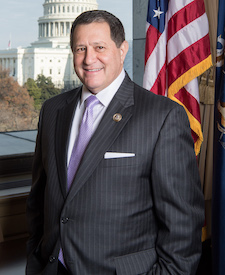
Rep. Joseph D. Morelle
Sponsored bills
This concurrent resolution expresses the sense of Congress that the individuals responsible for the July 1999 murders of U.S. citizens Ylli, Agron, and Mehmet Bytyqi in Serbia should be brought to justice and that the United States should devote sufficient resources to fully assist and monitor Serbia's efforts to investigate and prosecute such individuals.
Maddy summaryThis bill amends the Family and Medical Leave Act (FMLA) to add a new category of protected leave for employees (or family members) affected by domestic violence, dating violence, sexual assault, sex trafficking, or stalking. It entitles eligible employees to up to 12 weeks of unpaid leave for specific needs like medical care, legal services, counseling, securing safe housing, or assisting family members with these issues. The leave can be taken intermittently or on a reduced schedule, and employees may substitute accrued paid leave (vacation, sick days) for part of the unpaid FMLA leave period. Employers may require certification or accept a sworn statement if certification is pending, but the bill does not mandate paid leave.
Maddy summaryHR 3011 establishes a 15-member task force within the Department of Defense to review and assess mental health services for active-duty military members, reservists, and their families. The task force, requiring half DOD personnel (including service surgeons and family members) and half external experts (like VA and SAMHSA staff), must submit a report within 12 months detailing improvements needed in areas like access to care, telehealth, reducing stigma, and transitioning care to veterans' services. The report will include specific recommendations for legislative or administrative changes, followed by annual progress reports to Congress over five years on implementing those recommendations. This bill creates a review mechanism but does not directly change existing mental health programs or funding.
Maddy summaryThe Protecting America's Workers Act expands workplace safety protections to public employees, including those working for state and local governments who were previously excluded from some OSHA protections. It strengthens whistleblower protections by prohibiting retaliation against employees who report safety concerns, refuse to perform dangerous tasks, or report work-related injuries. The bill requires employers to promptly report work-related deaths and hospitalizations, prohibits policies that discourage injury reporting, and mandates posting of employee safety rights information. It also increases penalties for safety violations and improves access to information for victims and families during workplace investigations. These changes apply to all employers covered by OSHA, with specific implementation timelines for state and local government workplaces.
Maddy summaryThis bill protects living organ donors from insurance discrimination by prohibiting life, disability, and long-term care insurers from denying coverage, raising premiums, or altering policy terms solely because someone donated an organ while alive. It also updates the Family and Medical Leave Act to include recovery from organ donation surgery as a qualifying health condition, allowing donors to take protected leave for this purpose. Additionally, the bill requires the Health and Human Services Secretary to update public educational materials about living donation benefits, risks, and insurance protections within six months of enactment. These changes directly affect living organ donors, insurers, employers, and healthcare systems by ensuring fair access to insurance and workplace leave.
Maddy summaryThe Kids PRIVACY Act strengthens privacy protections for children under 13 and teenagers aged 12-18 online. It requires digital services that collect data from these age groups to obtain verifiable consent, limit data collection to what's necessary, and prevent targeted advertising based on their information. The bill establishes new requirements for transparency (including clear privacy policies), data minimization, security measures, and privacy impact assessments. It also creates a dedicated Youth Privacy and Marketing Division at the Federal Trade Commission to enforce these rules and repeals existing safe harbor provisions that previously protected operators from liability.
Maddy summaryThe PREPARE Act establishes a new pre-disaster mitigation loan program for small businesses through the Small Business Administration (SBA). It authorizes $25 million annually from 2024 to 2028 to provide loans of up to $500,000 per business, enabling small businesses to fund projects that protect their property and operations from disaster damage (e.g., flood barriers or structural reinforcements). The SBA must conduct targeted outreach to businesses in economically distressed areas, offer technical assistance, and require borrowers to maintain insurance during loan terms. Annual reports will track program outcomes, including project types, cost savings avoided, and regional impacts, to evaluate effectiveness.
Maddy summaryThe College Transparency Act requires the National Center for Education Statistics to develop a secure, privacy-protected system that collects and organizes student-level data from colleges and universities. The system will track enrollment patterns, progression, completion rates, costs, financial aid, and post-graduation outcomes, with data disaggregated by characteristics like race, gender, program of study, and credential level. Colleges participating in federal financial aid programs must submit this data, while the system will provide the public with customizable summary information to help students and families make informed college decisions. The bill includes strict privacy protections, prohibiting collection of sensitive data like health information or exact addresses, and requires data minimization to only what's necessary for the system's purposes.
Maddy summaryThe Child Care for Working Families Act establishes a federal entitlement program providing subsidized child care for working families with children under age 6 who are not yet in kindergarten. It creates a sliding fee scale where families at or below 85% of State median income pay no copayment, while higher-income families pay up to 7% of their income based on income thresholds. The bill requires states to develop quality rating systems for child care providers and ensures providers receive sufficient funding to meet quality standards, including wages equivalent to elementary educators. It prioritizes access for underserved populations including children with disabilities, infants and toddlers, children experiencing homelessness, and families in low-income communities. The program is funded with $20 billion for fiscal year 2024 and subsequent years through 2029.