

Aaron Salter, Jr., Responsible Body Armor Possession Act This bill establishes a federal statutory framework to restrict the purchase, ownership, or possession of enhanced body armor by civilians. The term enhanced body armor means body armor, including a helmet or shield, with a ballistic resistance that meets or exceeds the ballistic performance standard of Type III armor, as determined using the National Institute of Justice standard in effect at the time the person purchases, owns, or possesses the armor.
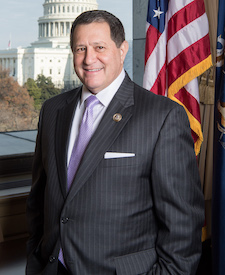
Rep. Joseph D. Morelle
Sponsored bills
Maddy summaryThe RAISE Act of 2023 creates a new refundable tax credit for teachers and early childhood educators working in schools with high student poverty rates. The credit starts at $1,000, with additional amounts up to $14,000 (or $9,000 for early childhood educators without bachelor's degrees) based on the school's poverty ratio. The bill also increases the educator expense deduction from $250 to $500 and establishes mandatory funding for local schools that maintain or increase teacher salaries. These provisions directly affect K-12 teachers, early childhood educators, and their schools, with specific eligibility requirements and protections against employer retaliation regarding the credit.
Maddy summaryHR 3238, the Affordable Housing Credit Improvement Act of 2023, updates the Low-Income Housing Tax Credit (LIHTC) program to increase the availability of affordable housing across the United States. The bill makes several key changes including increasing state funding formulas, modifying tenant eligibility rules to better serve vulnerable populations (such as domestic violence victims and students), and expanding credit eligibility for projects in rural and Native American communities. Specific provisions raise the credit for properties serving extremely low-income households, clarify rules around tenant income increases, and require housing providers to protect victims of domestic violence. The bill also updates terminology from "low-income" to "affordable" throughout the tax code and enhances program transparency through data sharing requirements. These changes aim to make the LIHTC program more effective at creating and preserving affordable housing units for low-income households nationwide.
Maddy summaryThe Invest to Protect Act of 2023 establishes a federal grant program for local law enforcement agencies with fewer than 200 officers (including counties, municipalities, and tribal governments) to fund training and support services. Grants cover de-escalation training, mental health resources, evidence-based safety training (such as handling domestic violence or mental health crises), and recruitment/retention incentives like signing bonuses, retention bonuses (up to 20% of salary), and stipends for graduate education in mental health or social work. The bill requires a streamlined grant application process (under two hours), public disclosure of bonus amounts, and annual audits to prevent misuse of funds.
Maddy summaryThe HELPER Act of 2023 creates a new FHA mortgage insurance program specifically for first responders and K-12 teachers. It allows eligible first-time homebuyers in these professions to secure mortgages with 100% financing (no down payment required) for purchasing or repairing a primary residence. To qualify, applicants must be employed as law enforcement, firefighters, paramedics, or K-12 teachers, have completed housing counseling, and meet specific employment history requirements (e.g., 4 years in the role or disability-related release). The program authorizes $660,000 for fiscal year 2024 and $160,000 annually through 2030, with authority expiring after 5 years.
Maddy summaryHR 3148, the POWER Act, provides $20 million in federal grants to state, local, and Tribal law enforcement agencies to purchase chemical screening devices and train staff. The devices identify narcotics like fentanyl, methamphetamine, and synthetic opioids, helping officers quickly and safely analyze seized substances. Agencies must use funds to supplement, not replace, existing budgets and submit annual reports on device usage and effectiveness. The bill directly affects law enforcement agencies by enhancing their ability to investigate drug cases and share data with other agencies.
Maddy summaryThe Transit to Trails Act establishes a federal grant program to fund transportation projects connecting critically underserved communities - defined as areas lacking adequate park access, low-income, communities of color, or environmental justice areas - to public lands and recreational spaces. Eligible entities, including states, local governments, tribal organizations, and park districts, can apply for grants to develop transportation connectors (like bus routes) and culturally appropriate education materials, with priority for projects using low-emission vehicles and offering discounted fares for low-income riders. Grants range from $25,000 to $500,000, with federal funding covering up to 80% of costs, and recipients must report on demographics served and project outcomes. The program is funded at $40 million annually in its fifth year, aiming to improve mobility to parks and recreation in communities historically excluded from such access.
Maddy summaryHRES 362 is a symbolic House resolution recognizing elementary and secondary school teachers' contributions to U.S. civic, cultural, and economic well-being. It specifically thanks teachers and encourages students, parents, school leaders, and officials to acknowledge National Teacher Appreciation Week (May 8-12, 2023). The resolution has no binding effect or policy changes - it solely promotes public appreciation for the teaching profession through a formal expression of gratitude. It directly affects teachers by affirming their societal value but does not alter laws, funding, or educational standards.
Maddy summaryHR 3106, the Preventing Deepfakes of Intimate Images Act, creates a legal right for individuals whose realistic digital manipulations of intimate images (such as uncovered genitals, bodily fluids, or sexually explicit conduct) are disclosed without consent. It allows victims to sue for civil damages, including up to $150,000 in liquidated damages, actual harm, or punitive penalties, and seek court orders to stop further disclosure. The bill specifically protects identifiable individuals (not just public figures) and covers images created or altered using digital manipulation, excluding cases involving law enforcement, public interest, or good-faith disclosures. Criminal penalties up to 10 years may apply for malicious disclosure with intent to harass or cause harm. This directly affects anyone whose intimate images are deepfaked without permission, providing new legal recourse against perpetrators.
Maddy summaryHR 2965, the Autism Family Caregivers Act of 2023, establishes a federal pilot program to provide free or low-cost evidence-based skills training for family caregivers of children (ages 0-9) with autism spectrum disorder or other developmental delays. It authorizes $10 million annually to fund grants for eligible organizations (like nonprofits, health centers, and community groups) to teach caregivers practical strategies for communication, social engagement, daily living skills, and managing challenging behaviors. The program requires local stakeholder committees - including caregivers, healthcare providers, and community representatives - to ensure cultural relevance, and mandates annual evaluations to assess impacts on children's well-being and caregiver support.