

Maddy summaryThe Protect America's Children from Toxic Pesticides Act would require the Environmental Protection Agency to complete pesticide registration reviews within 15 years, with automatic suspension of pesticides that miss deadlines. It mandates the EPA to review pesticides banned in the European Union or Canada, with automatic cancellation if the ban is not found to be clearly erroneous. The bill would ban organophosphate pesticides, neonicotinoids, and paraquat, prohibit continued sale of suspended or canceled pesticides, and require full disclosure of inert ingredients on product labels. It also establishes new protections for farmworkers by requiring bilingual labels, mandating incident reporting, and imposing penalties for non-compliance. These changes would directly affect pesticide manufacturers, farmers, farmworkers, and communities seeking to protect public health and the environment.
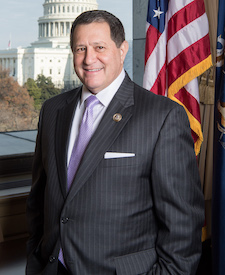
Rep. Joseph D. Morelle
Sponsored bills
Maddy summaryHCONRES 67 designates the week of September 17-23, 2023, as "National Fall Prevention Awareness Week" to highlight fall risks among older adults (aged 65+). It cites CDC data showing falls cause ~39,000 preventable deaths and $50 billion in annual medical costs for this group. The resolution supports existing evidence-based fall prevention programs - like balance exercises, home hazard reduction, and medication management - and encourages collaboration between federal agencies, community organizations, and healthcare providers to raise awareness. It does not create new laws but formally recognizes ongoing efforts to reduce falls.
Maddy summaryThis bill amends the Higher Education Act to require all U.S. colleges and universities receiving federal financial aid to create detailed anti-harassment policies covering physical, online, and institution-sponsored settings. It mandates policies prohibiting harassment based on race, sex (including sexual orientation and gender identity), disability, religion, and other protected characteristics, including harassment via institutional email, computers, or electronic messaging. The bill also establishes a $50 million annual grant program to fund colleges developing prevention programs, victim support services, and training for students and staff on recognizing and addressing harassment. These policies and grants must comply with existing civil rights laws like Title IX but add specific requirements for reporting and prevention.
Maddy summaryHR 5619, the Military Dependents School Meal Eligibility Act of 2023, requires the Secretary of Agriculture to study how to directly certify military children for free or reduced-price school meals without additional applications. The bill directs a report by October 2024 evaluating options like using military housing allowance data and excluding non-service income from household calculations under existing school nutrition laws. This would affect children in households of active-duty military members, potentially streamlining eligibility for meals at schools. The bill itself is procedural, focusing on feasibility study rather than immediate policy changes.
Maddy summaryHR 5566, the *Supreme Court Tenure Establishment and Retirement Modernization Act of 2023*, establishes an 18-year term limit for all Supreme Court justices. It requires the President to nominate one new justice every two years (during first and third years after presidential elections), with Senate confirmation within 90 days, and prohibits lifetime appointments. Current justices are automatically retired in order of service length as new justices are appointed, while retired justices may temporarily fill vacancies through a randomized process. The bill directly affects all sitting and future Supreme Court justices by restructuring appointments and retirement timelines.
Fairness in Vineyard Data Act This bill requires the National Agricultural Statistics Service (NASS) to conduct a survey, within one year of the bill's enactment, on grape production in each state and publish the data on the NASS website. In the following four years, NASS must make publicly available on the website data from the five states with the highest grape production in the preceding year.
Maddy summaryThe Better CARE for Animals Act of 2023 amends the Animal Welfare Act to strengthen enforcement of animal welfare standards. It gives the Attorney General authority to bring civil cases for violations, including seeking penalties up to $10,000 per day per violation and injunctions to remove or relocate animals. The bill also requires the Secretary of Agriculture and Attorney General to coordinate through a new Memorandum of Understanding, focusing on repeat violators. These changes directly affect dealers, exhibitors, and enforcement agencies by expanding civil enforcement tools and clarifying jurisdiction over rule violations.
Maddy summaryHR 4845, the Food Secure Strikers Act of 2023, amends the Food and Nutrition Act to remove a restriction that previously disqualified workers from the Supplemental Nutrition Assistance Program (SNAP) if they were on strike. The bill changes eligibility rules so that striking workers are no longer automatically ineligible for SNAP benefits solely because they are participating in a labor strike. This change directly affects workers involved in strikes who rely on SNAP for food assistance, ensuring they can access benefits during labor disputes. The key provision removes specific language from Section 6(d) of the Food and Nutrition Act that had barred strike participants from SNAP enrollment.
Maddy summaryThe John R. Lewis Voting Rights Advancement Act of 2023 would strengthen the Voting Rights Act of 1965 by updating the criteria for which states and localities must obtain federal preclearance before changing voting practices. It would establish new standards for proving vote dilution and vote denial by requiring courts to consider historical discrimination, racial polarization in voting, and whether voting practices disproportionately burden minority voters. The bill would also require states and localities to provide public notice of voting changes and share demographic data about polling locations. These changes would primarily affect jurisdictions with a history of voting rights violations, aiming to prevent discriminatory voting practices before they take effect.
Maddy summaryHR 5438, the Nuclear Forensics Authority Realignment Act, establishes a new National Nuclear Forensics Center within the National Nuclear Security Administration (NNSA) to coordinate federal efforts in analyzing nuclear materials to trace attacks or terrorism. The bill repeals the previous Nuclear Forensics and Attribution Act and updates references in the Homeland Security Act to align with the new NNSA center. It requires the NNSA Administrator to develop a plan within one year to expand university programs for building nuclear forensics expertise. This reorganization directly affects NNSA, federal agencies handling nuclear security, and the technical capabilities used to investigate nuclear incidents.