

Maddy summaryThe Streamlining Federal Grants Act of 2023 requires federal agencies to simplify grant application and reporting processes, with a focus on improving access for underserved communities, rural areas, and historically excluded organizations like faith-based groups. Key mechanisms include designating senior agency officials for grants, creating a Grants Council to coordinate improvements, and mandating plain-language notices of funding opportunities under 500 words. Agencies must develop annual plans to streamline procedures, ensure language accessibility for limited-English speakers, and report progress to Congress. The bill directly affects federal agencies managing grants and their recipients, aiming to reduce administrative burdens while expanding equitable access to federal funding.
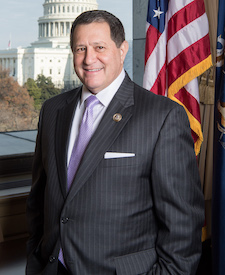
Rep. Joseph D. Morelle
Sponsored bills
Maddy summaryThe Protecting America from Seasonal and Pandemic Influenza Act of 2023 establishes national goals to improve influenza preparedness and response, including delivering first doses of influenza vaccine within 12 weeks of a pandemic strain's emergence and developing a universal vaccine within 10 years. The bill authorizes $335 million annually for pandemic influenza activities, strengthens vaccine supply chains through public-private partnerships, and requires the development of rapid at-home diagnostic tests to improve access. It specifically focuses on addressing vaccine hesitancy through community partnerships targeting vulnerable populations including racial and ethnic minorities, seniors, and people with chronic conditions. The legislation mandates annual reports on implementation progress and requires incorporating health equity into influenza planning and response efforts. This comprehensive approach aims to build a more resilient system for preventing and responding to both seasonal and pandemic influenza.
Maddy summaryThis bill amends an existing federal awareness campaign (Johanna's Law) to specifically include ovarian, cervical, and endometrial cancers. It directs the Health and Human Services Secretary to expand public service announcements to raise awareness about these cancers, emphasizing screening for cervical cancer and genetic risk factors. The campaign must now specifically target disadvantaged women, addressing documented disparities where Black women face 80% higher endometrial cancer mortality and Hispanic women have 50% higher rates among young adults. The bill focuses solely on increasing public awareness through existing HHS resources, without creating new funding or medical programs.
Maddy summaryThe Rail Worker and Community Safety Act establishes a minimum 2-person crew requirement for most freight trains (with exceptions for smaller carriers or specific low-risk operations), mandates new safety regulations for hazardous materials transportation including advance notification to emergency response agencies, and requires rail carriers to provide employees with earned paid sick time (1 hour for every 30 hours worked). The bill also sets a minimum requirement of 425 federal rail safety inspectors with specialized expertise across various safety domains, along with additional funding for hiring and compensation. These provisions directly affect rail carriers, rail workers, and communities near rail operations, aiming to enhance rail safety and worker protections through concrete policy changes.
Maddy summaryHRES 750 is a symbolic resolution recognizing the "Operation Green Light for Veterans" campaign, which encourages counties to illuminate buildings green (Nov 6-12) to show community support for veterans. It promotes awareness of existing county resources - such as mental health services, job training, housing assistance, and benefits guidance - that help veterans transition to civilian life. The resolution urges all counties to participate in the lighting event and use community outreach to highlight these resources, while commending the National Association of Counties for leading the initiative. It does not create new laws or funding but focuses on raising visibility for existing support systems. (HRES 750, introduced Sept. 29, 2023)
Maddy summaryThis resolution designates the week of September 25-29, 2023, as "National Clean Energy Week" to recognize the growing role of clean energy in the U.S. economy. It expresses support for clean energy jobs and innovation, noting the sector employed about 8.1 million people in 2022. The resolution encourages federal, state, and local investment in affordable clean energy technologies and promotes "commonsense solutions" for energy needs. As a symbolic gesture, it has no legal force or funding implications - it simply urges recognition of clean energy's economic and environmental contributions.
Maddy summaryThis bill requires websites and applications used by public entities, businesses, and employers to be accessible to people with disabilities. It directs the Department of Justice and Equal Employment Opportunity Commission to establish accessibility standards within 24 months, with special consideration for small businesses. The law defines accessibility as websites that are perceivable, operable, understandable, and robust for people with disabilities. It also creates a technical assistance center to help entities comply and provides grants to small businesses to fix inaccessible websites. The bill aims to ensure equal digital access for people with disabilities, building on existing ADA protections.
Maddy summaryThis bill requires the Department of Veterans Affairs (VA) to review all veteran suicides occurring between 2018-2023 (the five years before enactment) for veterans who received VA care. The review must analyze demographics, medications (including those with strong safety warnings like "black box" labels), prescribing patterns, mental health diagnoses, and facility-level data. The VA must complete the review within 18 months and publicly submit a detailed report to Congress and the public within 30 days of completion. This law directly affects veterans' families, VA healthcare providers, and policymakers by mandating transparency around suicide risk factors and prescribing practices.
Maddy summaryThe Family Friendly Schools Act establishes a federal grant program to help 500 elementary schools align their schedules with typical work hours, directly supporting working families with children in grades K-5. It requires schools to extend hours (typically 8 a.m. to 6 p.m.) without increasing staff workloads, eliminate unnecessary closures (like for conferences), and partner with community organizations to provide free enrichment activities during extended hours. Schools receiving grants must serve Title I schools first and include community input in planning, with a requirement for annual parent surveys on satisfaction. The $5 million per school grant (for 5 years) mandates 10% non-Federal matching funds and focuses on reducing barriers like unsupervised after-school time and misaligned schedules. This aims to address documented challenges such as 1 in 5 children being unsupervised after school and $55 billion in annual productivity losses.
Maddy summaryThe Alice Cogswell and Anne Sullivan Macy Act amends the Individuals with Disabilities Education Act to better serve children and youth who are deaf, hard of hearing, deafdisabled, blind, visually impaired, or deafblind. It requires states to identify and provide appropriate services to these students regardless of how they're classified in disability categories, ensures access to language instruction in the student's primary language (including American Sign Language), and mandates improved data collection about these students. The bill establishes the Anne Sullivan Macy Center on Visual Disability and Educational Excellence to support research, training, and program development for blind and visually impaired students. These changes aim to improve educational outcomes by addressing the unique language, communication, and learning needs of students with sensory disabilities through concrete policy changes to IDEA.